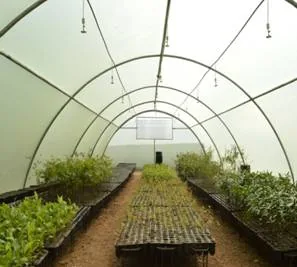

Silviculture
Silvicultural research, nursery management and tree improvement.
Silviculture Division
Silvicultural research focuses on growth dynamics, permanent sample plots (PSPs), sample preservation, and seed orchards for indigenous tree species across different agro-climatic zones of Meghalaya.
Silviculture Research Activities
Scientific interventions, nursery management, and genetic conservation protocols driven by the Silviculture Wing.
Seed Orchards & Plus Trees
Creation of Seed Orchards and scientific identification of Superior/Plus Tree species across high-value forest stands.
Nursery Protocols & Restocking
Standardizing nursery practices and propagation through tissue culture of Rare, Endangered & Critically Endangered species for natural habitat restocking.
In-Situ Species Protection
Protection and conservation of Rare, Endangered & Endemic Plant Species via dedicated in-situ reserves protected from biotic pressures.
Ex-Situ Germplasm Banks
Conservation of endemic flora & medicinal plants through Germplasm banks, herbal gardens, and ex-situ conservation units.
Bamboo & Tree Protocols
Developing propagation and conservation protocols for high-value timber, indigenous trees, and native Bamboo species of Meghalaya.
Micropropagation & Tissue Culture
Advanced tissue culture micropropagation protocols for Orchids, Medicinal Plants, and Nepenthes khasiana (Pitcher Plant).
Achievements
Standardizing Nursery Practices
The Division has standardized Nursery practices for:
Medicinal Plants
- Taxus baccata
- Aquilaria agallocha
- Terminalia arjuna
- Terminalia chebula
- Terminalia bellerica
Rare & Endangered Species
- Ilex khasiana
- Podocarpus nerifolia
Commercially Important Species
- Michelia champaca
- Toona ciliata
- Chukrassia tabularis
Plant Tissue Culture Laboratory
The Department has established a state-of-the-art Plant Tissue Culture Laboratory at Upper Shillong with the following objectives:
- Standardization of plant tissue culture protocol of rare and endangered plants, orchids, bamboo and medicinal plants of the region for large scale propagation.
- Conservation of rare and endangered plants, orchids, bamboo and medicinal plants through plant tissue culture techniques.
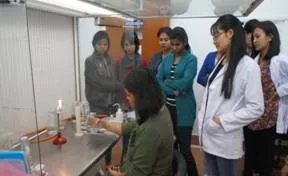
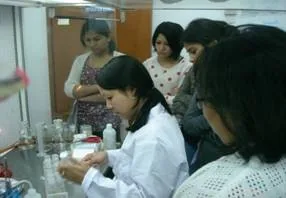
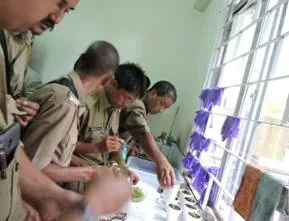
- Imparting knowledge of plant tissue culture techniques through training, workshops, etc. to students, farmers and Department officials.
Species for which tissue culture protocols have been standardized
Nepenthes khasiana, Ilex khasiana, Citrus indica, Nymphea tetragona, Gymnocladus assamicus, Citrus grandis
Dendrobium nobile, D. chrysanthum, Vanda cerulea, Paphiopedilum insigne, P. villossum, P. hirsutissimum, Pleione praecox, P. maculata, Cymbidium cochleare, C. elegans, C. eburneum, Coelogyne corymbosa, C. fimbriata, Cymbidium iridoides, Dendrobium falconeri, D. longicornu, D. ochreatum, Cymbidium mastersii, Dendrobium primulinum
Aegle marmelos, Acacia catechu, Aquilaria agallocha, Terminalia bellerica, T. chebula, Tectona grandis, Gmelina arborea, Panax pseudoginseng, Taxus baccata
Bambusa nana, Bambusa tulda, Dendrocalamus hamiltonii, Dendrocalamus strictus
Advantages of Tissue Culture Grown Seedlings
- High quality true to type seedlings
- Rapid large scale mass multiplication
- Round the year production
- Production of disease-free seedlings
- Easy transportation & lower cost
- Propagation of plants that fail to produce seeds or have long dormancy periods
- Conservation of endangered & endemic plants with poor germination capacity
- Orchid seed germination feasible via tissue culture — otherwise very difficult
Protection of Areas with Rare & Endangered Plant Species
The scheme "Conservation of Rare and Endangered Plants" is implemented by the Silviculture Division. So far, 55 hectares of plantation area of rare and endangered plant species have been successfully raised and maintained in different centres of the State. Prominent species planted include:
- Taxus baccata
- Carpinus viminea
- Podocarpus nerifolia
- Rhododendron arboreum
- Aquilaria agallocha
Ex-situ & In-situ Conservation of Nepenthes khasiana (Pitcher Plant)
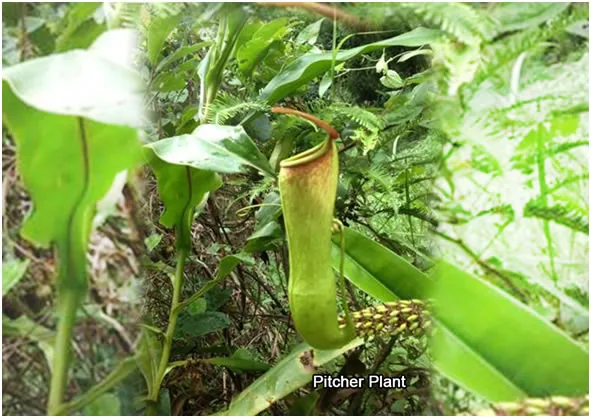
The only pitcher plant found in India, endemic to Meghalaya. A straggling scandent insectivorous shrub growing in undisturbed subtropical and tropical forests at elevations of 1000–1500 m MSL.
- Critically Endangered (IUCN)
- CITES Appendix I
- Wildlife Protection Act 1972 — Schedule VI
Medicinal Uses
The fluid in the unopened pitcher is used to treat eye, digestive and urinary ailments and for diabetes. The pitcher with its content is made into paste and applied on affected parts of leprosy patients.
Conservation Measures
Fire protection in dry months; habitat surveys conducted; tissue culture techniques standardised for multiplication; tissue culture grown plants used to restock natural habitat. Ex-situ conservation areas established at Laitkynsew, Mawsmai and Umkhuti.
In-vitro Multiplication of Orchids
The State of Meghalaya is famous for its beautiful orchids. About 300 species have been reported. A research laboratory was set up at Shillong to multiply and propagate orchids through tissue culture techniques. Tissue culture protocols of 19 orchid species have been standardized.
Orchids at Conservation Centre (70 species)
| # | Botanical Name |
|---|---|
| 1 | Agrostophyllum brevipes King & Pantl. |
| 2 | Agrostophyllum planicaule Wall. ex Lindl. |
| 3 | Anthogonium gracile Lindl. |
| 4 | Arundina graminifolia D. Don |
| 5 | Bulbophyllum forrestii Seiderf. |
| 6 | Bulbophyllum gymnopus Hook.f. |
| 7 | Bulbophyllum striatum Griff. |
| 8 | Bulbophyllum umbellatum Lindl. |
| 9 | Cephalantheropsis obcordata Lindl. |
| 10 | Coelogyne corymbosa Lindl. |
| 11 | Coelogyne flaccida Lindl. |
| 12 | Coelogyne fuliginosa Lodd. ex Hook. |
| 13 | Coelogyne ovalis Lindl. |
| 14 | Coelogyne viscosa Rchb.f. |
| 15 | Cymbidium aloifolium Lindl. |
| 16 | Cymbidium bicolor Lindl. |
| 17 | Cymbidium cochleare Lindl. |
| 18 | Cymbidium eburneum Lindl. |
| 19 | Cymbidium elegans Lindl. |
| 20 | Cymbidium iridioides D. Don |
| 21 | Cymbidium lancifolium Hook.f. |
| 22 | Dendrobium aduncum Wall. |
| 23 | Dendrobium chrysanthum Lindl. |
| 24 | Dendrobium crepidatum Lindl. & Paxton |
| 25 | Dendrobium densiflorum Lindl. |
| 26 | Dendrobium devonianum Paxton |
| 27 | Dendrobium heterocarpum Wall. ex Lindl. |
| 28 | Dendrobium jenkinsii Wall. ex Lindl. |
| 29 | Dendrobium moschatum Buch-Ham |
| 30 | Dendrobium nobile Lindl. |
| 31 | Dendrobium ruckeri Lindl. |
| 32 | Dendrobium ochreatum |
| 33 | Eria bambusifolia Lindl. |
| 34 | Eria coronaria Lindl. |
| 35 | Eria lasiopetala Willd. |
| 36 | Eria paniculata Lindl. |
| 37 | Eria stricta Lindl. |
| 38 | Esmeralda clarkei Rchb.f |
| 39 | Flickingeria fugax Rchb.f |
| 40 | Gastrochilus calceolaris Buch-Ham. ex Sm. |
| 41 | Goodyera procera Ker-Gawl. |
| 42 | Liparis cordifolia Hook.f. |
| 43 | Micropera obtusa Lindl. |
| 44 | Micropera rostrata Roxb. |
| 45 | Neogyna gardneriana Lindl. |
| 46 | Otochillus fuscus Lindl. |
| 47 | Oberonia pachyrachis Rchb.f. ex Hook.f. |
| 48 | Paphiopedilum hirsutissimum Lindl. ex Hook.f. |
| 49 | Paphiopedilum insigne Wall. ex Lindl. |
| 50 | Paphiopedilum venustum Wall. ex Sims. |
| 51 | Papilionanthe vandarum Rchb.f |
| 52 | Phaius flavus Lindl. |
| 53 | Phalaenopsis taenialis Lindl. |
| 54 | Pholidota articulata Lindl. |
| 55 | Pleione humilis D. Don |
| 56 | Pleione maculata Lindl. |
| 57 | Pleione praecox D. Don |
| 58 | Porpax gigantea Deori |
| 59 | Phaius tancarvilleae L'Her. |
| 60 | Rhomba lanceolata Lindl. |
| 61 | Rhynchostylis retusa Lindl. |
| 62 | Schoenorchis gemmata Lindl. |
| 63 | Smitinandia micrantha Lindl. |
| 64 | Spathoglottis pubescens Lindl. |
| 65 | Tainia minor Hook.f. |
| 66 | Thunia alba Lindl. |
| 67 | Vanda alpina Lindl. |
| 68 | Vanda coerulea Griff. ex Lindl. |
| 69 | Vanda cristata Lindl. |
| 70 | Vanda undulata Lindl. |
Gene-Pool Conservation of Medicinal Plants
The scheme "Conservation of Medicinal Plants" is implemented by the Silviculture Division. 96 gene-pool conservation plots and 5 hectares of plantation area have been raised and maintained at different locations in East Khasi Hills, Ri Bhoi and East Garo Hills. Plots are of dimensions 6×6 m (herbaceous), 8×8 m (shrub) and 12×12 m (tree species).
Plant species conserved in these plots include:
- Rhus semialata
- Myrica nagi
- Gaultheria fragrantissima
- Rubus ellipticus
- Panax ginseng
- Potentilla fulgens
- Mentha arvensis
- Swertia chirata
- Solanum nigrum
- Acorus calamus
- Abroma agusta
- Azadirachta indica
- Averrhoa carambola
- Nepenthes khasiana
- Terminalia arjuna
- Terminalia chebula
- Terminalia bellerica
- Rauvolfia serpentina
- Asparagus racemosus
- Aquilaria agallocha
- Rhododendron arboreum
- Taxus baccata
Development of Bamboo
Meghalaya is well endowed with bamboo resources. 38 species from 11 genera are found in the state. Bambusetum of 10 hectares each established at Rongrengiri (East Garo Hills) and Lumsohpetbneng (Ri Bhoi). A 2-hectare bamboo nursery at each centre produces quality planting stock.
Bamboo Species at Bambusetum
| # | Bamboo Species | # | Bamboo Species |
|---|---|---|---|
| 1 | Bambusa bambos (Linn.) | 11 | Bambusa balpakramii Naithani |
| 2 | Dendrocalamus hamiltonii | 12 | Dendrocalamus hookeri |
| 3 | Dendrocalamus strictus (Roxb.) | 13 | Gigantochloa albociliata (Munro) |
| 4 | Melocanna maclellandi (Munro) | 14 | Melocanna baccifera (Roxb.) |
| 5 | Phyllostachys manni | 15 | Schizostachyum mannii |
| 6 | Bambusa balcooa (Roxb.) | 16 | Bambusa cacharensis |
| 7 | Bambusa cacharensis | 17 | Bambusa multiplex |
| 8 | Bambusa polymorpha | 18 | Bambusa tulda (Roxb.) |
| 9 | Bambusa vulgaris | 19 | Bambusa vulgaris var. vittata |
| 10 | Bambusa vulgaris forma waminii |
Nurseries
The Silviculture Division has created nurseries at Umsaw (Ri-Bhoi), Sangmein, Upper Shillong, Umkhuti and Rongrengiri (East Garo Hills). Some of the plant species raised include:
- Podocarpus nerifolia
- Ilex khasiana
- Ilex excels
- Ilex venulosa
- Gymnocladus assamicus
- Aquilaria agallocha
- Magnolia lanuginosa
- Magnolia insignis
- Magnolia caveana
- Magnolia punduana
- Taxus baccata
- Taxus wallichiana
- Elaeocarpus prunifolius
- Acer laevigatum
- Carpinus viminea
- Terminalia bellerica
- Terminalia chebula
- Terminalia arjuna
- Rauvolfia serpentina
- Rauvolfia tetraphylla
- Dillenia indica
- Oroxylum indicum
- Phyllanthus emblica
- Garcinia pedunculata
- Myrica spp.
Permanent Sample Plots (PSPs)
| Plot No. | Location / Reserved Forest | Range | Division | Year | Area (ha) | Target Species |
|---|---|---|---|---|---|---|
| PSP/MEG/01 | Riat Khwan Reserved Forest | Shillong | East Khasi Hills | 1978 | 0.20 | Pinus kesiya (Khasi Pine) |
| PSP/MEG/02 | Nongkhyllem Reserved Forest | Lailad | Ri-Bhoi Wildlife | 1982 | 0.30 | Shorea robusta (Sal) |
| PSP/MEG/03 | Darugiri Reserved Forest | Darugiri | East Garo Hills | 1980 | 0.25 | Tectona grandis (Teak) |
| PSP/MEG/04 | Riat Khwan Reserved Forest | Shillong | East Khasi Hills | 1985 | 0.20 | Schima wallichii |
| PSP/MEG/05 | Nongkhyllem Reserved Forest | Lailad | Ri-Bhoi Wildlife | 1990 | 0.30 | Mixed Semi-Evergreen |
| PSP/MEG/06 | Darugiri Reserved Forest | Darugiri | East Garo Hills | 1995 | 0.25 | Gmelina arborea (Gamhar) |
| PSP/MEG/07 | Angratoli Reserved Forest | Baghmara | South Garo Hills | 1988 | 0.20 | Shorea robusta (Sal) |
| PSP/MEG/08 | Pitcher Plant Sanctuary | Baghmara | South Garo Hills | 2002 | 0.15 | Nepenthes khasiana |
| PSP/MEG/09 | Umiam Forest Block | Umiam | East Khasi Hills | 2005 | 0.20 | Pinus kesiya (Khasi Pine) |
| PSP/MEG/10 | Upper Shillong Reserved Forest | Mylliem | East Khasi Hills | 1975 | 0.40 | Pinus kesiya / Cryptomeria |
| PSP/MEG/11 | Nongkhyllem Reserved Forest | Lailad | Ri-Bhoi Wildlife | 2010 | 0.30 | Toona ciliata |
| PSP/MEG/12 | Mawphlang Sacred Grove | Mawphlang | East Khasi Hills | 2012 | 0.50 | Subtropical Broadleaf Mixed |
Preservation Plots (PPs)
| Plot No. | Location / Reserved Forest | Range | Division | Year | Area (ha) | Forest Type |
|---|---|---|---|---|---|---|
| PP/MEG/01 | Nongkhyllem Reserved Forest | Lailad | Ri-Bhoi Wildlife | 1974 | 4.50 | 3C/C1a Active Sal Forest |
| PP/MEG/02 | Riat Khwan Reserved Forest | Shillong | East Khasi Hills | 1976 | 2.80 | 9/C2 Subtropical Pine Forest |
| PP/MEG/03 | Darugiri Reserved Forest | Darugiri | East Garo Hills | 1981 | 3.20 | 3C/C3 Moist Mixed Deciduous Forest |
| PP/MEG/04 | Saipung Reserved Forest | Saipung | East Jaintia Hills | 1985 | 5.00 | 2B/C2 Semi-Evergreen Forest |
| PP/MEG/05 | Narpuh Reserved Forest | Narpuh | East Jaintia Hills | 1988 | 6.20 | 1B/C1 Assam Valley Evergreen Forest |
| PP/MEG/06 | Tura Peak Reserved Forest | Tura | West Garo Hills | 1983 | 3.50 | 8B/C1 Subtropical Broadleaf Forest |
| PP/MEG/07 | Nongkhyllem Reserved Forest | Lailad | Ri-Bhoi Wildlife | 2001 | 4.00 | 3C/C1b Moist Deciduous Forest |
| PP/MEG/08 | Riat Khwan Reserved Forest | Shillong | East Khasi Hills | 2003 | 1.50 | 9/C2 Subtropical Pine Forest |
| PP/MEG/09 | Baghmara Reserved Forest | Baghmara | South Garo Hills | 1992 | 3.00 | 3C/C3 Moist Deciduous Forest |
| PP/MEG/10 | Saipung Reserved Forest | Saipung | East Jaintia Hills | 2007 | 4.80 | 2B/C2 Semi-Evergreen Forest |
Seed Production Areas & Orchards
| Site Name / Location | Division | Year | Area (ha) | Tree Species | Type of Facility |
|---|---|---|---|---|---|
| Jyrngam SPA | West Khasi Hills | 1994 | 10.00 | Pinus kesiya (Khasi Pine) | Seed Production Area |
| Lailad SPA | Ri-Bhoi Wildlife | 1996 | 15.00 | Shorea robusta (Sal) | Seed Production Area |
| Darugiri Teak Orchard | East Garo Hills | 1991 | 8.00 | Tectona grandis (Teak) | Clonal Seed Orchard |
| Jyrngam Seed Orchard | West Khasi Hills | 1998 | 5.00 | Pinus kesiya (Khasi Pine) | Seedling Seed Orchard |
| Umdiker Seedling Orchard | Ri-Bhoi | 2002 | 4.50 | Gmelina arborea (Gamhar) | Seedling Seed Orchard |
| Mawphlang SPA | East Khasi Hills | 2005 | 12.00 | Schima wallichii | Seed Production Area |
| Lailad Gmelina SPA | Ri-Bhoi Wildlife | 1999 | 6.00 | Gmelina arborea | Seed Production Area |
| Darugiri Teak SPA | East Garo Hills | 1989 | 20.00 | Tectona grandis (Teak) | Seed Production Area |
| Saipung Pine Orchard | East Jaintia Hills | 2006 | 7.50 | Pinus kesiya | Clonal Seed Orchard |
| Baghmara Sal SPA | South Garo Hills | 2000 | 11.00 | Shorea robusta (Sal) | Seed Production Area |
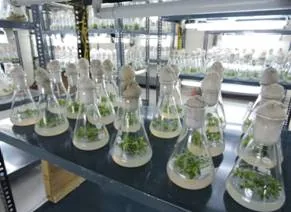
Culture room
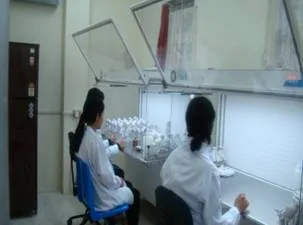
Inoculation chamber
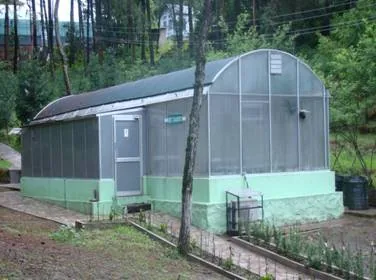
Mist chamber
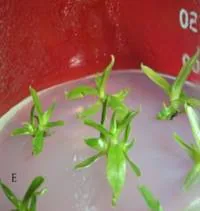
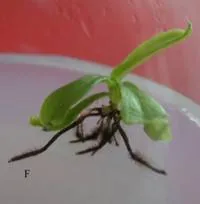
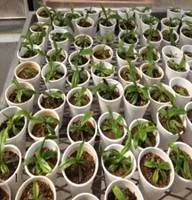
In vitro propogation of Pitcher Plant (Nepenthes khasiana)
_
Hands on training at Tissue Culture lab for Research Associates, Students & Frontline Staff
_

Nurseries at Various Location
_
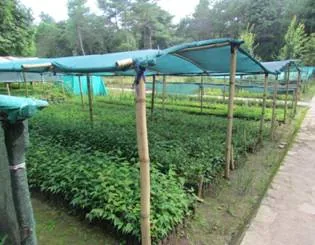
Nursery at Sangmein, Upper Shillong
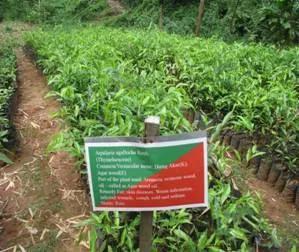
Nursery at Umsaw, Ri-Bhoi
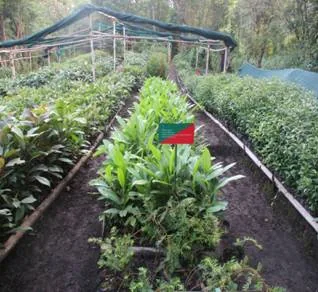
Nursery at Umkhuti, Ri-Bhoi district