
Government of Meghalaya

Forests & Environment Department

Government of Meghalaya
Forests & Environment Department, Government of Meghalaya

Wildlife of Meghalaya

Neofelis nebulosa

Clouded Leopard – The Elusive Jewel of Meghalaya's Forests

The Clouded Leopard is the State Animal of Meghalaya, is a rare and elusive wild cat known for its distinctive cloud-shaped markings and exceptional tree-climbing abilities. Inhabiting the State’s rich forest landscapes, particularly Balpakram, Nokrek and Nongkhyllem, this Vulnerable species plays a vital role in maintaining ecological balance. To strengthen its protection, the Meghalaya Government launched Mission Clouded Leopard in 2026, focusing on habitat conservation, scientific monitoring and community participation. The identification of 21 individual Clouded Leopards in the Balpakram landscape highlights Meghalaya’s rich biodiversity and its commitment to safeguarding this iconic species for future generations.
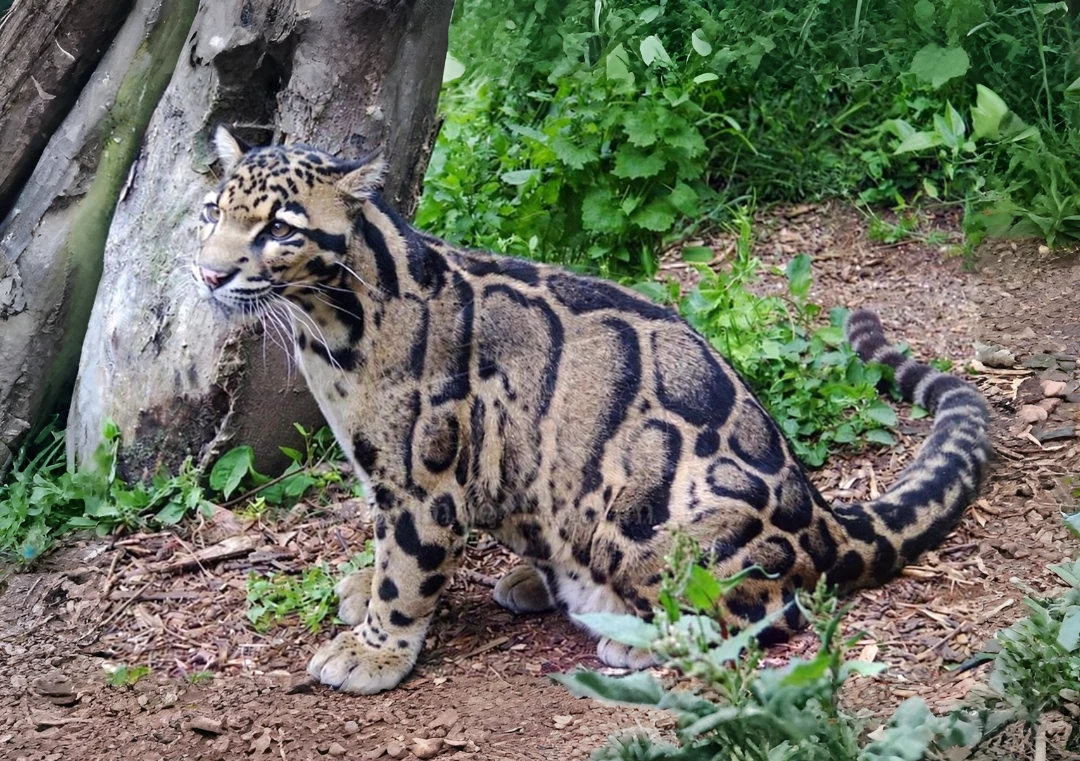
Clouded Leopard – The Elusive Jewel of Meghalaya's Forests
Gracula religiosa

Hill Myna – The Melodious Voice of Meghalaya's Forests

The Hill Myna the State Bird of Meghalaya, is a captivating forest bird celebrated for its glossy black plumage, striking orange-yellow wattles and extraordinary ability to mimic sounds, including human speech. Inhabiting the lush evergreen and subtropical forests of the Khasi, Jaintia and Garo Hills, this remarkable species plays an important ecological role by dispersing seeds and supporting natural forest regeneration. According to the State of India's Birds 2025 assessment, the Hill Myna is a resident species with a recorded distribution range of approximately 23,065 sq. km in Meghalaya, although reliable population trends remain unavailable. Classified as Least Concern by the IUCN and protected under Schedule I of the Wild Life (Protection) Act, 1972, its conservation highlights the importance of safeguarding forest habitats, preventing illegal wildlife trade and preserving Meghalaya's rich avian heritage.
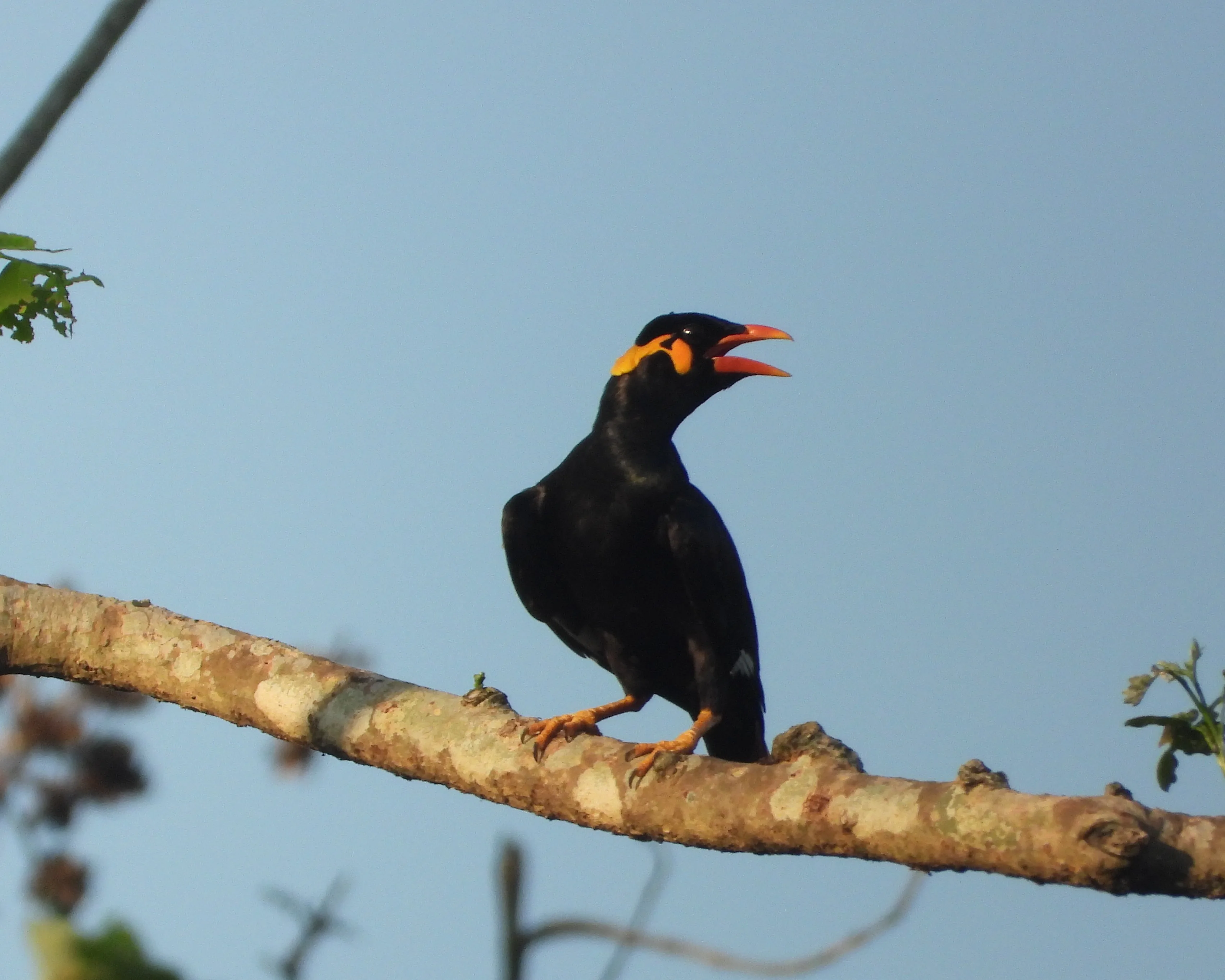
Hill Myna – The Melodious Voice of Meghalaya's Forests
Elephas maximus indicus

Asian Elephant – The Gentle Giant of Meghalaya's Forests

The Asian Elephant is one of Meghalaya’s most magnificent wildlife species, is a symbol of strength, intelligence and ecological harmony. Roaming the dense forests of the Garo, Khasi and Jaintia Hills, these gentle giants play a vital role in maintaining forest ecosystems through seed dispersal and habitat regeneration. According to the 2021–2025 DNA-based All India Elephant Population Estimation, Meghalaya is home to an estimated 677 wild elephants, highlighting the State’s importance in elephant conservation. The Garo Hills Elephant Reserve, spanning approximately 3,500 sq. km, provides a significant landscape for their survival. Through Project Elephant, habitat protection, elephant corridor conservation and human–elephant conflict mitigation initiatives, Meghalaya continues its efforts to safeguard these endangered giants while promoting peaceful coexistence between wildlife and local communities.
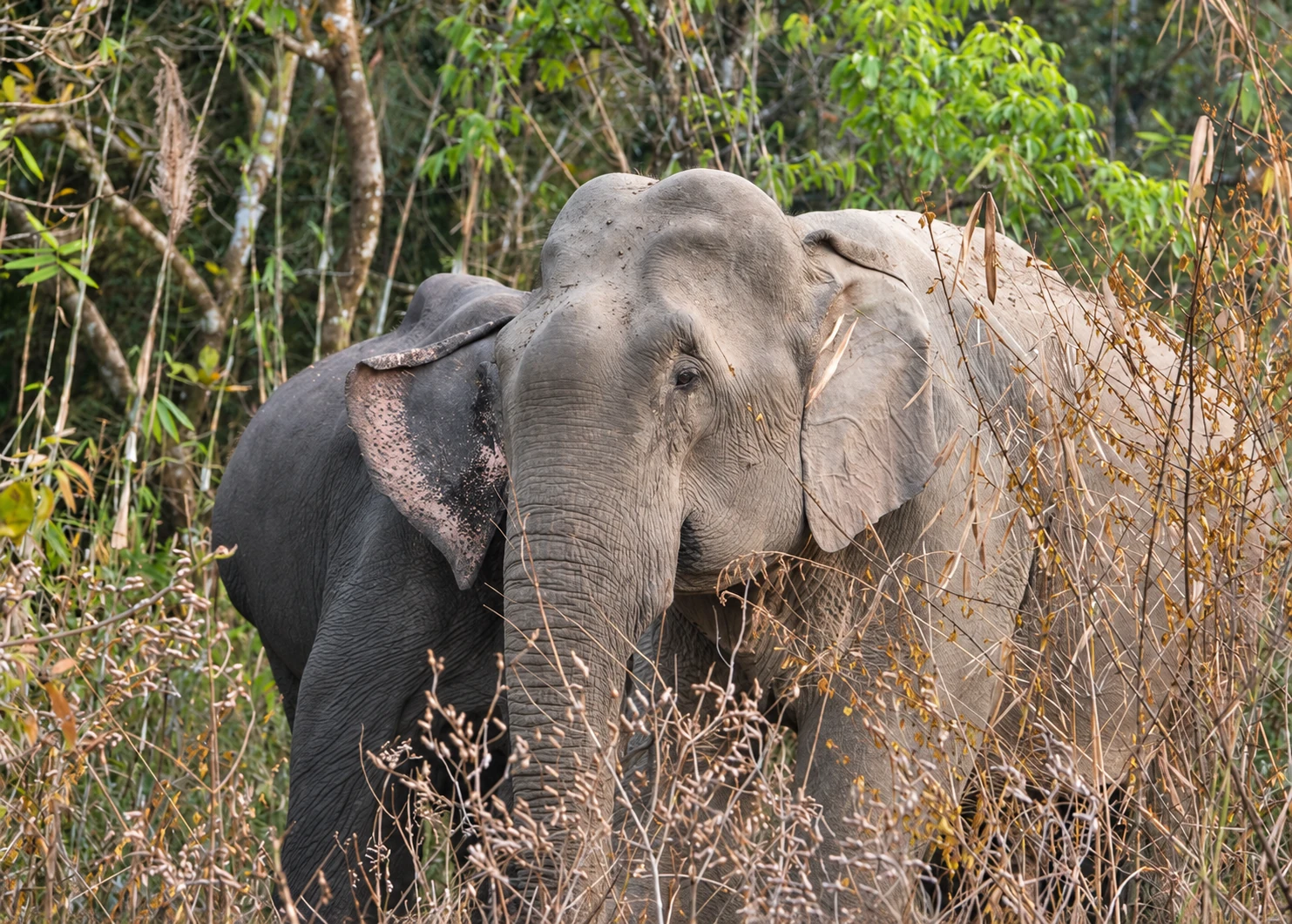
Asian Elephant – The Gentle Giant of Meghalaya's Forests
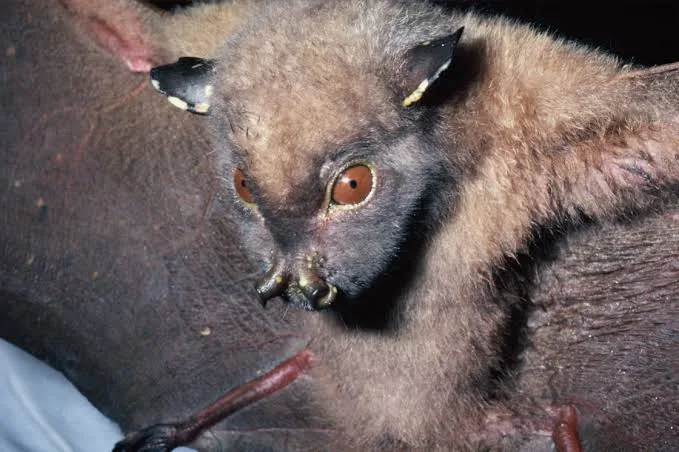
Eudiscopus denticulus

Disk-footed Bat – India's First Bat with Sticky Disks, Discovered in Meghalaya

The Disk-footed Bat a rare bamboo-dwelling species distinguished by its unique adhesive disk-like pads and striking orange-brown coloration, was recorded for the first time in India in 2021 from the Lailad area near Nongkhyllem Wildlife Sanctuary in Meghalaya’s Ri-Bhoi district. Discovered by researchers from the Zoological Survey of India (ZSI) and collaborating scientists, this remarkable finding extended the species’ known geographical range by approximately 1,000 km westward and increased Meghalaya’s recorded bat diversity to 66 species at the time. Equipped with specialised feet and high-frequency echolocation, this extraordinary bat is adapted to life within dense bamboo habitats. The discovery highlights Meghalaya’s exceptional biodiversity and the importance of protecting its unique forest ecosystems through continued scientific research and habitat conservation.
First Recorded in India: 2021
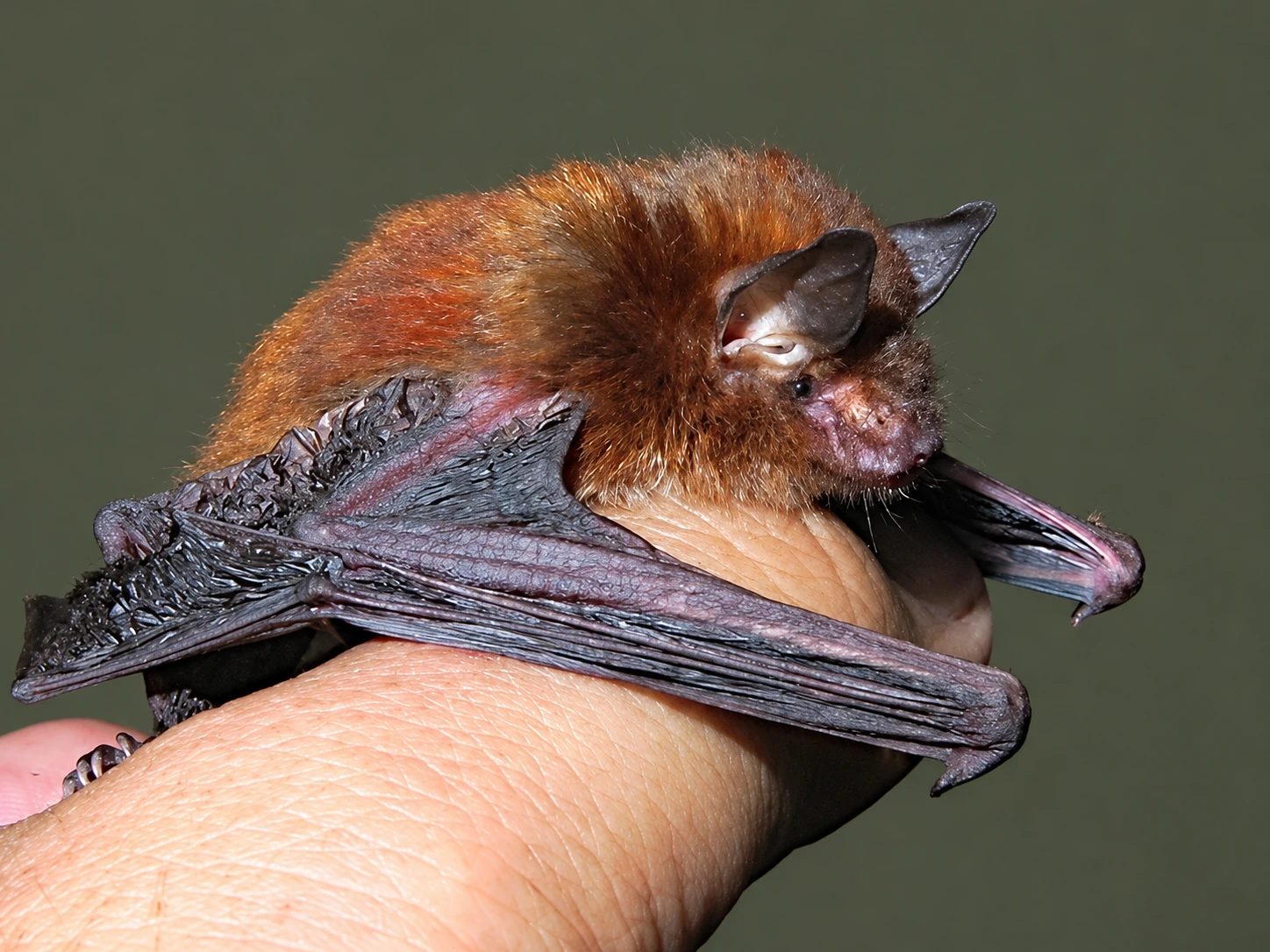
Disk-footed Bat – India's First Bat with Sticky Disks, Discovered in Meghalaya
Chremistica ribhoi

Niangtaser – Meghalaya's Remarkable Four-Year Cicada (World Cup Insect)

The Niangtaser (Chremistica ribhoi), popularly known as the “World Cup Cicada” is one of Meghalaya’s most fascinating insects, renowned for its extraordinary four-year life cycle. Native to the forests of Ri-Bhoi district, this remarkable species spends nearly four years underground before emerging in large numbers, filling the forest with its distinctive buzzing calls. Its emergence coincides with the FIFA World Cup cycle, earning it a unique place in Meghalaya’s natural and cultural heritage. In May 2026, the rare insect reappeared in Ri-Bhoi, celebrated through the Ñiangtaser Festival at Saiden village on 8–9 May, promoting biodiversity awareness, community participation and eco-tourism. Recent scientific research has also documented its occurrence in neighbouring Assam, expanding knowledge of its distribution. The Niangtaser stands as a remarkable example of Meghalaya’s ecological diversity and the importance of conserving its forest habitats and unique natural heritage.
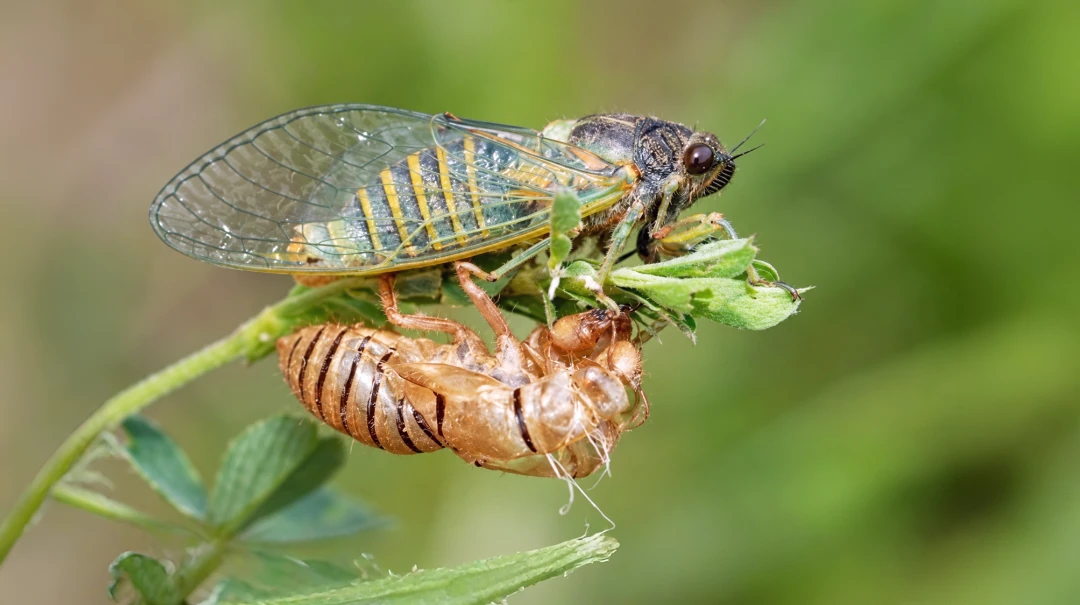
Niangtaser – Meghalaya's Remarkable Four-Year Cicada (World Cup Insect)
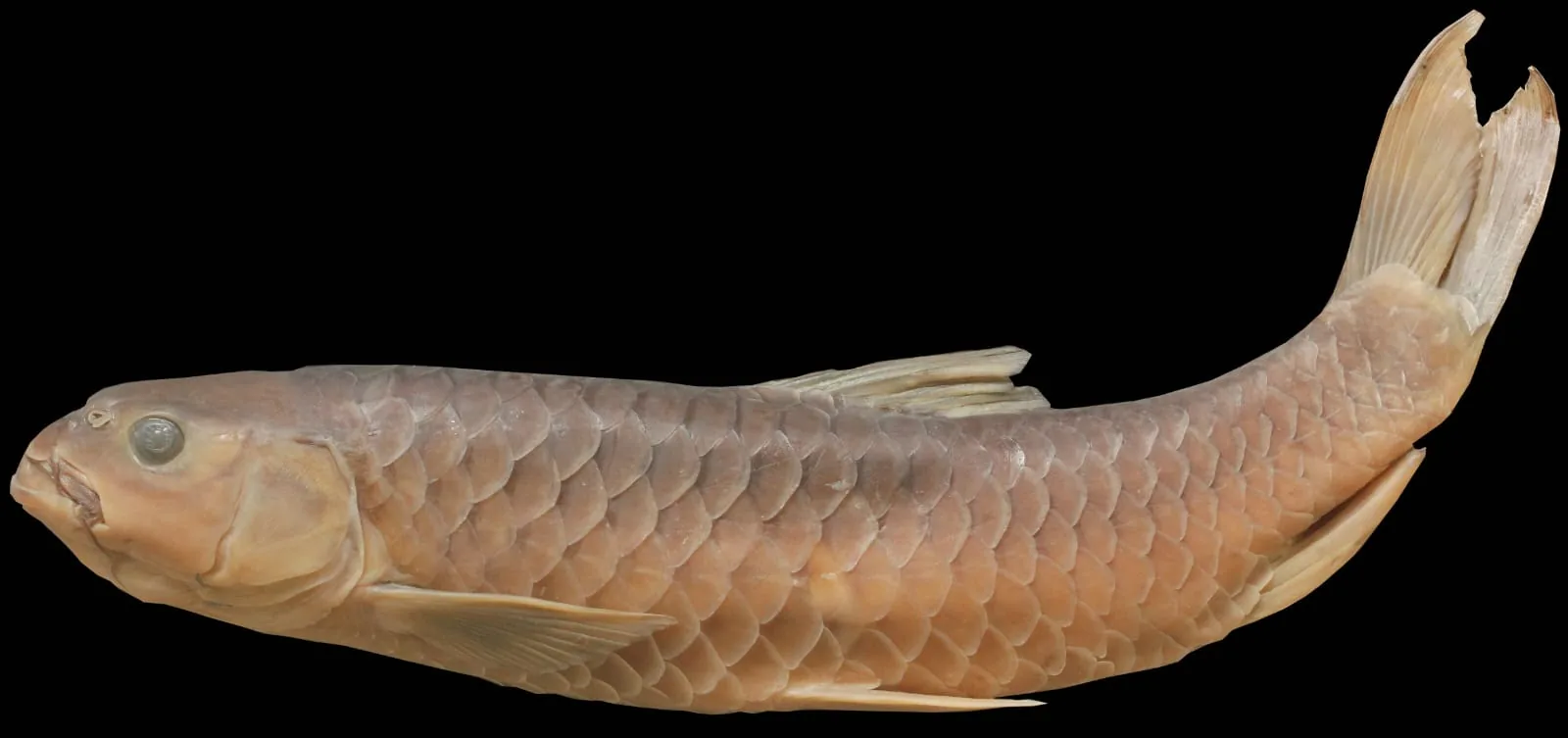
Neolissochilus pnar

Blind Cave Fish – The Hidden Wonder of Meghalaya's Underground World

The Blind Cave Fish, discovered in 2019 in Meghalaya’s Jaintia Hills, is recognised as the world’s largest known cave-dwelling fish, with specimens measuring over 40 cm in length. Found in the dark limestone cave systems of Um Ladaw and Krem Chympe, this extraordinary species has evolved without visible eyes or body pigmentation, demonstrating remarkable adaptation to life in complete darkness. Formally identified as a new species in 2023, it was named pnar in honour of the indigenous Pnar community of Meghalaya. A 2024 scientific study, published in Scientific Reports, further explored its mitochondrial genome, advancing understanding of its evolutionary uniqueness. This exceptional discovery highlights Meghalaya’s globally significant subterranean biodiversity and the importance of conserving its fragile cave ecosystems for future generations.
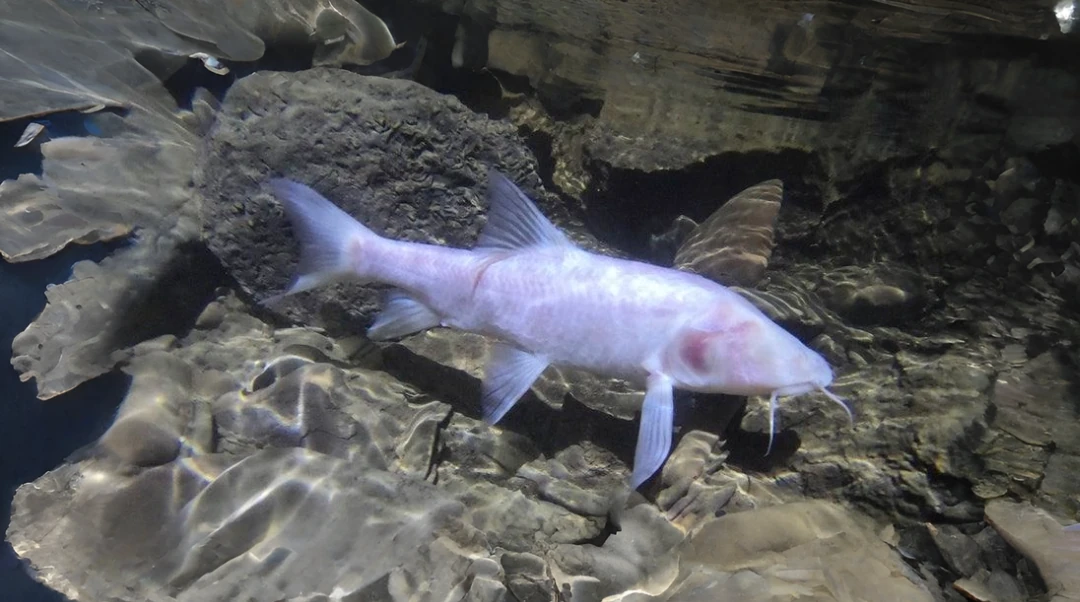
Blind Cave Fish – The Hidden Wonder of Meghalaya's Underground World
Falco amurensis

Amur Falcon – Seasonal Visitors to Tyrso, Meghalaya

Every year during October and November, Tyrso village and nearby Umru in Meghalaya’s Ri-Bhoi district welcome flocks of Amur Falcons (Falco amurensis). These remarkable migratory raptors use the area as a seasonal stopover during their long journey from breeding grounds in eastern Asia towards southern Africa. Their arrival offers a spectacular sight as large flocks gather above the landscape and settle into roosts.

Local communities, supported by the Tyrso Valley Wildlife Protection Society, play an important role in protecting these seasonal visitors. The Amur Falcon Festival, first held in 2015, celebrates their arrival and raises awareness about preventing hunting and conserving wildlife. Tyrso’s connection with these birds highlights Meghalaya’s importance along their migration route and the value of community participation in safeguarding migratory habitats. Visitors are encouraged to observe the falcons responsibly without disturbing their roosting sites.
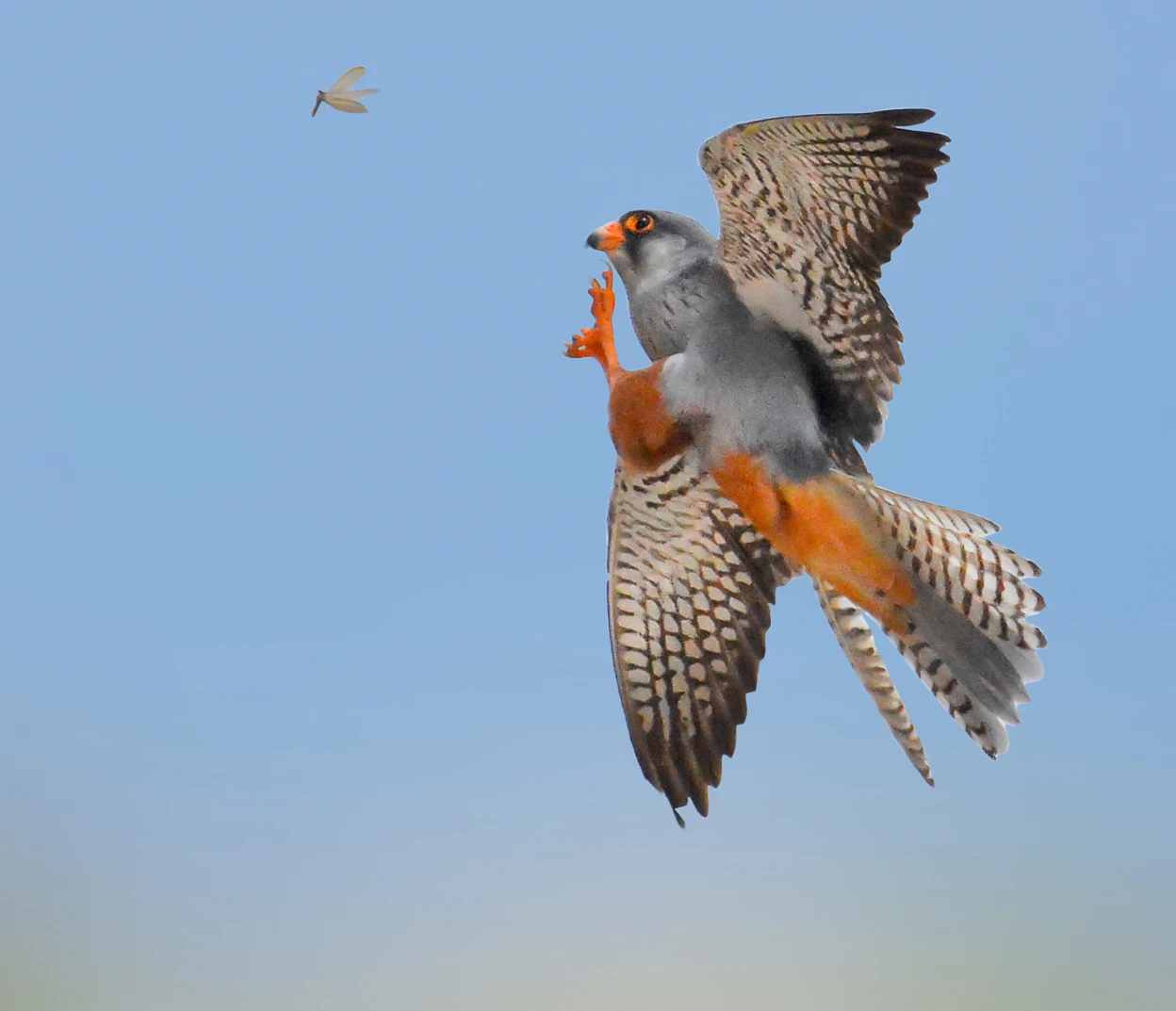
Amur Falcon – Seasonal Visitors to Tyrso, Meghalaya
    IUCN Red List

    Established by the International Union for Conservation of Nature, the Red List is the world's leading authority for evaluating global species extinction risks. Explore comprehensive global statuses, scientific criteria, and conservation databases directly through the official IUCN Red List.

    1. LCLeast Concern
    2. NTNear Threatened
    3. VUVulnerable
    4. ENEndangered
    5. CRCritically Endangered
    6. EWExtinct in the Wild
    7. EXExtinct
    IUCN Red List of Threatened Species

    Carnivores

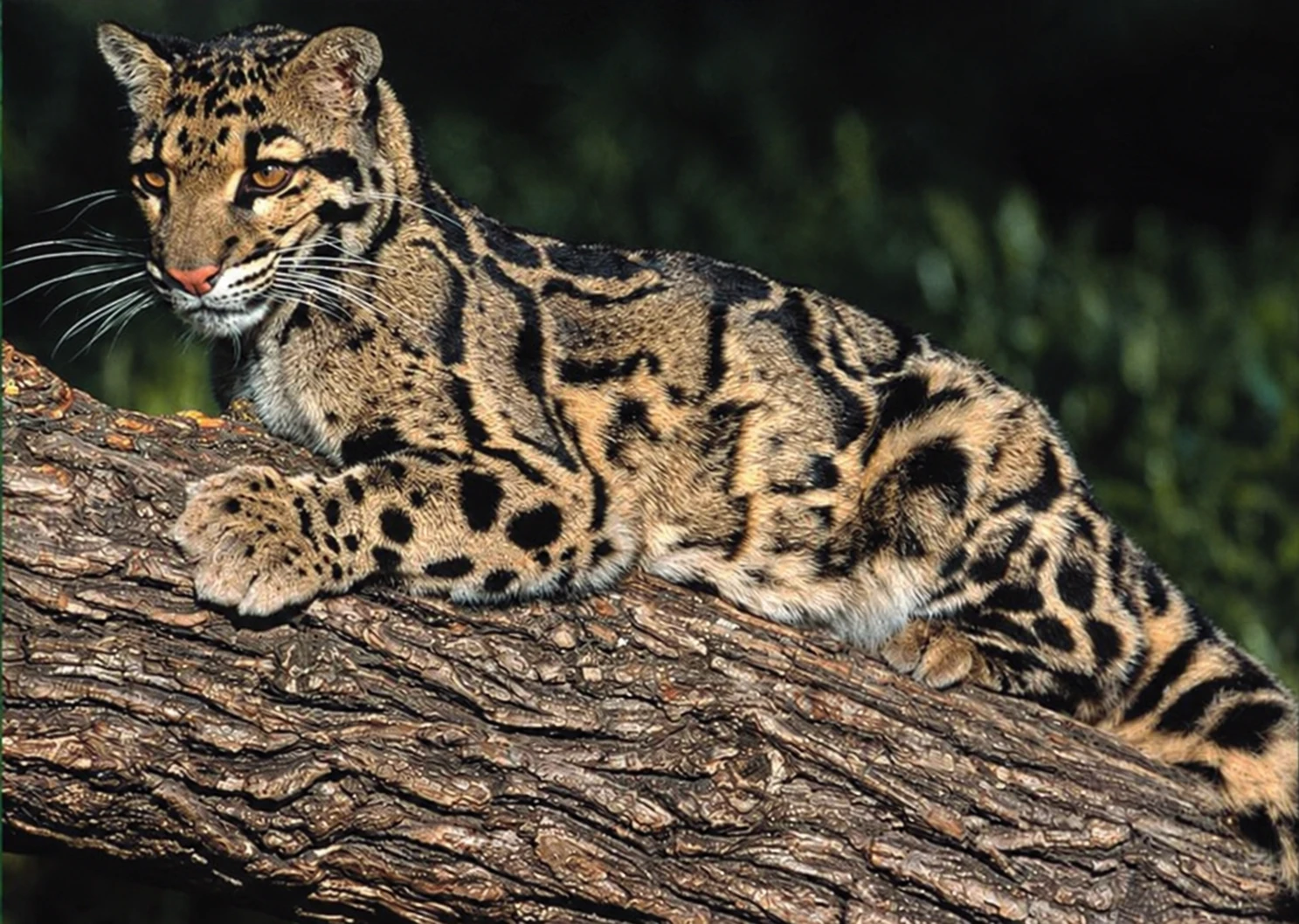
    Clouded Leopard
    Vulnerable

    Clouded Leopard

    Neofelis nebulosa
    Meghalaya’s state animal, this reclusive arboreal wild cat features a striking cloud-like patterned coat and exceptionally large canine teeth relative to its skull size. It inhabits dense, contiguous canopy forests across major sanctuaries.
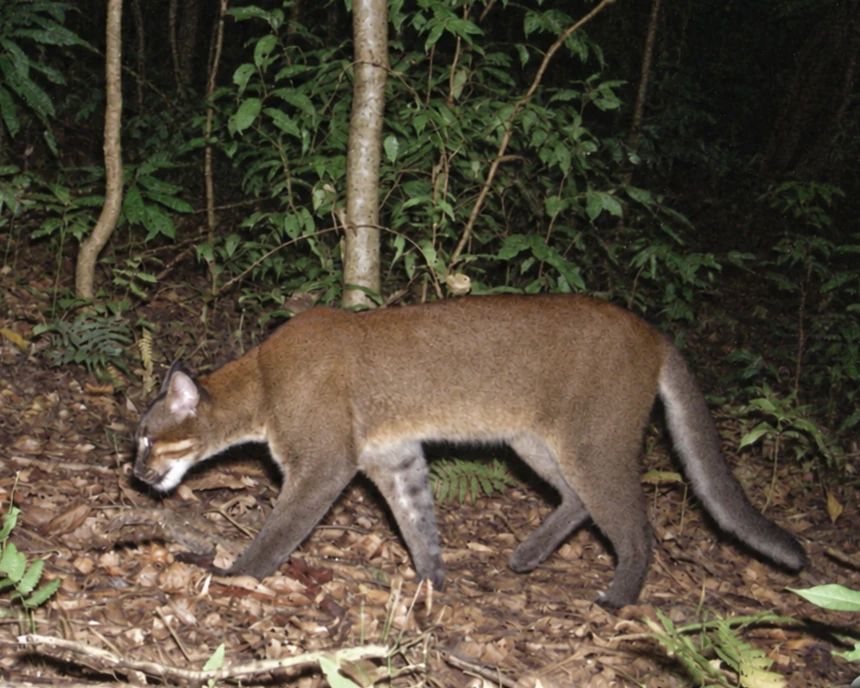
    Asiatic Golden Cat
    Near Threatened

    Asiatic Golden Cat

    Catopuma temminckii
    A medium-sized wild cat characterized by its rich golden-brown coat. It is an elusive nocturnal hunter thriving in the dense tropical and sub-tropical moist forests of the state.
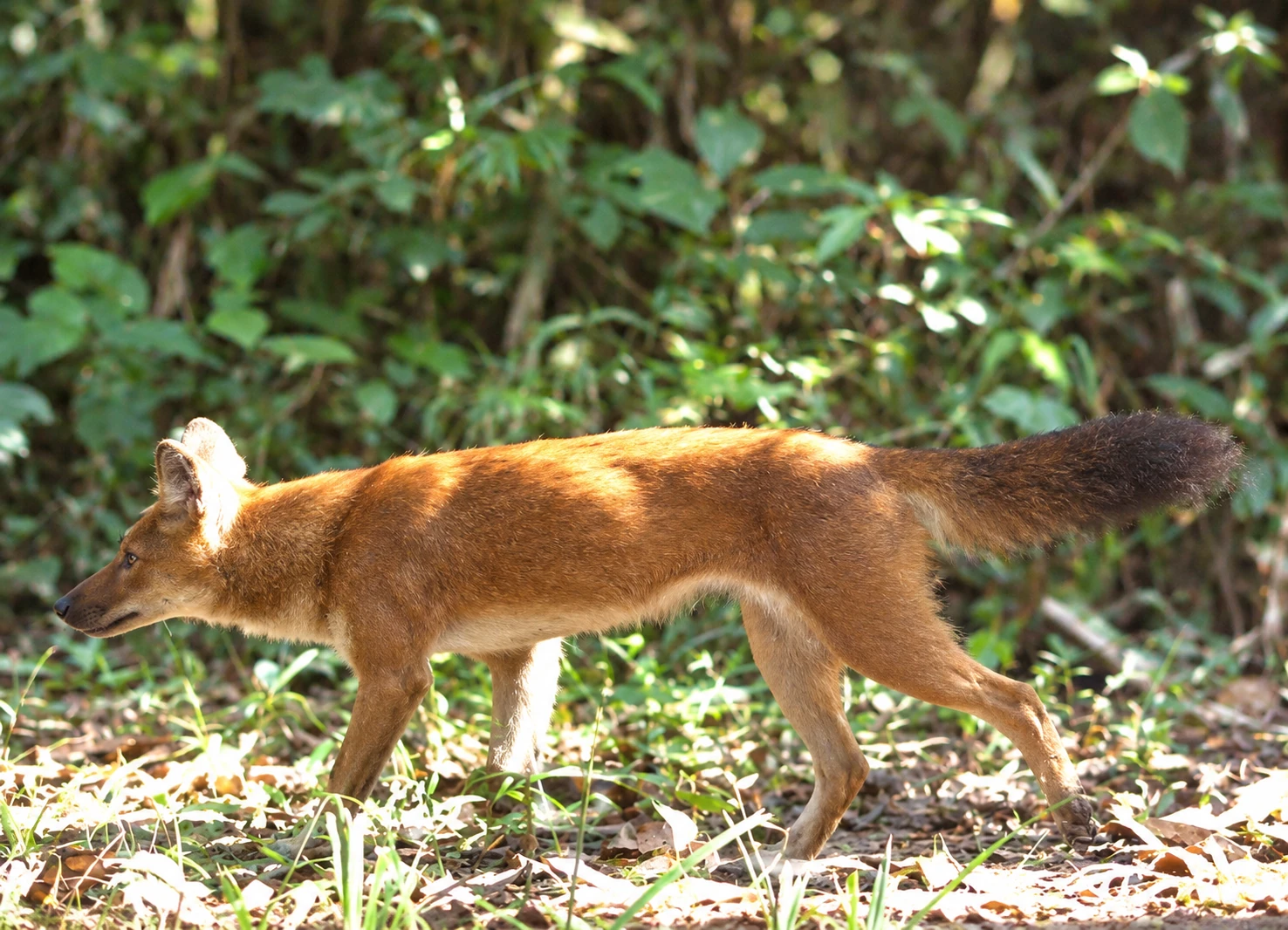
    Indian Wild Dog
    Endangered

    Indian Wild Dog

    Buceros bicornis
    A highly social and cooperative wild canine species recognized by its reddish coat and distinct social pack-hunting behavior across hilly forested terrains.
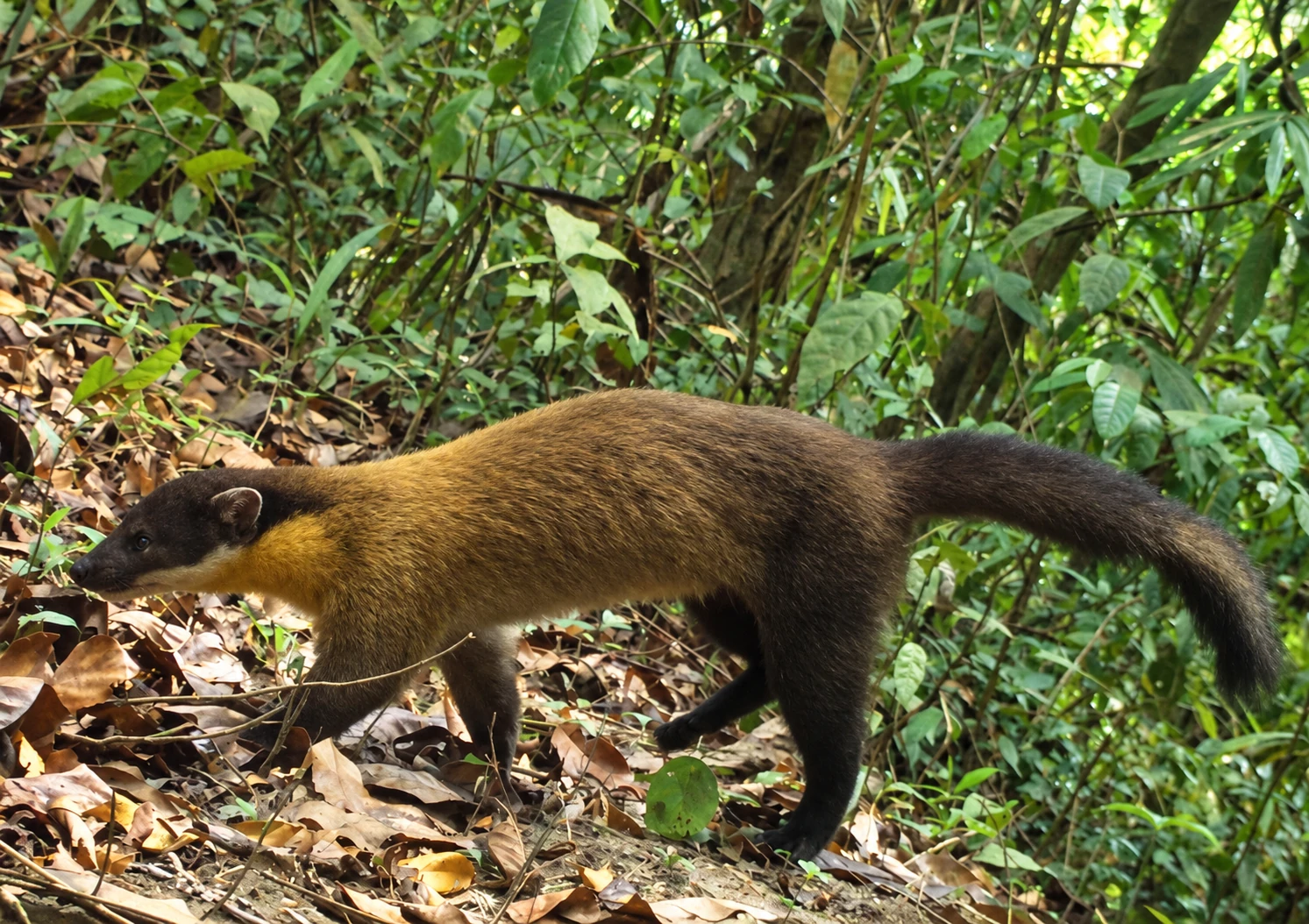
    Yellow-Throated Marten
    Least Concern

    Yellow-Throated Marten

    Martes flavigula
    An agile, slender-bodied mustelid featuring a bright yellow throat and chest patch. It is an active diurnal predator hunting through upper forest canopies.
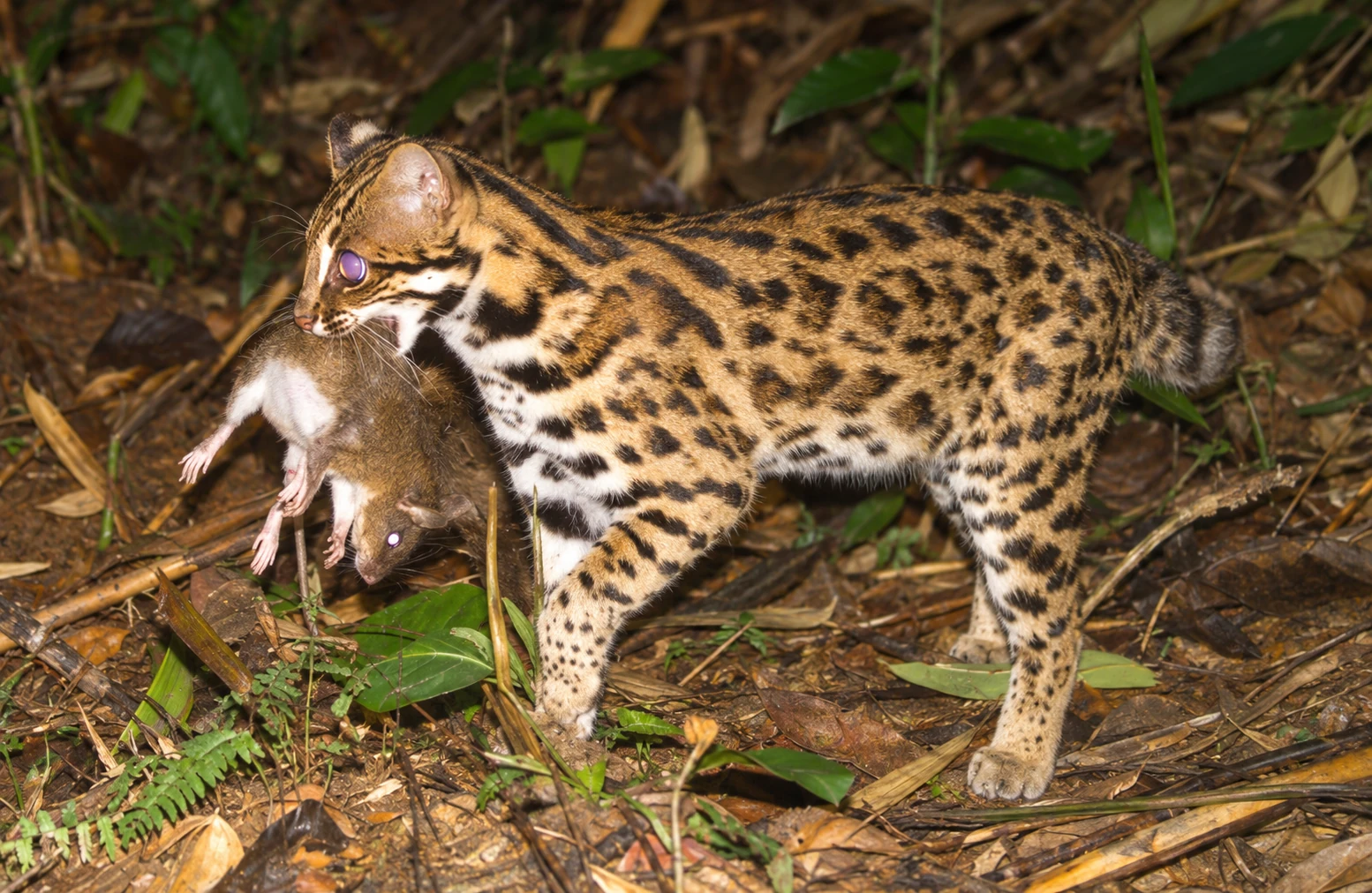
    Leopard Cat
    Least Concern

    Leopard Cat

    Prionailurus bengalensis
    A small nocturnal wild cat featuring striking dark spots and rosette markings across its tawny coat. It actively hunts rodents, birds, and small reptiles across the dense secondary forests and scrub borders of the state.
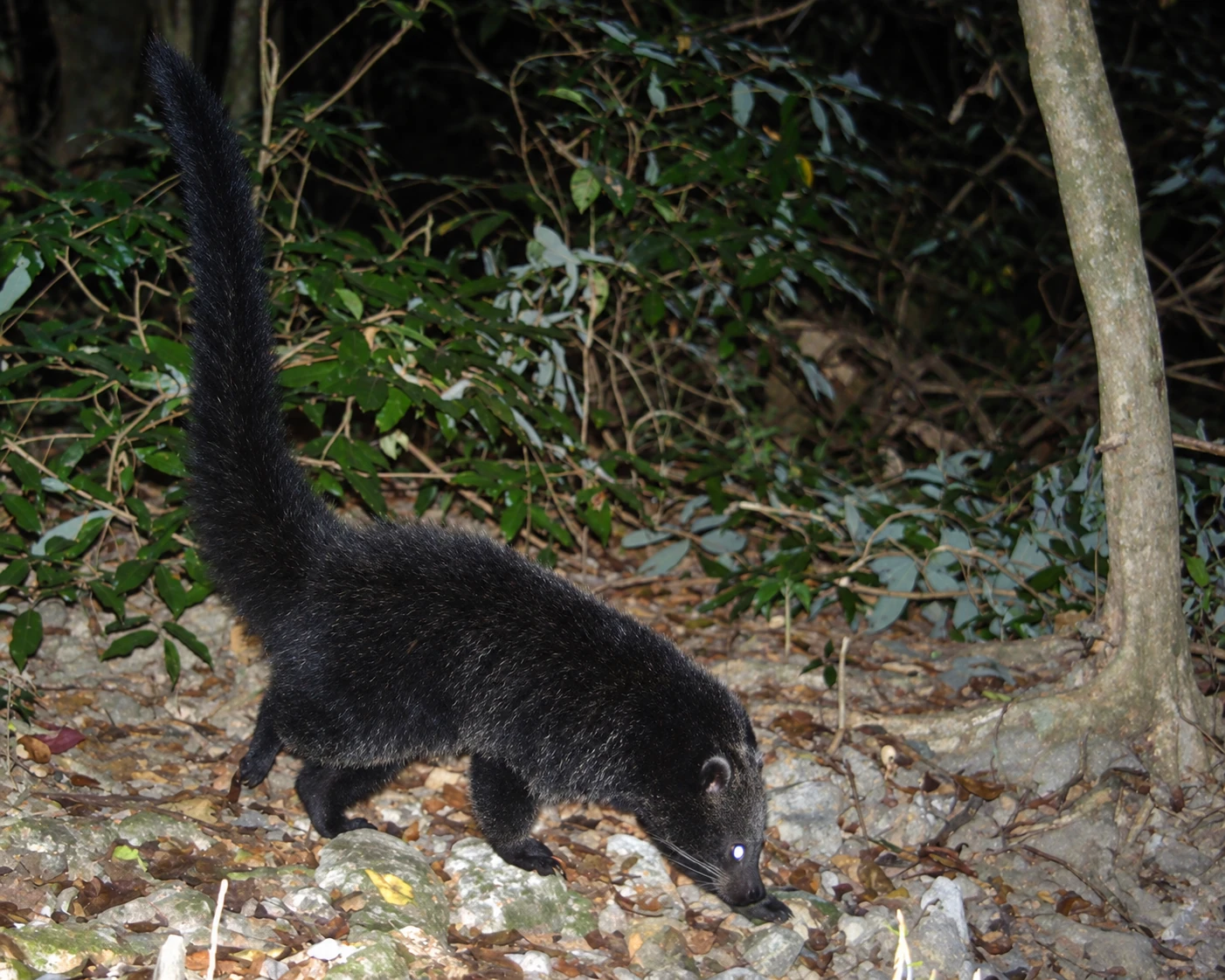
    Binturong
    Vulnerable

    Binturong

    Arctictis binturong
    Also known as the bearcat, this unique arboreal viverrid possesses a prehensile tail and emits a distinct musk reminiscent of hot buttered popcorn. It plays a critical seed-dispersal role in mature forest canopies.

    Herbivores

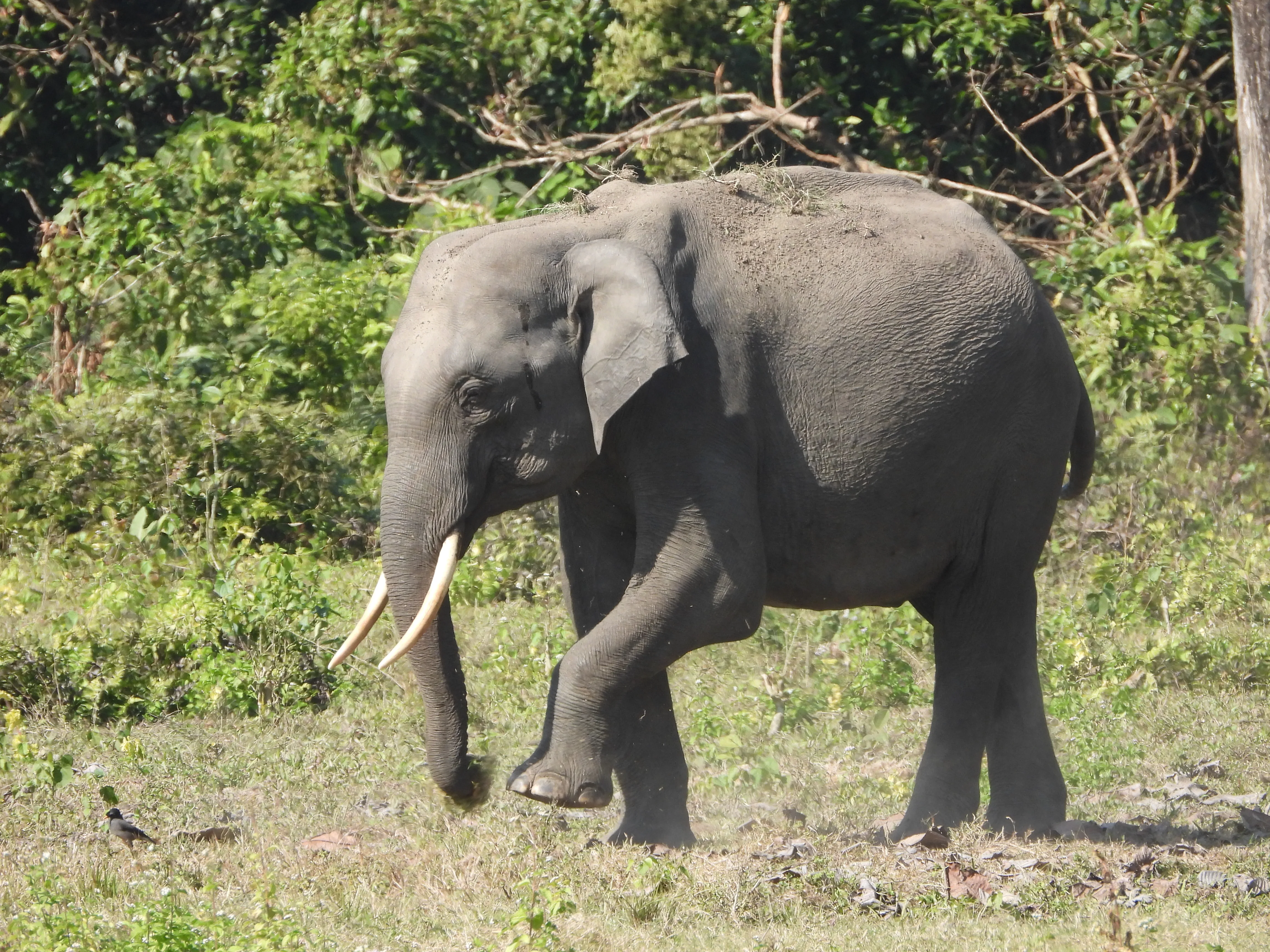
    Asian Elephant
    Endangered

    Asian Elephant

    Elephas maximus
    The largest land mammal in Asia, playing a vital keystone role in maintaining forest structures and seed dispersal across the Garo and Khasi hill landscapes.
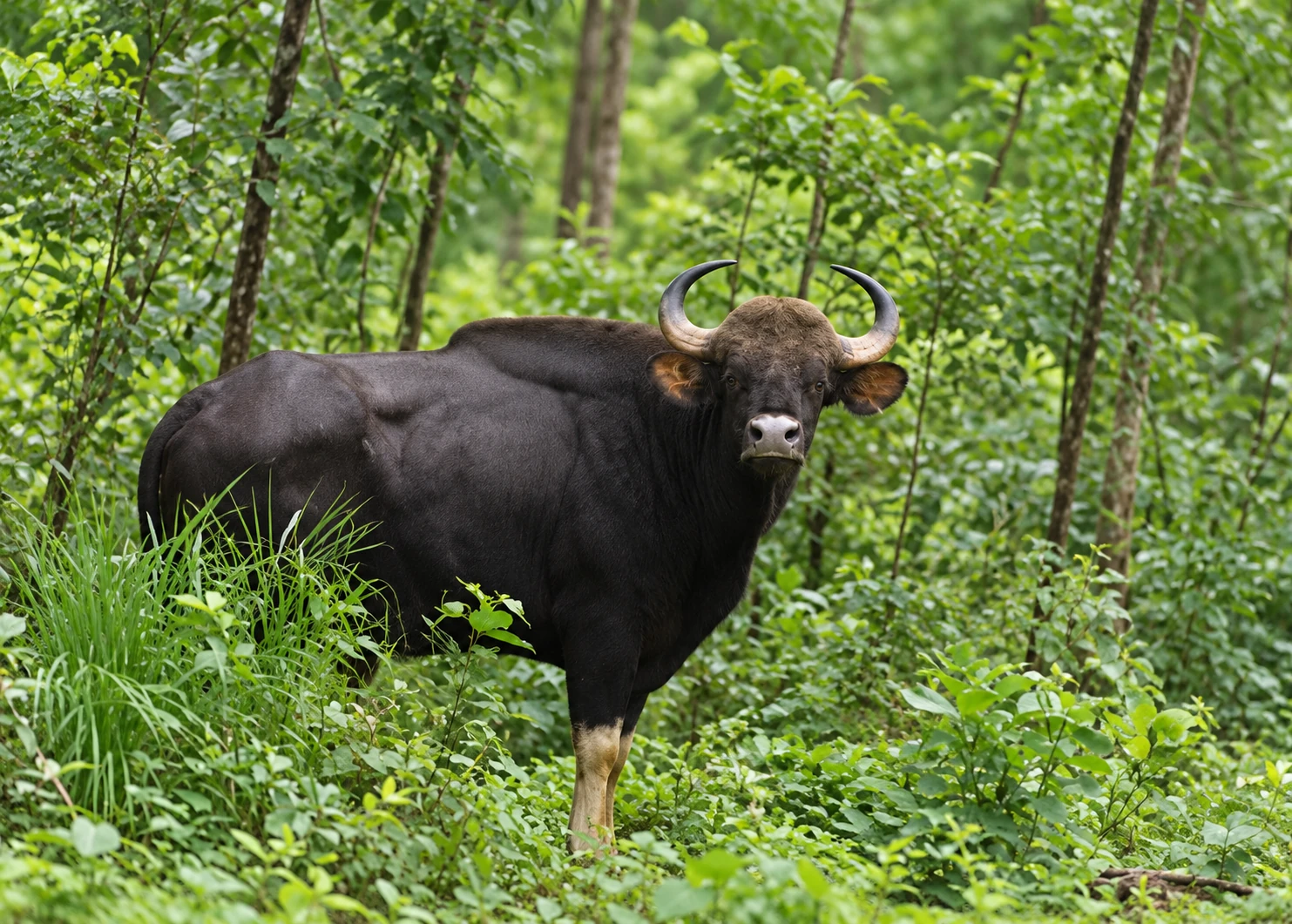
    Gaur
    Vulnerable

    Gaur

    Bos gaurus
    The world's largest extant bovine, characterized by its massive muscular build, prominent dorsal ridge, and whitish stockings, inhabiting dense hilly forest tracts.
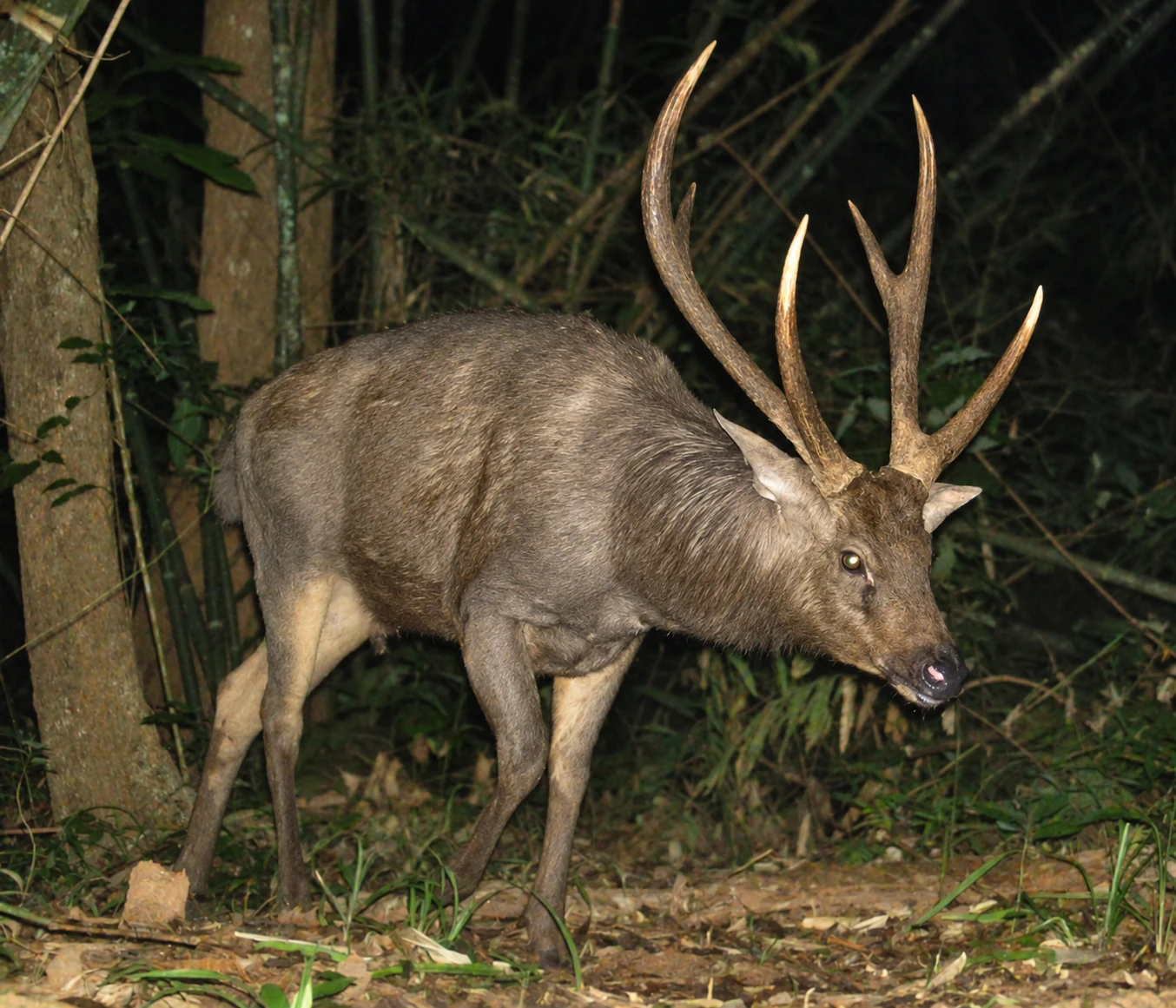
    Sambar Deer
    Vulnerable

    Sambar Deer

    Rusa unicolor
    A large, robust deer species equipped with rugged, branching antlers. It prefers dense forest cover near water sources and hill slopes.
    Red Serow
    Vulnerable

    Red Serow

    Capricornis sumatraensis
    A unique, goat-like mammal with coarse blackish fur and short, curved horns, perfectly adapted to steep rocky cliffs, limestone karst zones, and rugged gorges.
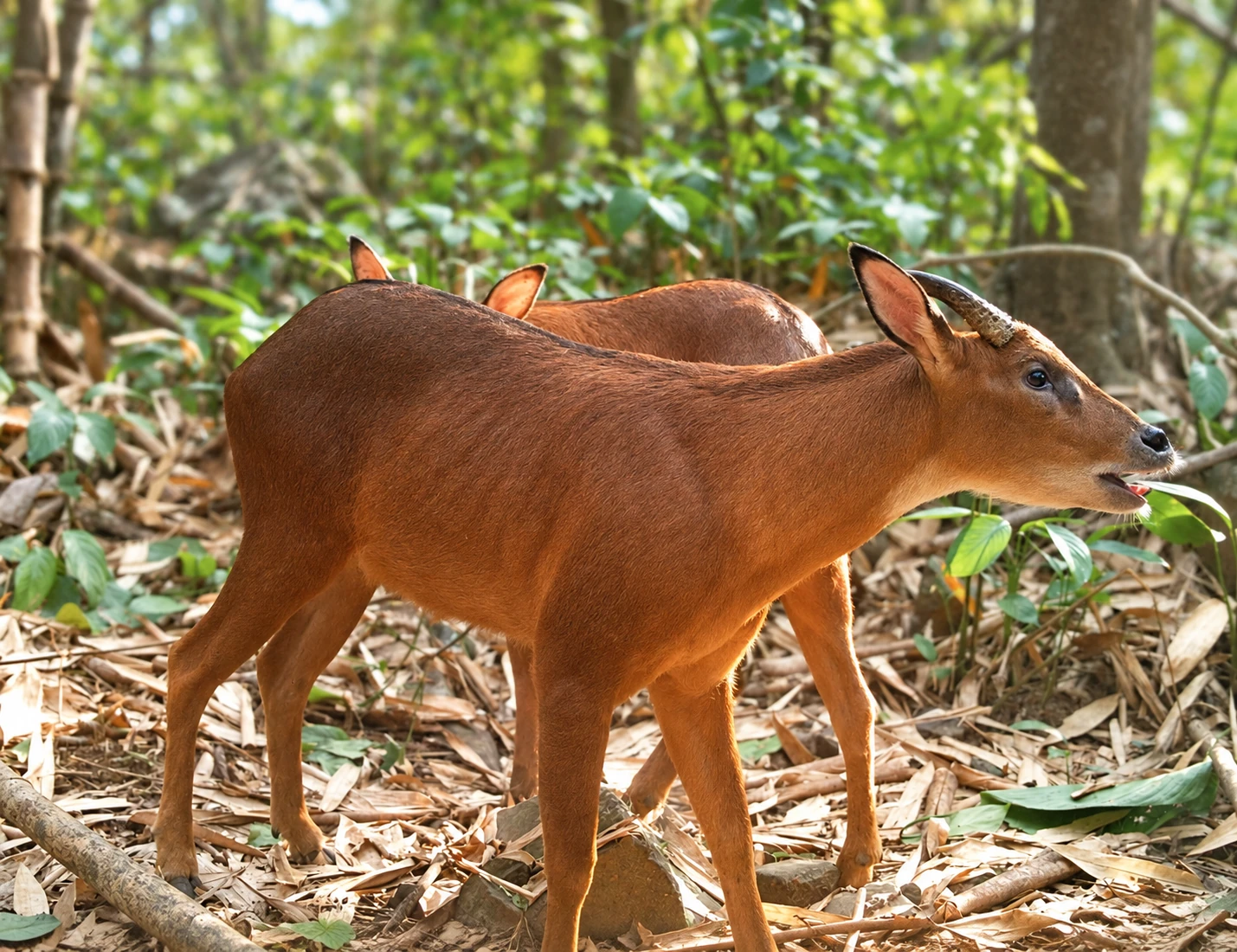
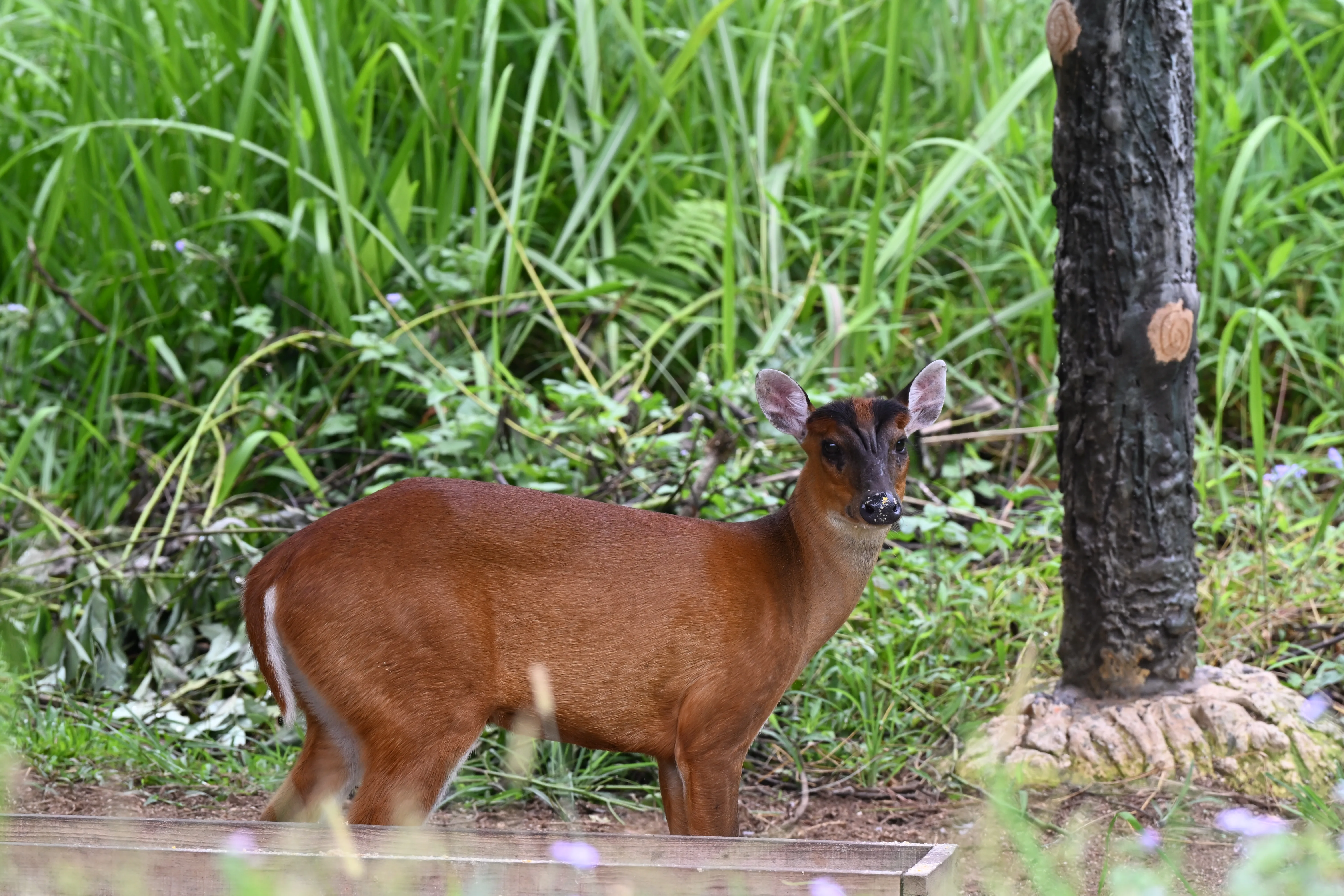
    Indian Muntjac / Barking Deer
    Least Concern

    Indian Muntjac / Barking Deer

    Muntiacus muntjak
    A small, solitary forest deer renowned for its distinct, dog-like alarm bark when startled by predators within the forest understory.
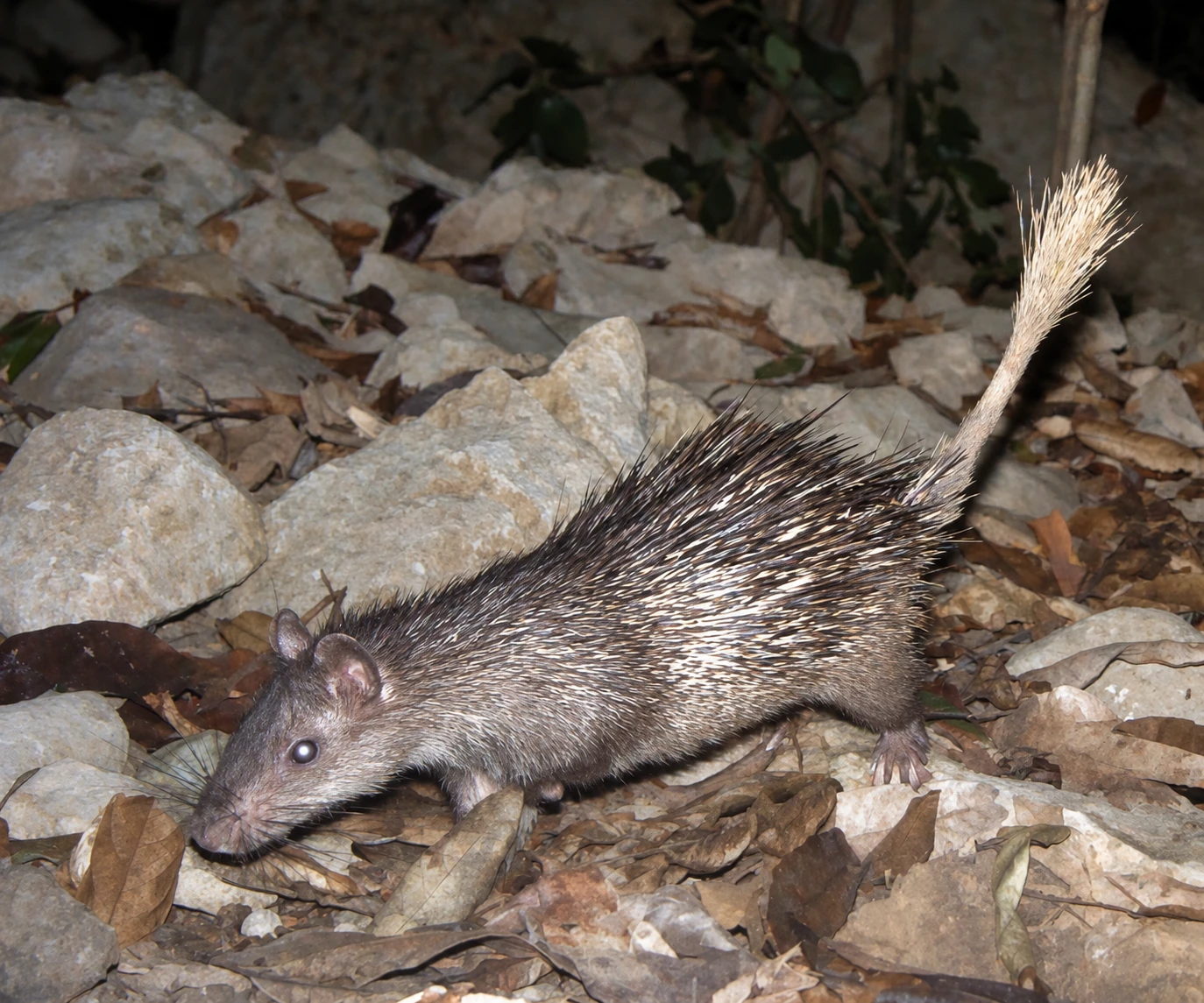
    Asiatic Brush-tailed Porcupine
    Least Concern

    Asiatic Brush-tailed Porcupine

    Atherurus macrourus
    A nocturnal rodent native to dense forests, easily recognized by its specialized quills and brush-like tail tuft. It lives in underground burrows and feeds primarily on fruits, roots, and vegetation on the forest floor.
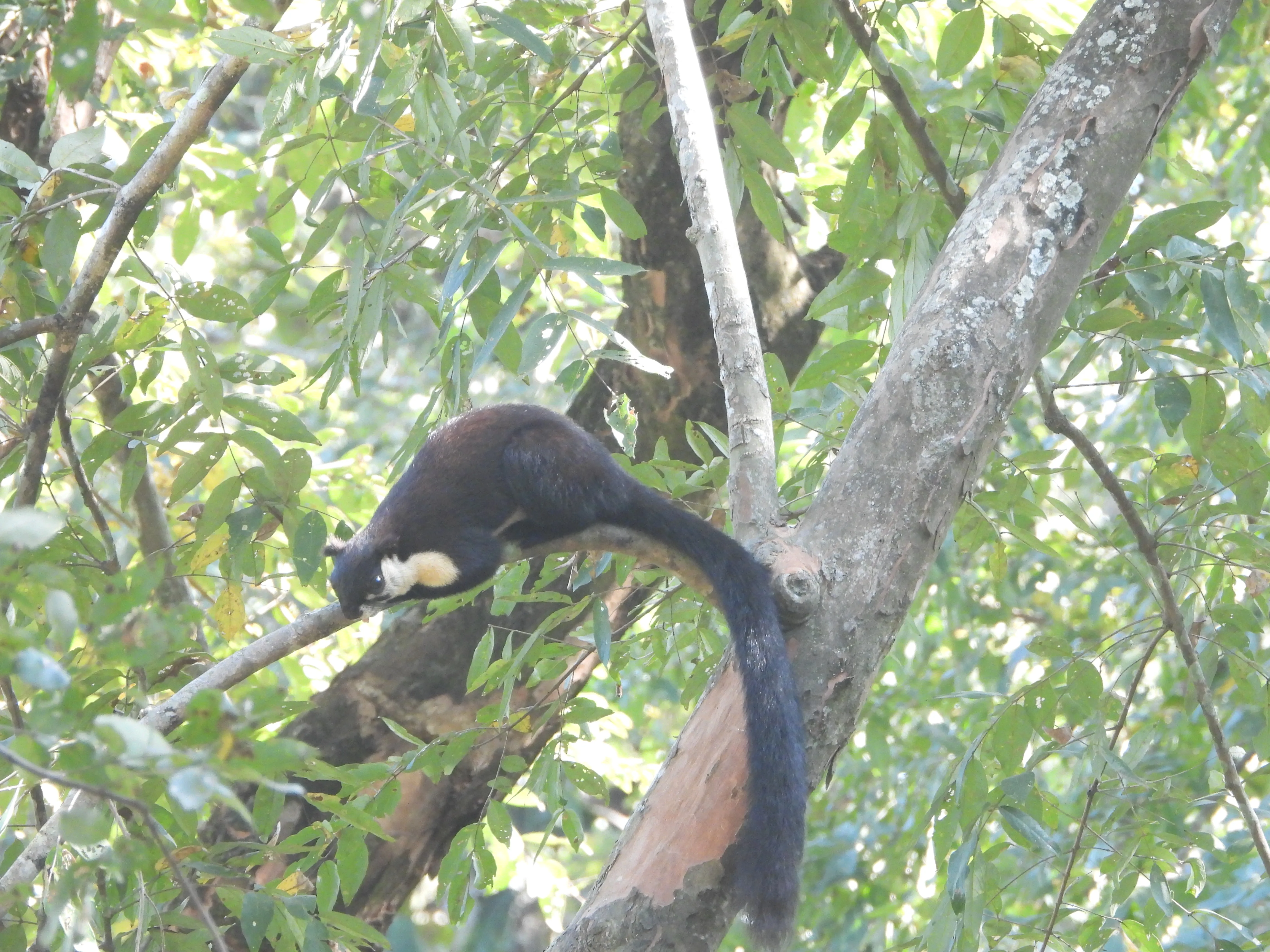
    Giant Squirrel
    Near Threatened

    Giant Squirrel

    Ratufa bicolor
    One of the world's largest tree squirrels, characterized by deep dark-brown upper parts, pale underparts, and long bushy tails. It leaps across high forest tiers in evergreen and semi-evergreen zones.

    Omnivores

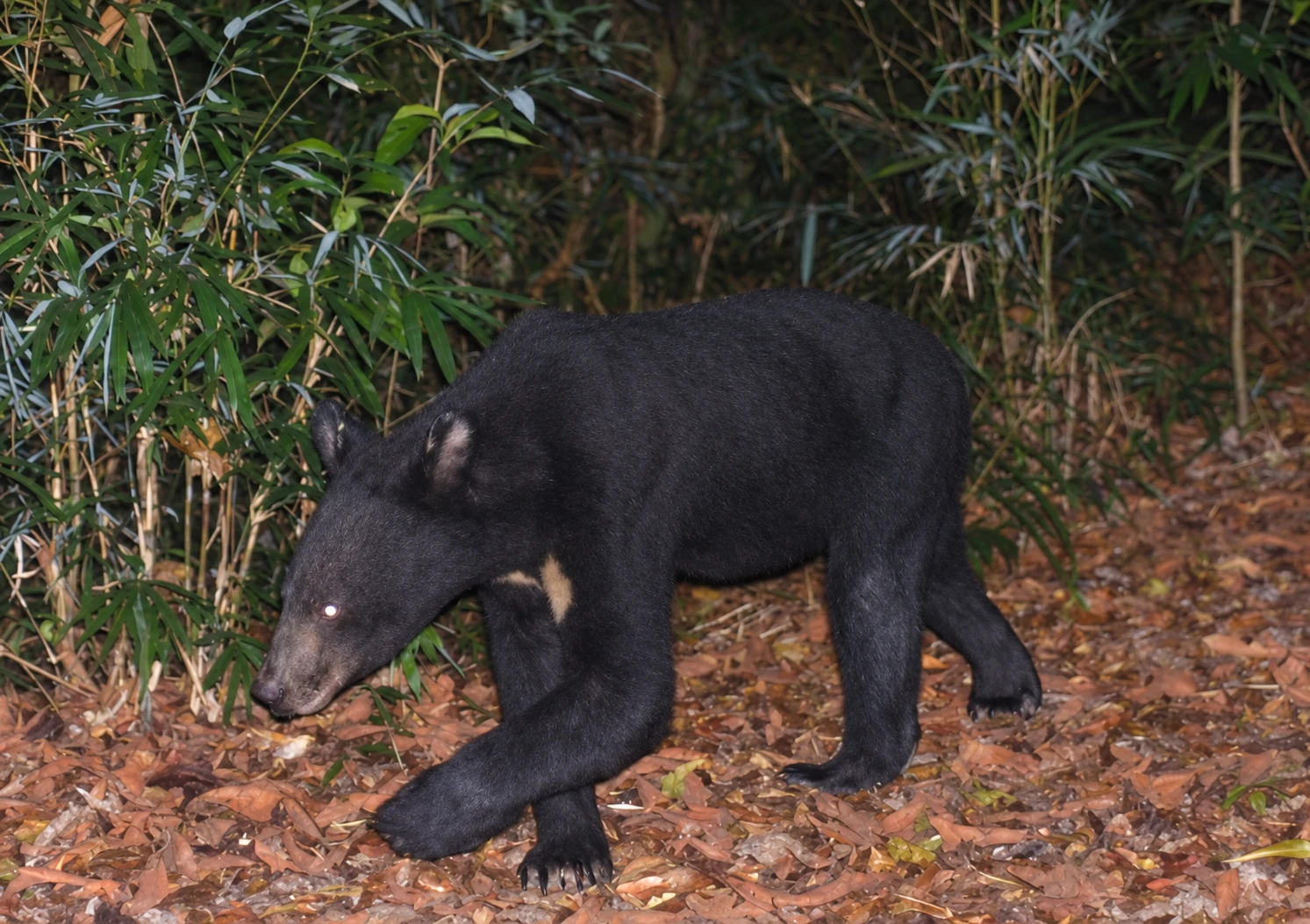
    Asiatic Black Bear
    Vulnerable

    Asiatic Black Bear

    Ursus thibetanus
    A medium-sized stocky bear distinguished by a prominent V-shaped white chest mark. It is an opportunistic feeder consuming fruits, nuts, insects, and small vertebrates.
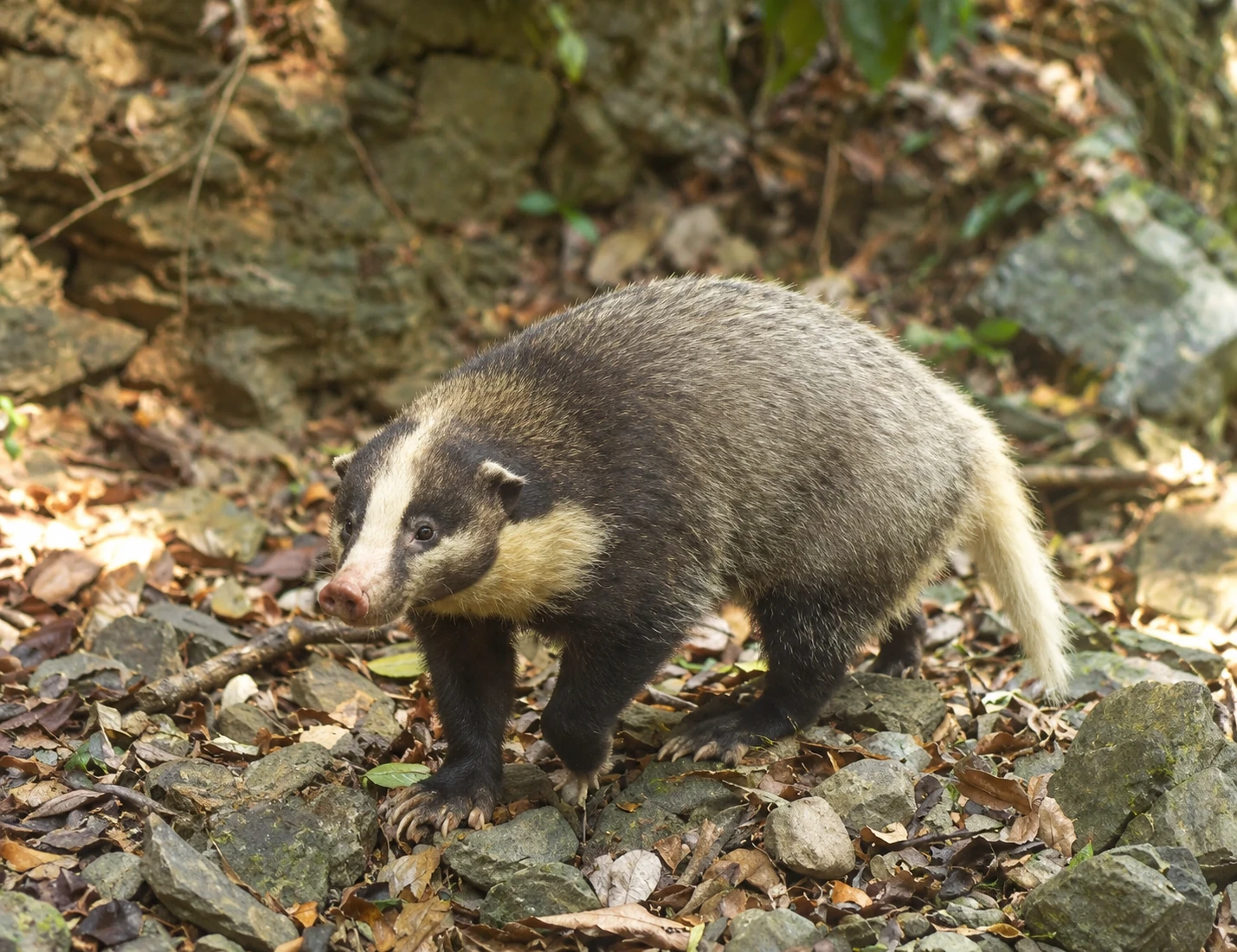
    Hog Badger
    Vulnerable

    Hog Badger

    Arctonyx collaris
    A stout, burrowing mammal featuring distinct facial black-and-white stripes. It uses its powerful snouts to forage for roots, tubers, and ground-dwelling invertebrates.
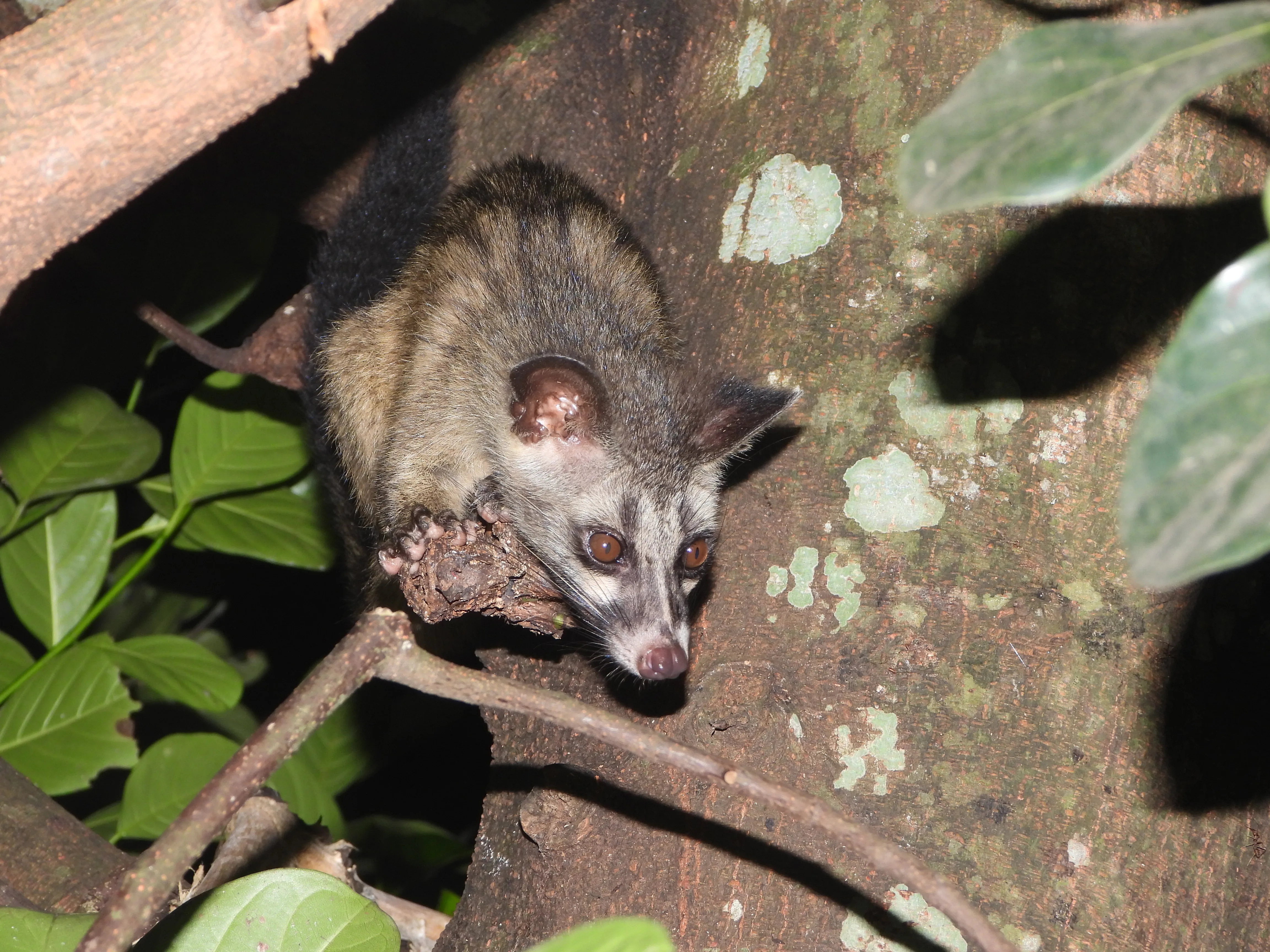
    Masked Palm Civet
    Least Concern

    Masked Palm Civet

    Paguma larvata
    A nocturnal, arboreal viverrid with a distinct facial mask pattern that plays an essential role as a midnight fruit forager and seed disperser.
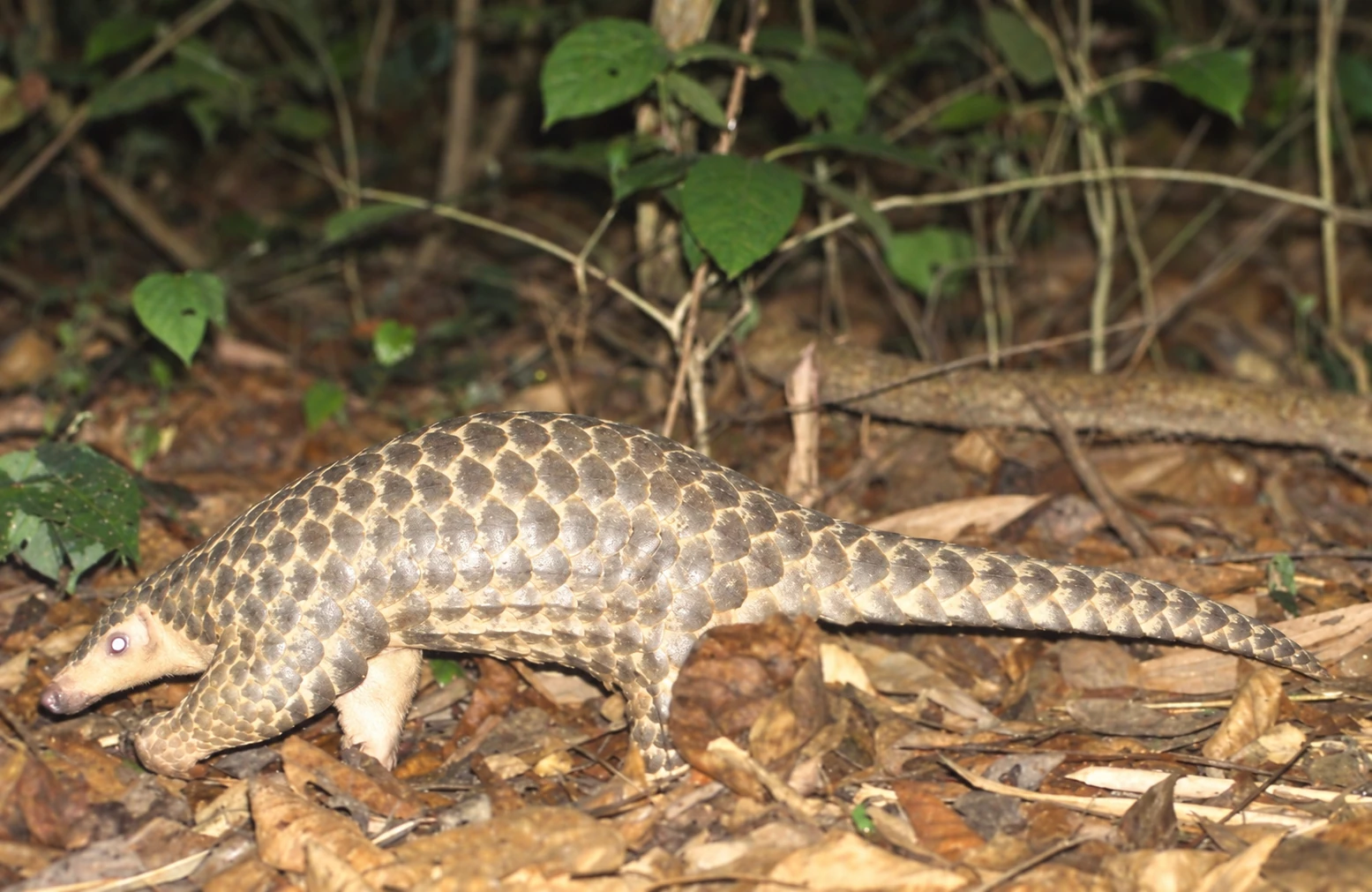
    Chinese Pangolin
    Critically Endangered

    Chinese Pangolin

    Manis pentadactyla
    A nocturnal mammal covered in protective keratin scales and known for rolling into a tight ball when threatened. Native to evergreen and bamboo forests, it uses a specialized long tongue to feed primarily on ants and termites.
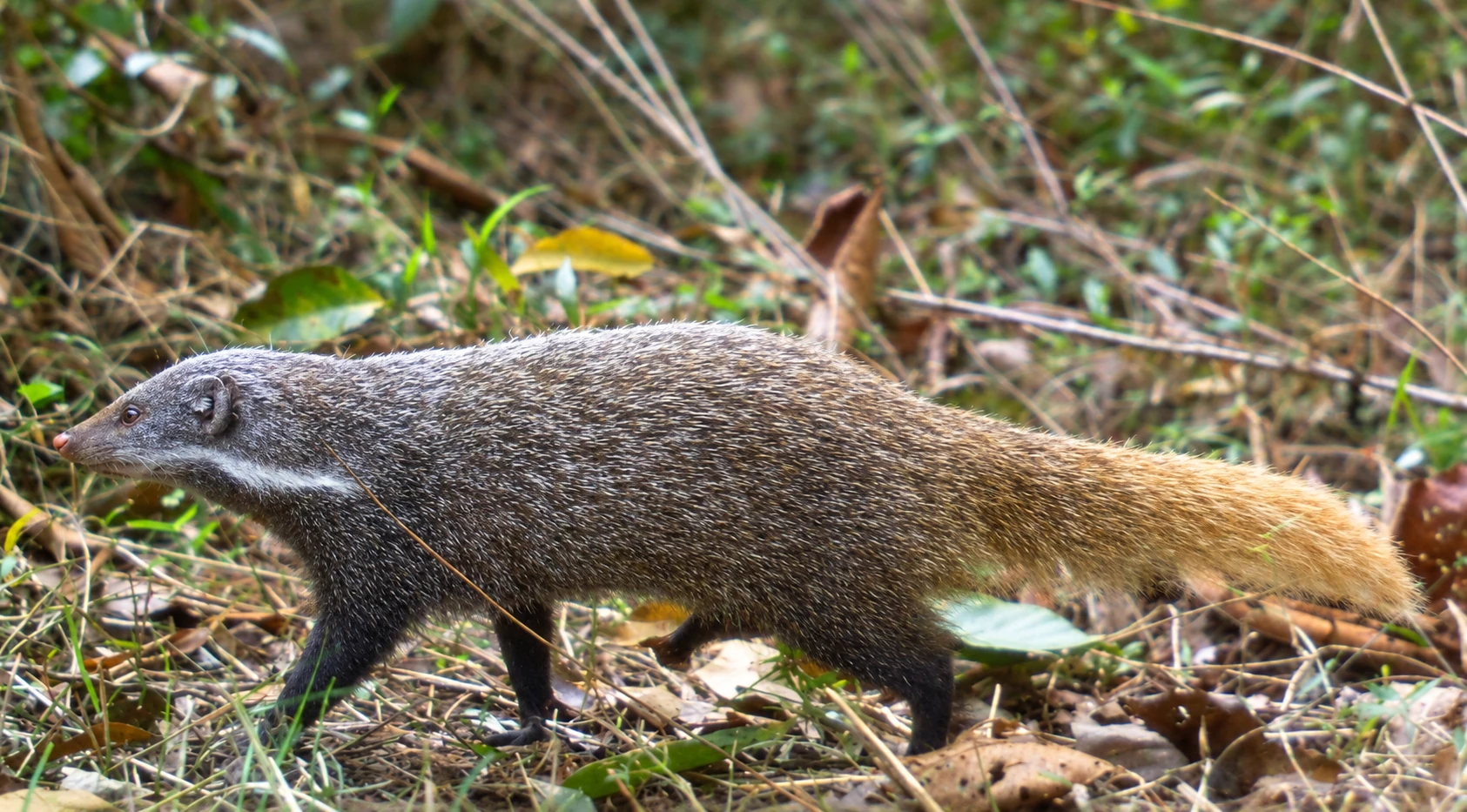
    Crab-eating Mongoose
    Least Concern

    Crab-eating Mongoose

    Herpestes urva
    An amphibious predator known for its distinct white neck stripe and gray-grizzled coat. Commonly found near water sources in tropical forests, it actively hunts crabs, fish, frogs, and small terrestrial prey.

    Primates

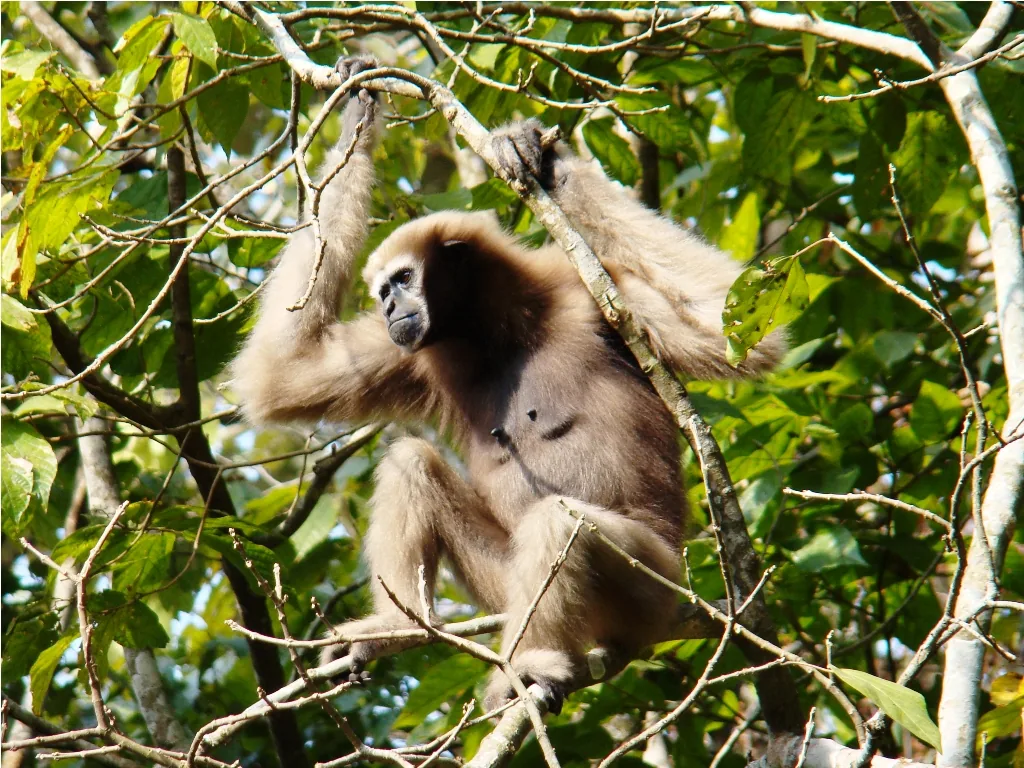
    Western Hoolock Gibbon
    Endangered

    Western Hoolock Gibbon

    Hoolock hoolock
    India’s only true ape species. Highly acrobatic and vocal, these tailless primates live in high evergreen canopies, communicating via echoing duet calls.
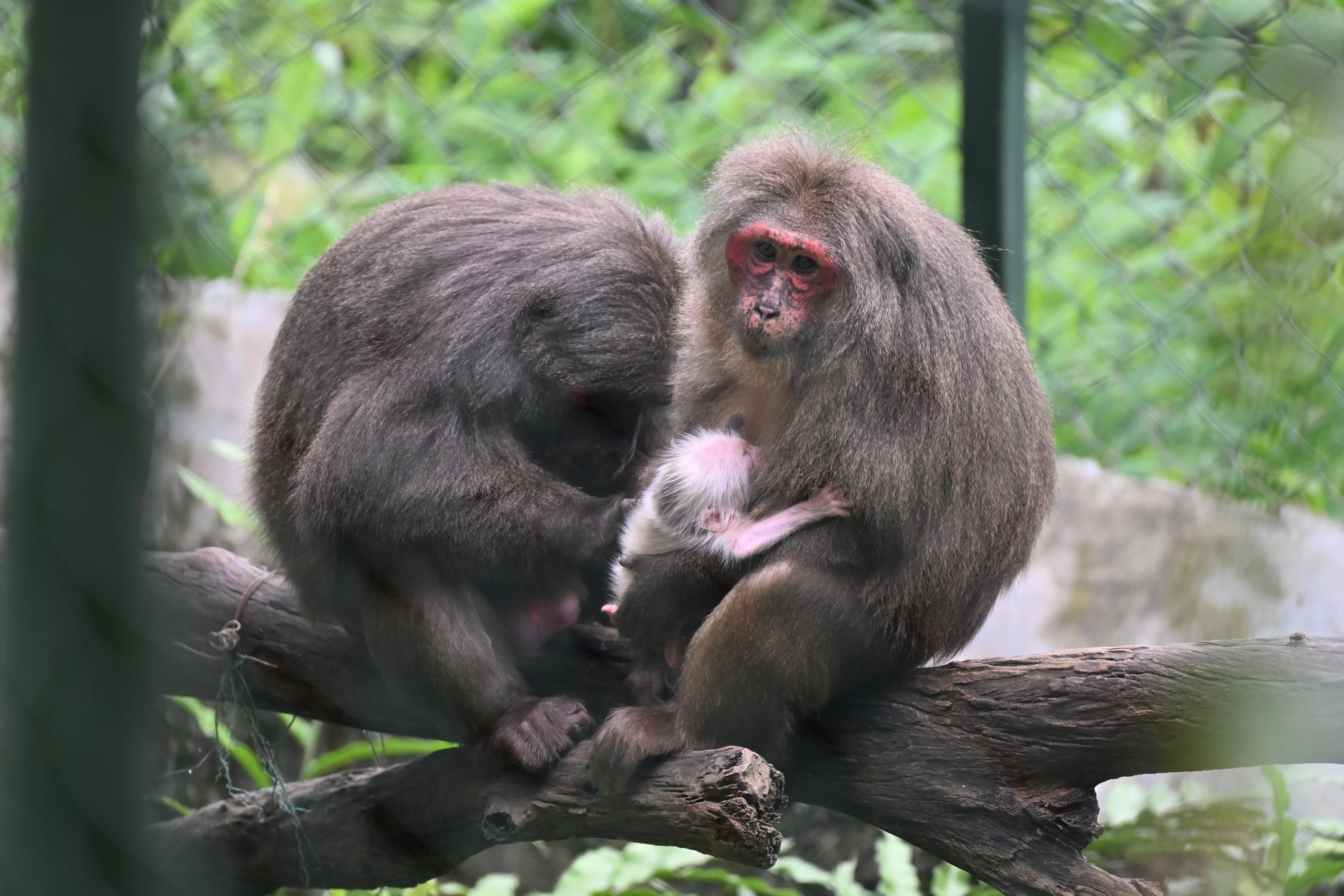
    Stump-tailed Macaque
    Vulnerable

    Stump-tailed Macaque

    Macaca arctoides
    A distinctive, highly social forest primate inhabiting Meghalaya’s tropical and subtropical forests, recognised by its short tail, reddish face and thick brown fur, playing a vital role in seed dispersal and forest regeneration.
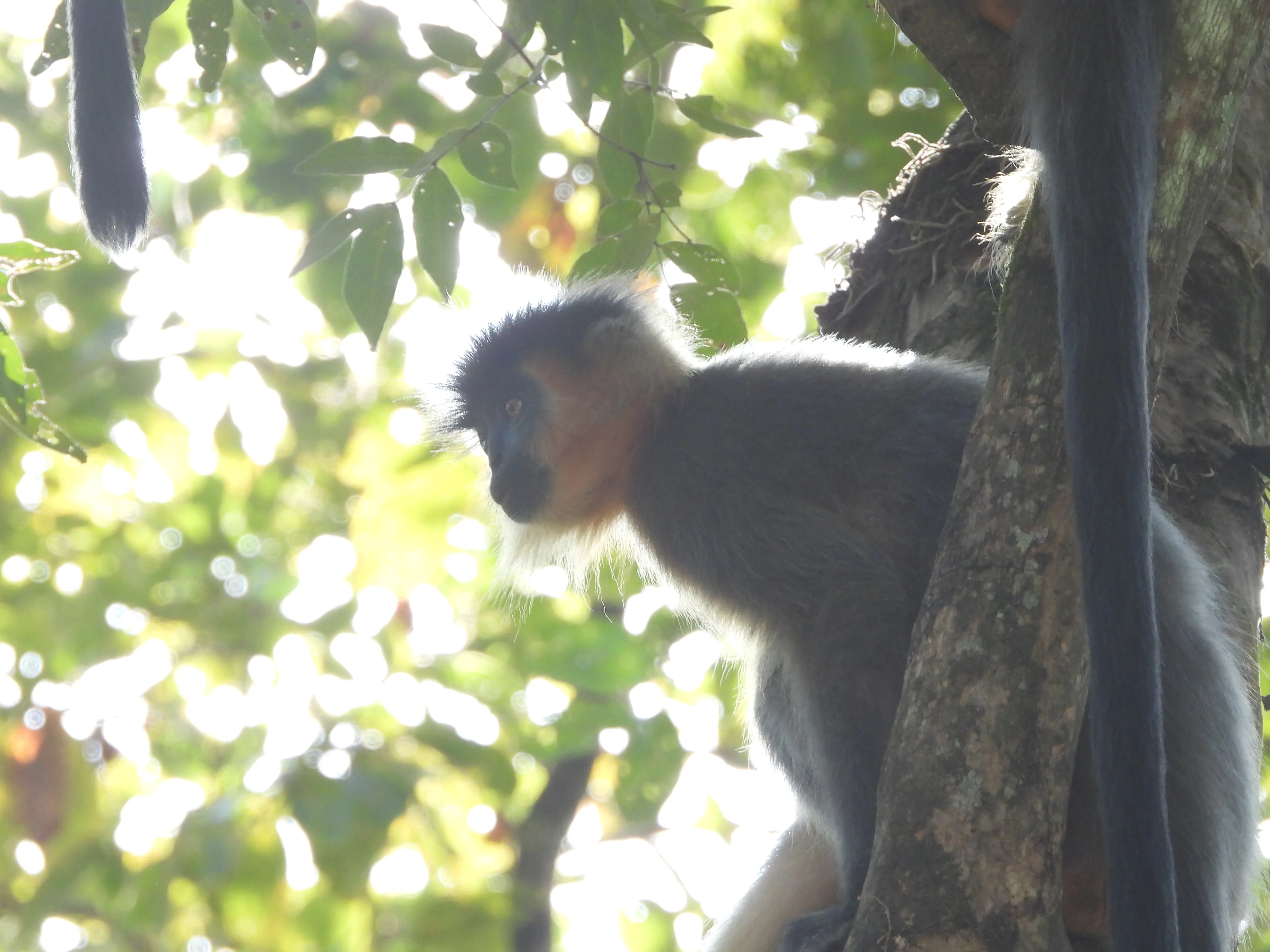
    Capped Langur
    Vulnerable

    Capped Langur

    Trachypithecus pileatus
    A leaf-eating monkey distinguished by a golden-yellow chest and a prominent dark cap of hair on its head, residing in dense woodlands and hilly terrain.
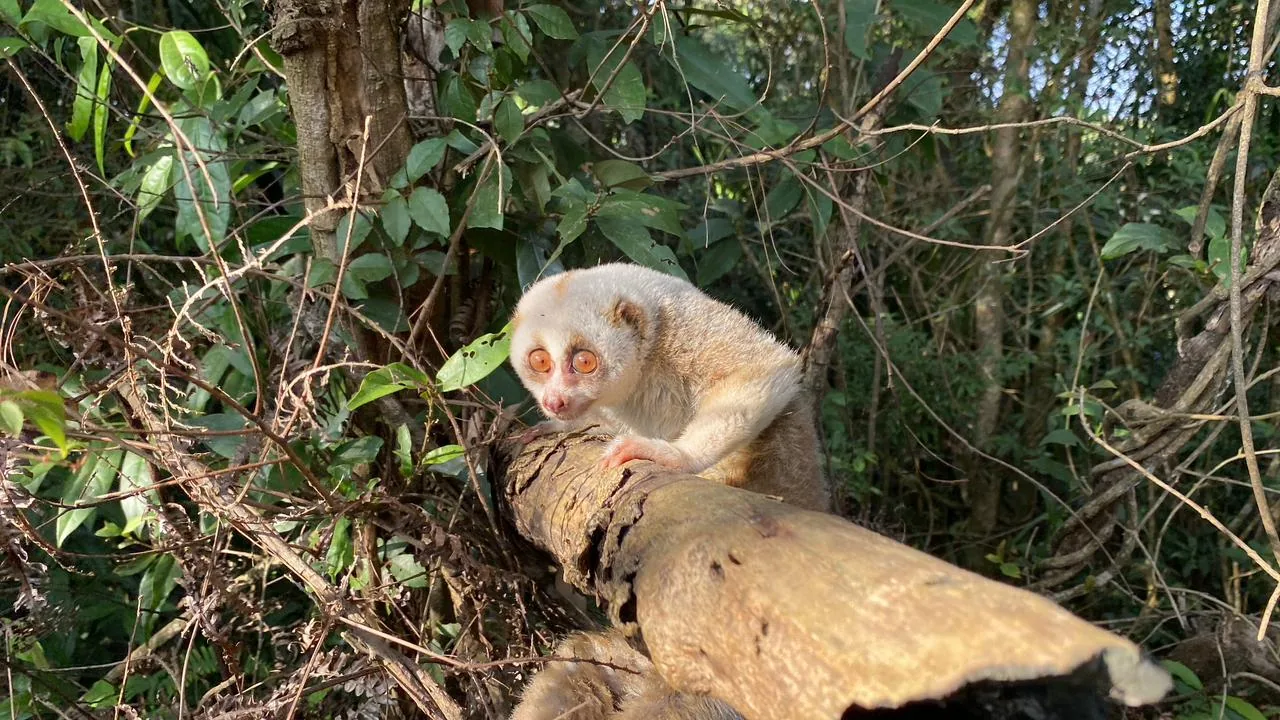
    Bengal Slow Loris
    Endangered

    Bengal Slow Loris

    Nycticebus bengalensis
    The region's only nocturnal, slow-moving primate with large round eyes, spending its entire life cycle traversing high-branch networks.
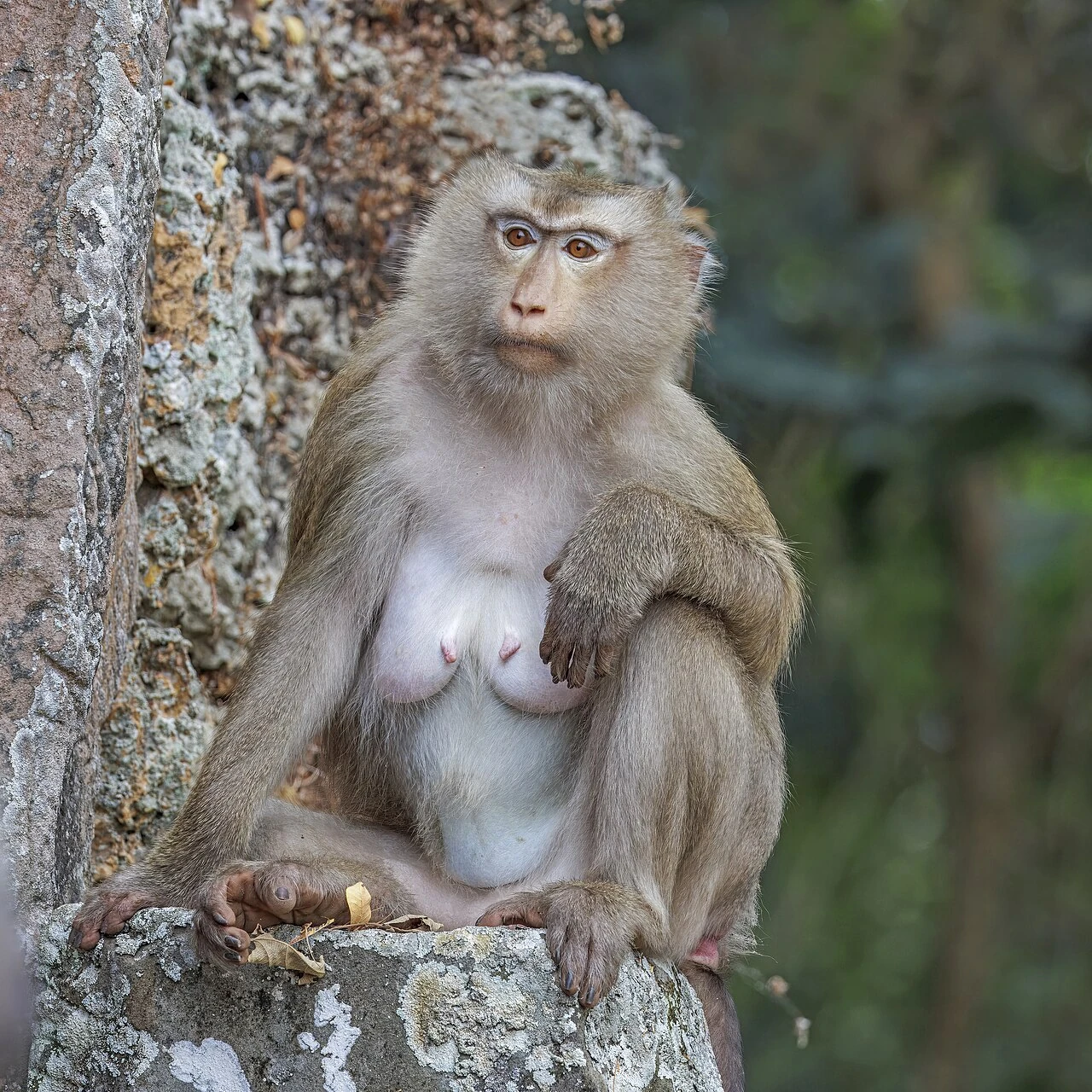
    Northern Pig-Tailed Macaque
    Vulnerable

    Northern Pig-Tailed Macaque

    Macaca leonina
    A robust arboreal macaque recognized by its short, pig-like tail, inhabiting multi-layered tropical evergreen forests.
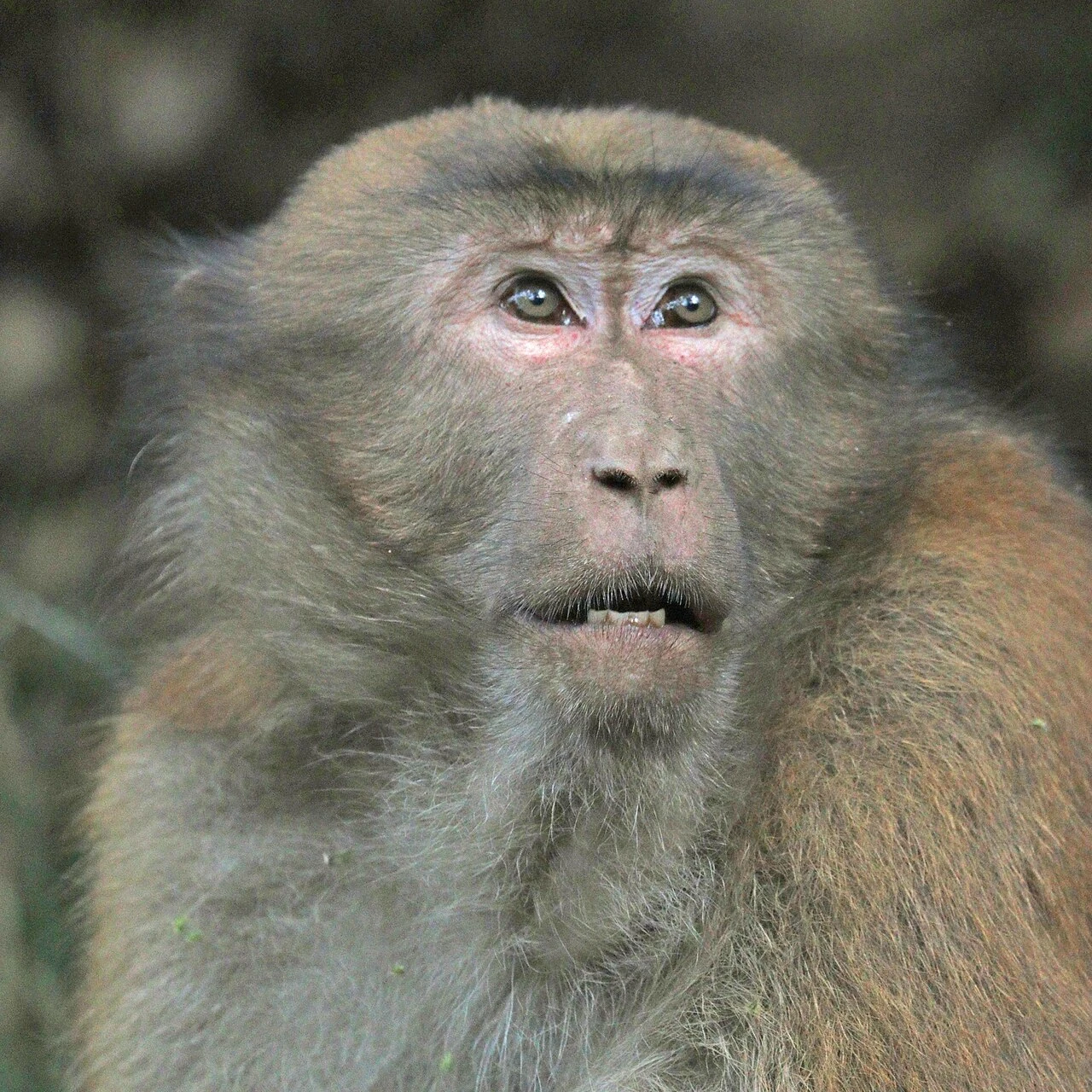
    Assamese Macaque
    Near Threatened

    Assamese Macaque

    Macaca assamensis
    A heavy-bodied monkey found across hilly terrains, moving in large troops through rocky outcrops and high-altitude forest tracts.
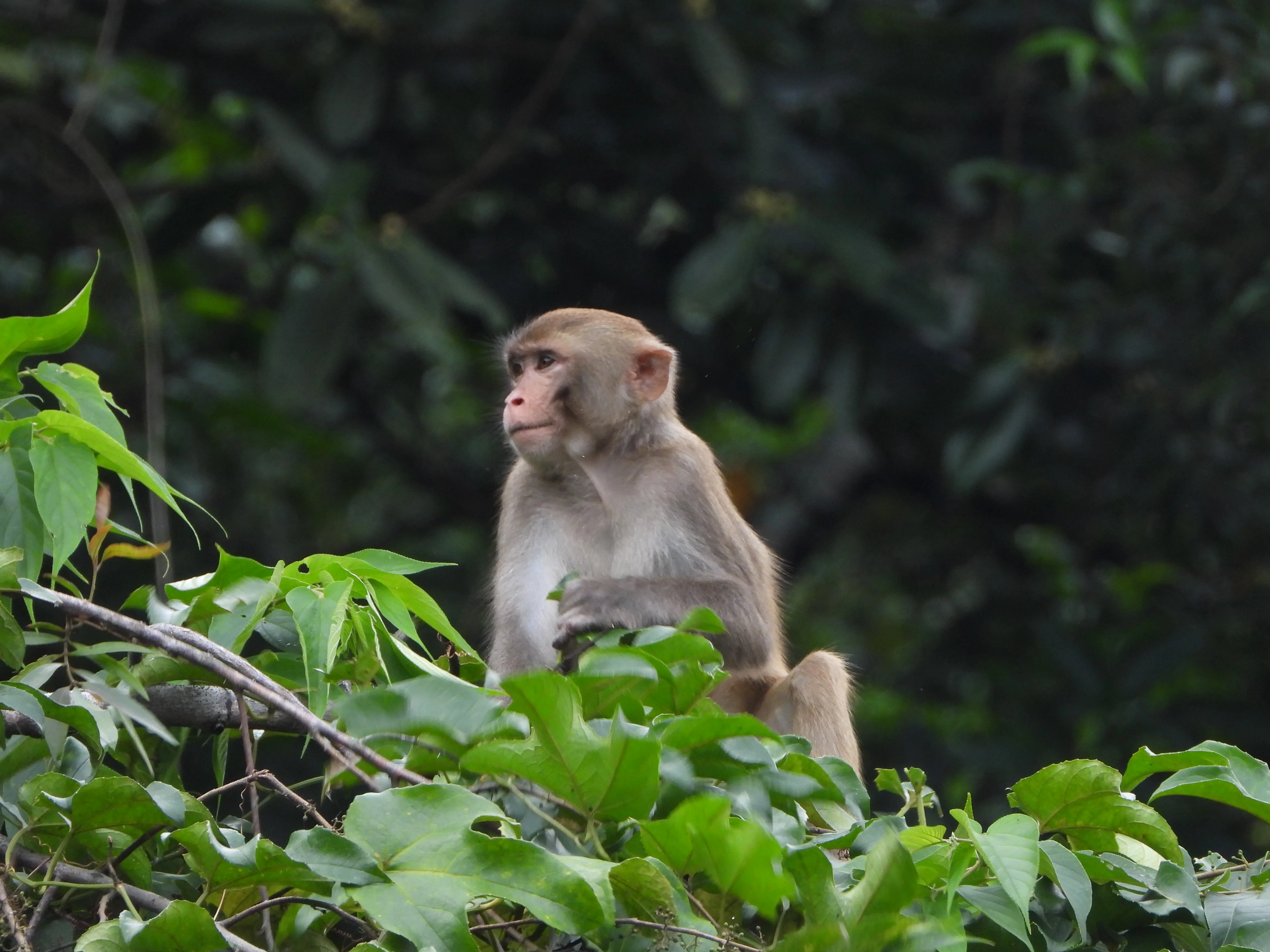
    Rhesus Macaque
    Least Concern

    Rhesus Macaque

    Macaca mulatta
    An adaptable, highly intelligent primate with a brownish coat and a medium-length tail, inhabiting a diverse range of forest edges, rocky hillsides, and riverbanks.

    Birds

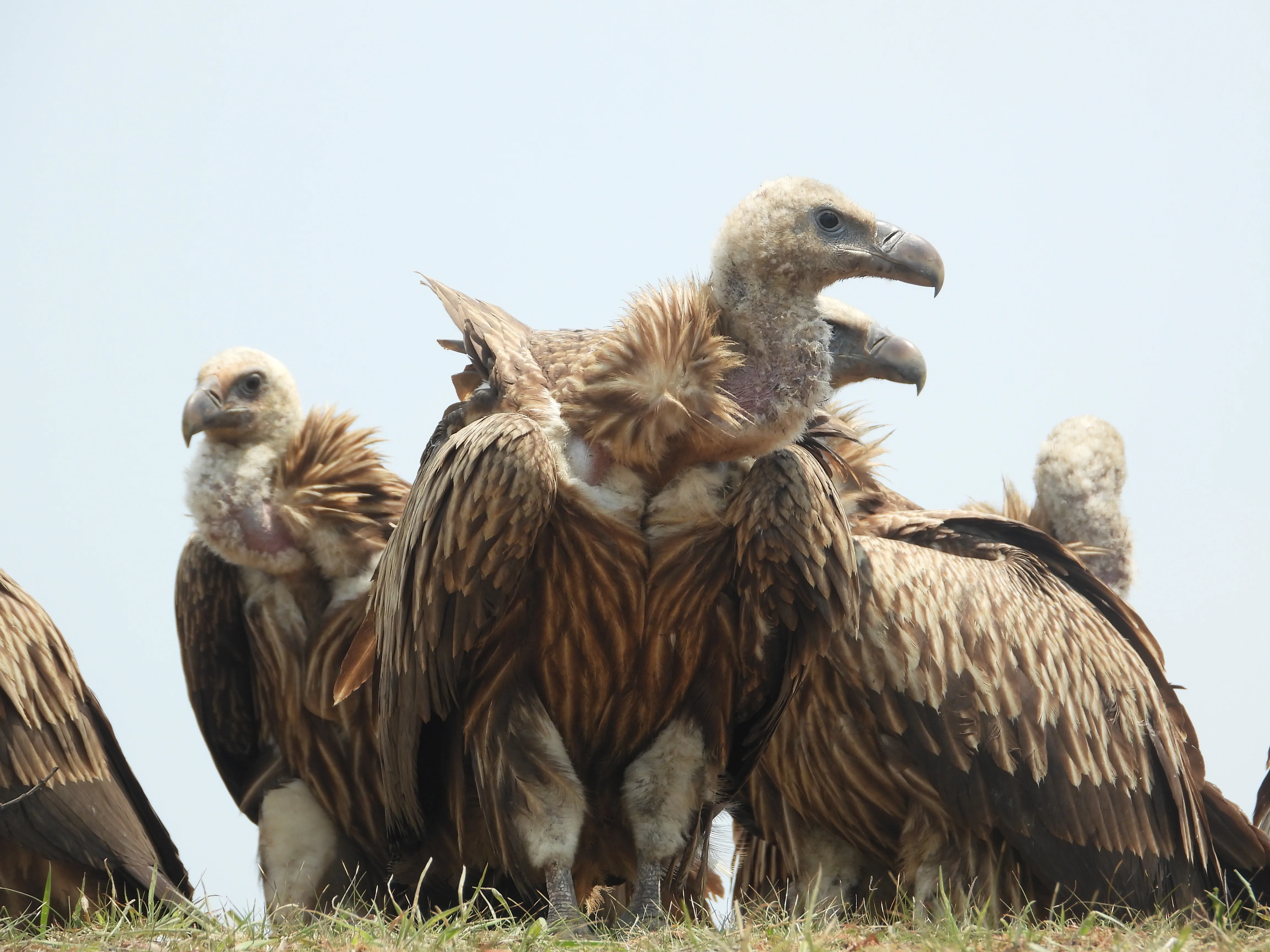
    Himalayan Griffon
    Near Threatened

    Himalayan Griffon

    Gyps himalayensis
    A massive, high-altitude raptor distinguished by its pale body, broad wings, and a thick ruff of feathers around its neck. As a key scavenger of the Himalayas and Tibetan Plateau, it plays a vital ecological role by feeding almost exclusively on animal carcasses.
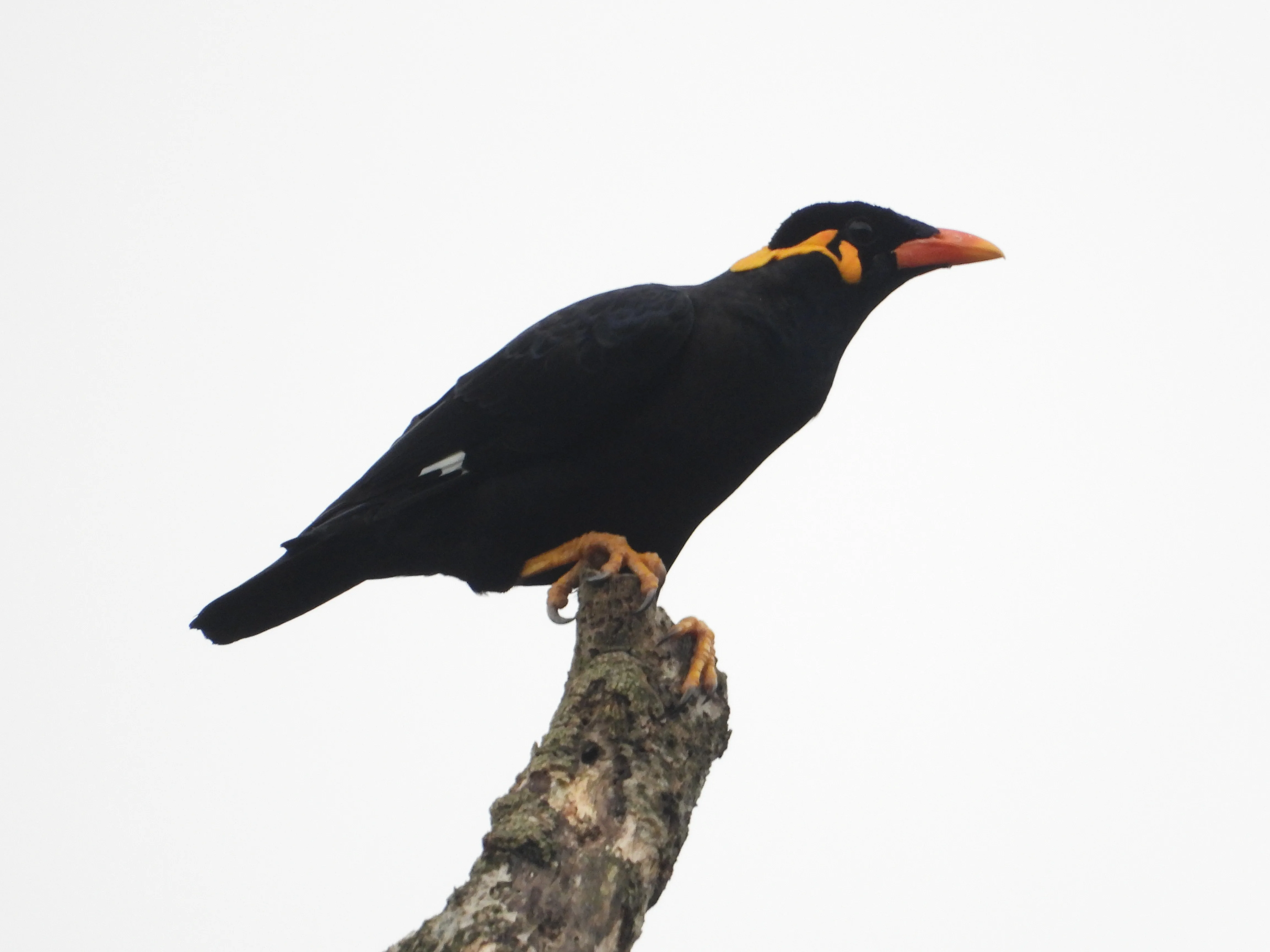
    Hill Myna
    Least Concern

    Hill Myna

    Gracula religiosa
    Meghalaya's state bird, celebrated for its glossy black plumage, bright yellow bill patches, and exceptional vocal mimicking abilities in forest canopies.
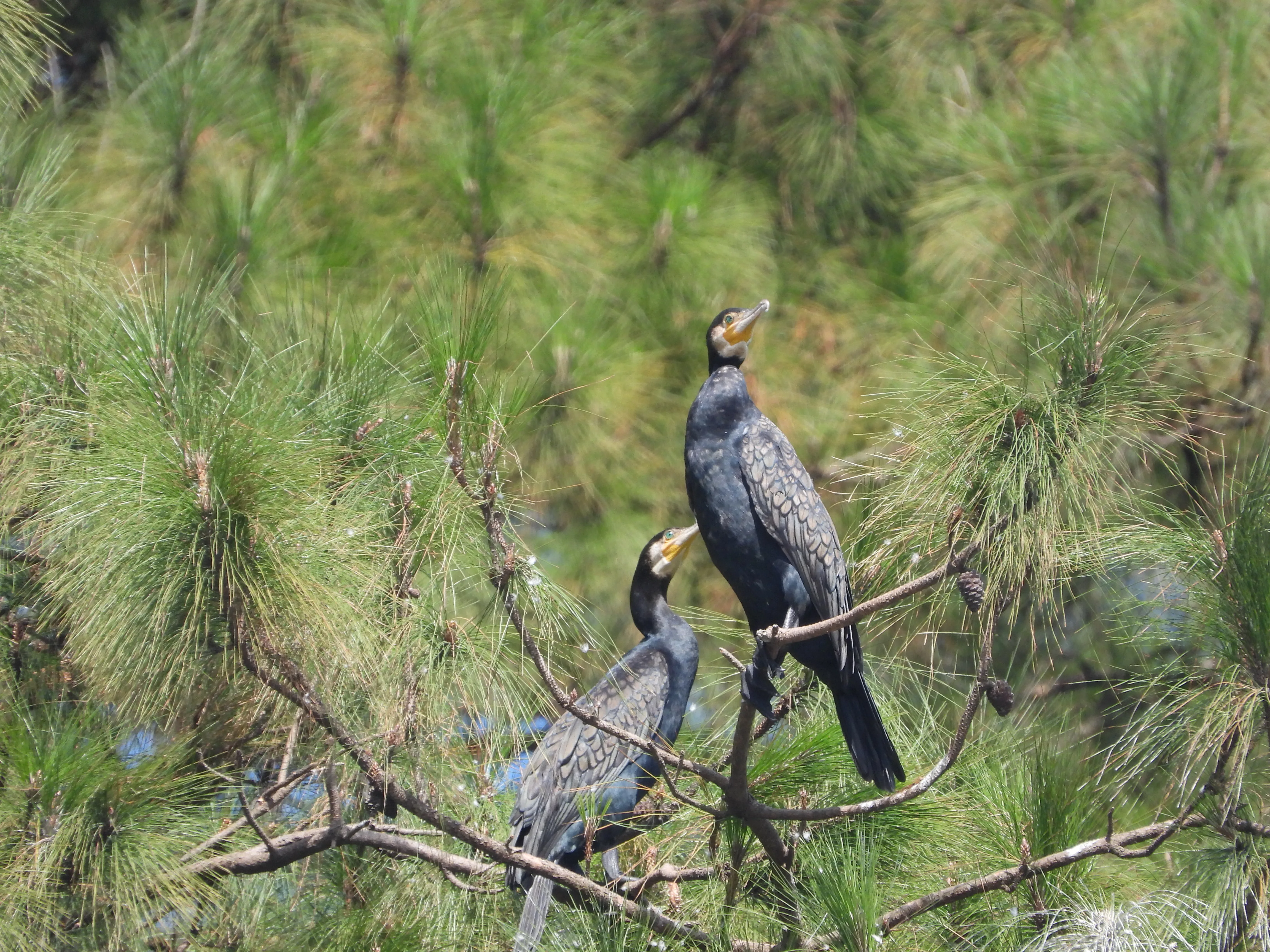
    Greater Cormorant
    Least Concern

    Greater Cormorant

    Phalacrocorax carbo
    A large, deep-diving waterbird distinguished by its dark plumage, yellow facial patch, and hooked bill. Commonly found along rivers, lakes, and coastal waters, it is an expert swimmer that plunges underwater to hunt fish before spreading its wings in the sun to dry.
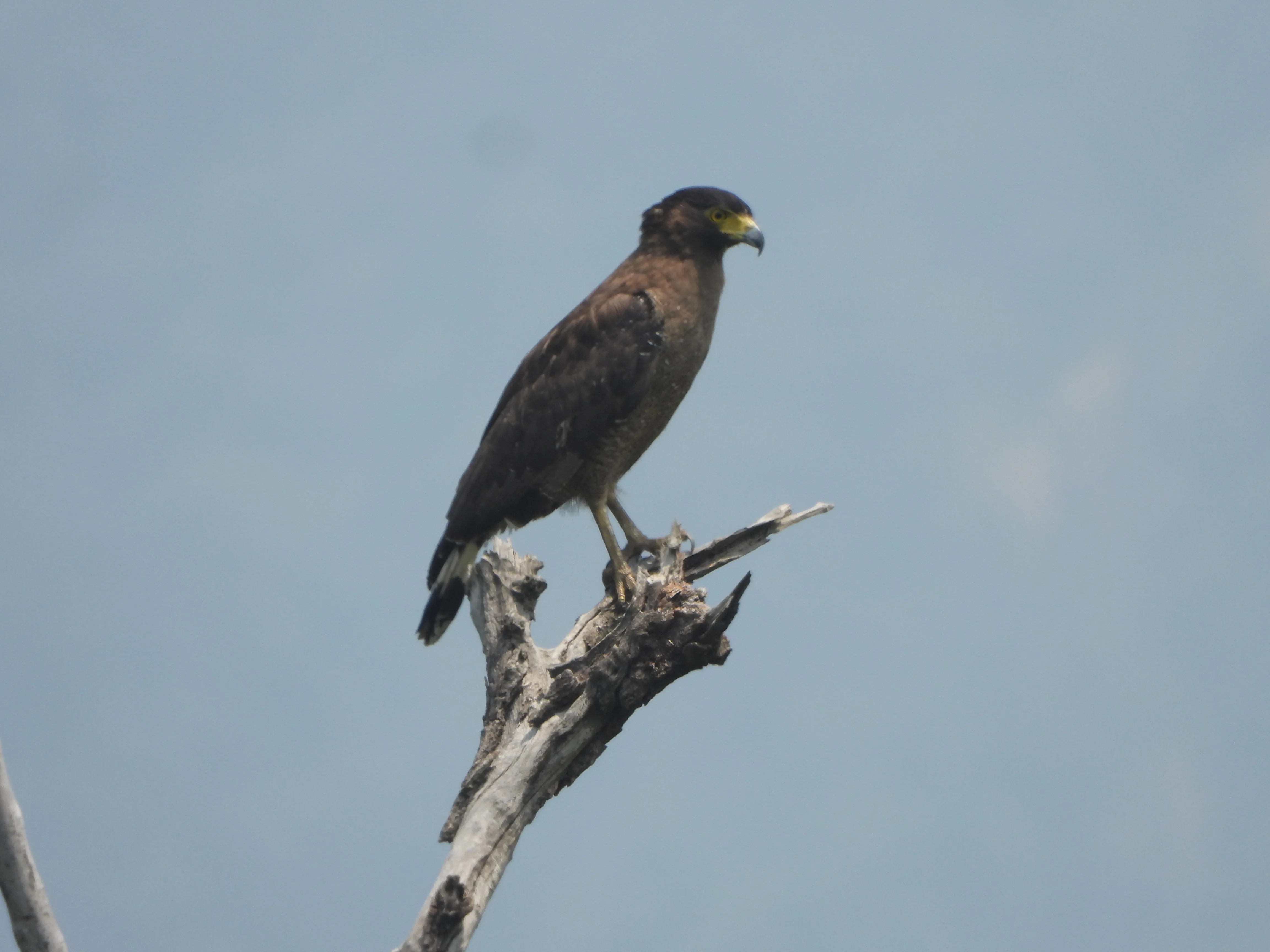
    Crested Serpent Eagle
    Least Concern

    Crested Serpent Eagle

    Spilornis cheela
    A medium-to-large raptor easily identified by its prominent feathered crest, dark facial mask, and bright yellow eyes and legs. Commonly found soaring over forest canopies and riverbanks, it is a specialized predator that hunts snakes, lizards, and frogs.
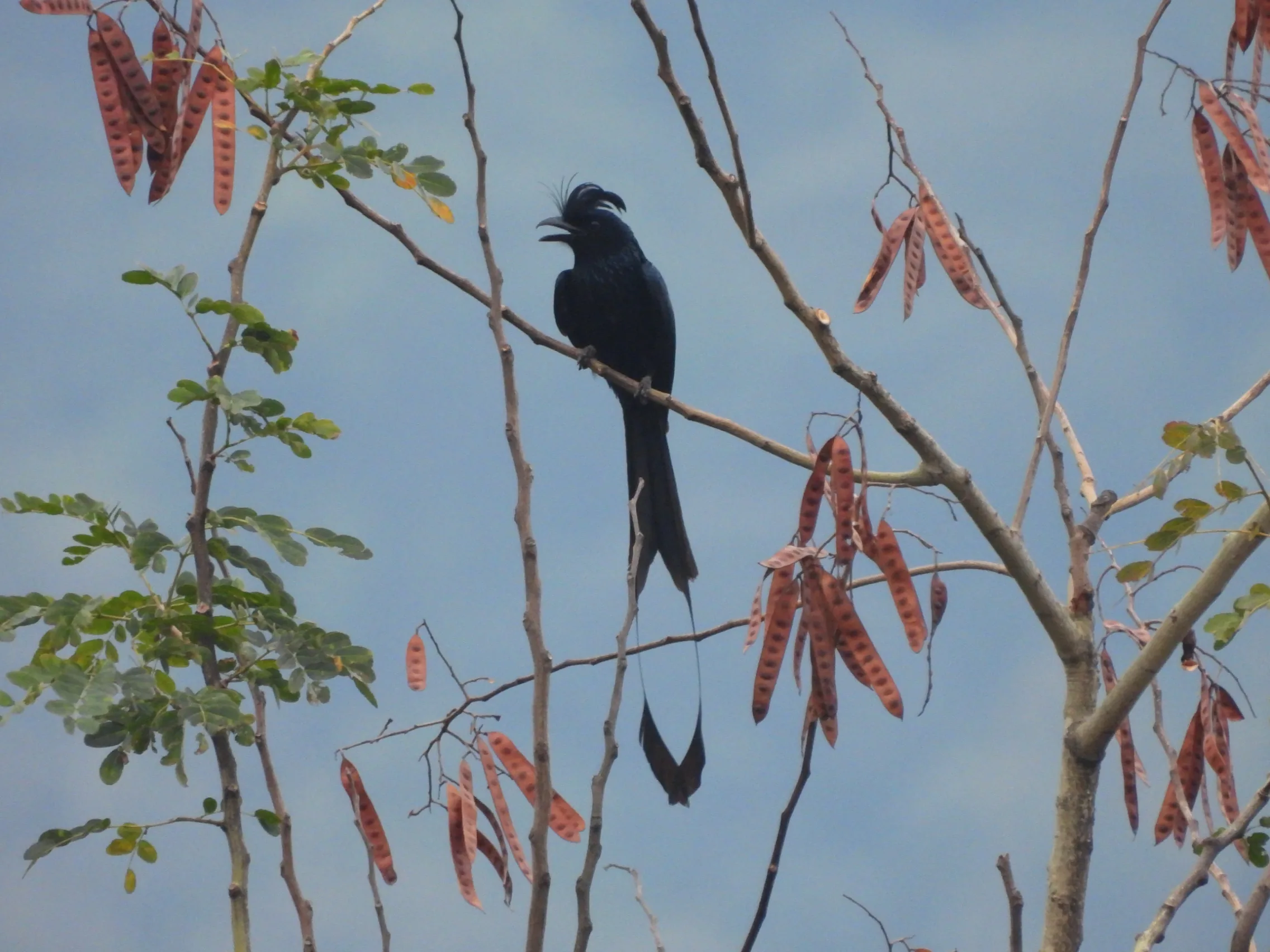
    Greater Racket-tailed Drongo
    Least Concern

    Greater Racket-tailed Drongo

    Dicrurus paradiseus
    A distinctive black bird known for its deeply forked tail with extended outer feathers ending in webbed "rackets." Inhabiting tropical forests and woodlands, it is famous for its exceptional vocal mimicry and aggressive mobbing behavior against larger predators.
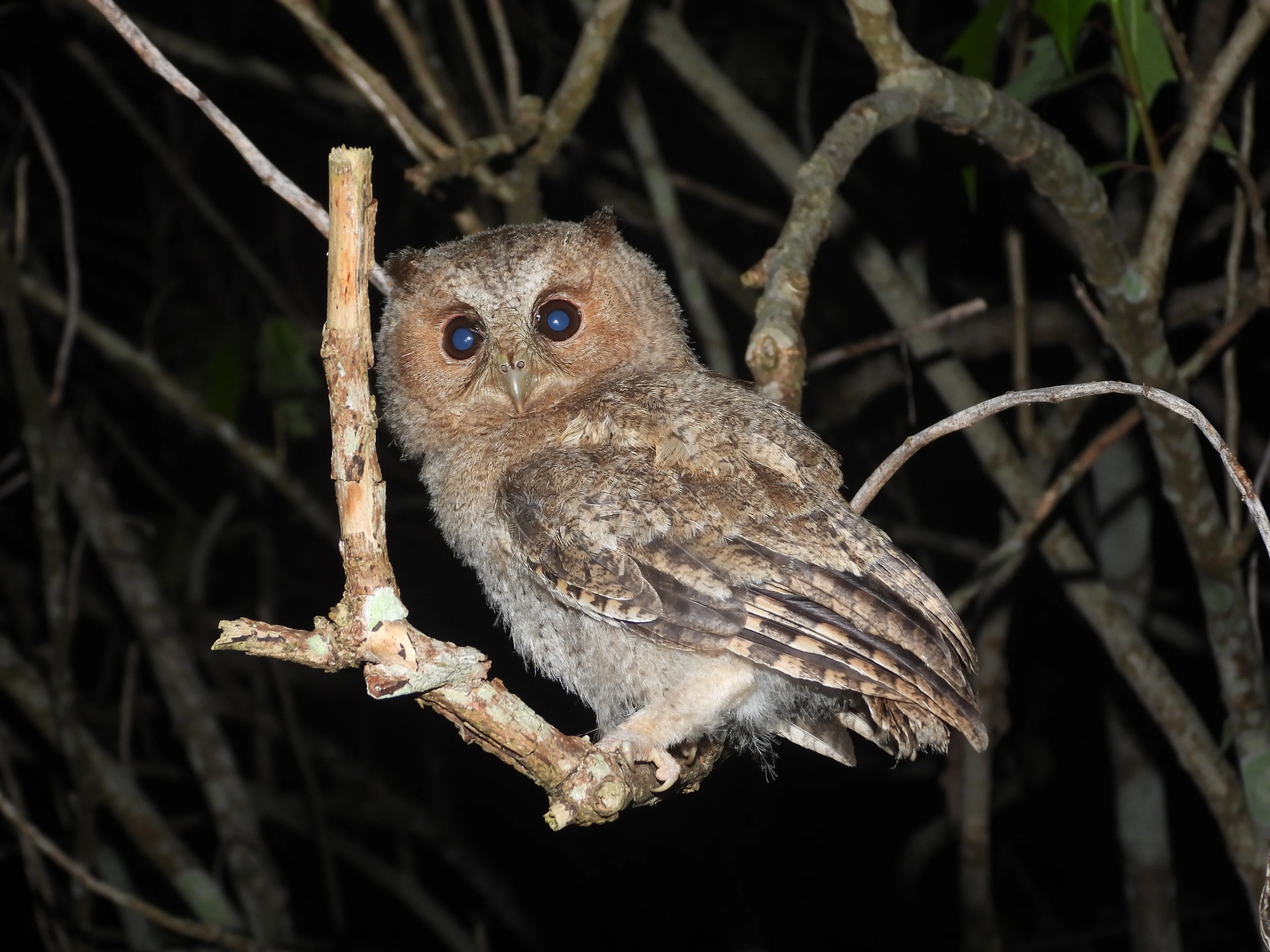
    Mountain Scops Owl
    Least Concern

    Mountain Scops Owl

    Otus spilocephalus
    A small, nocturnal bird of prey recognized by its short ear tufts, intricately patterned rufous-brown plumage, and distinctive two-note whistle. Inhabiting high-altitude montane forests, it remains hidden in dense foliage by day and actively hunts insects and small invertebrates at night.
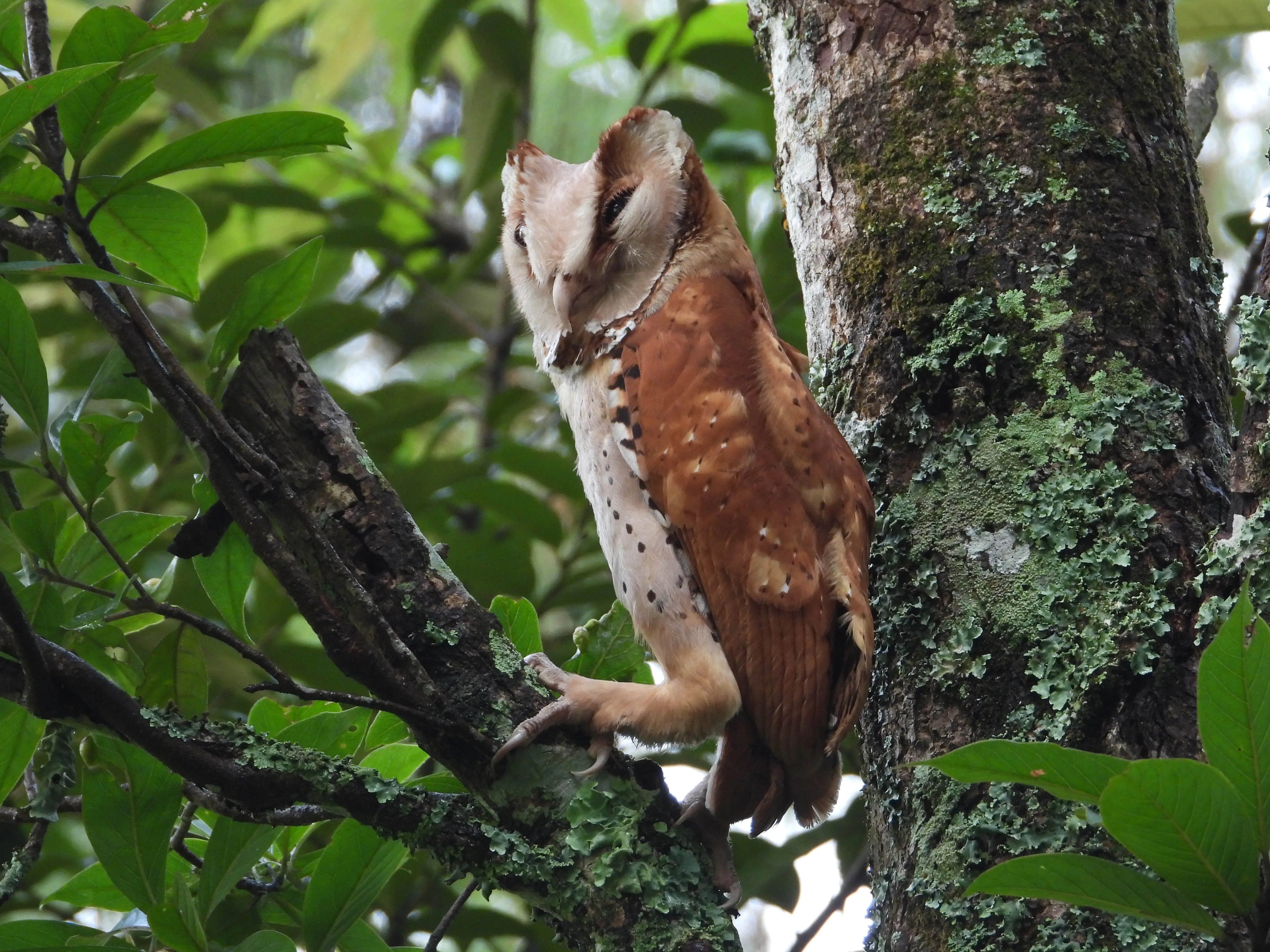
    Oriental Bay Owl
    Least Concern

    Oriental Bay Owl

    Phodilus badius
    A small, striking nocturnal predator distinguished by its heart-shaped facial disc, large dark eyes, and spotted chestnut-and-white plumage. Inhabiting dense tropical forests and mangroves, it perches low in heavy foliage to ambush small rodents, bats, frogs, and insects.

    Reptiles

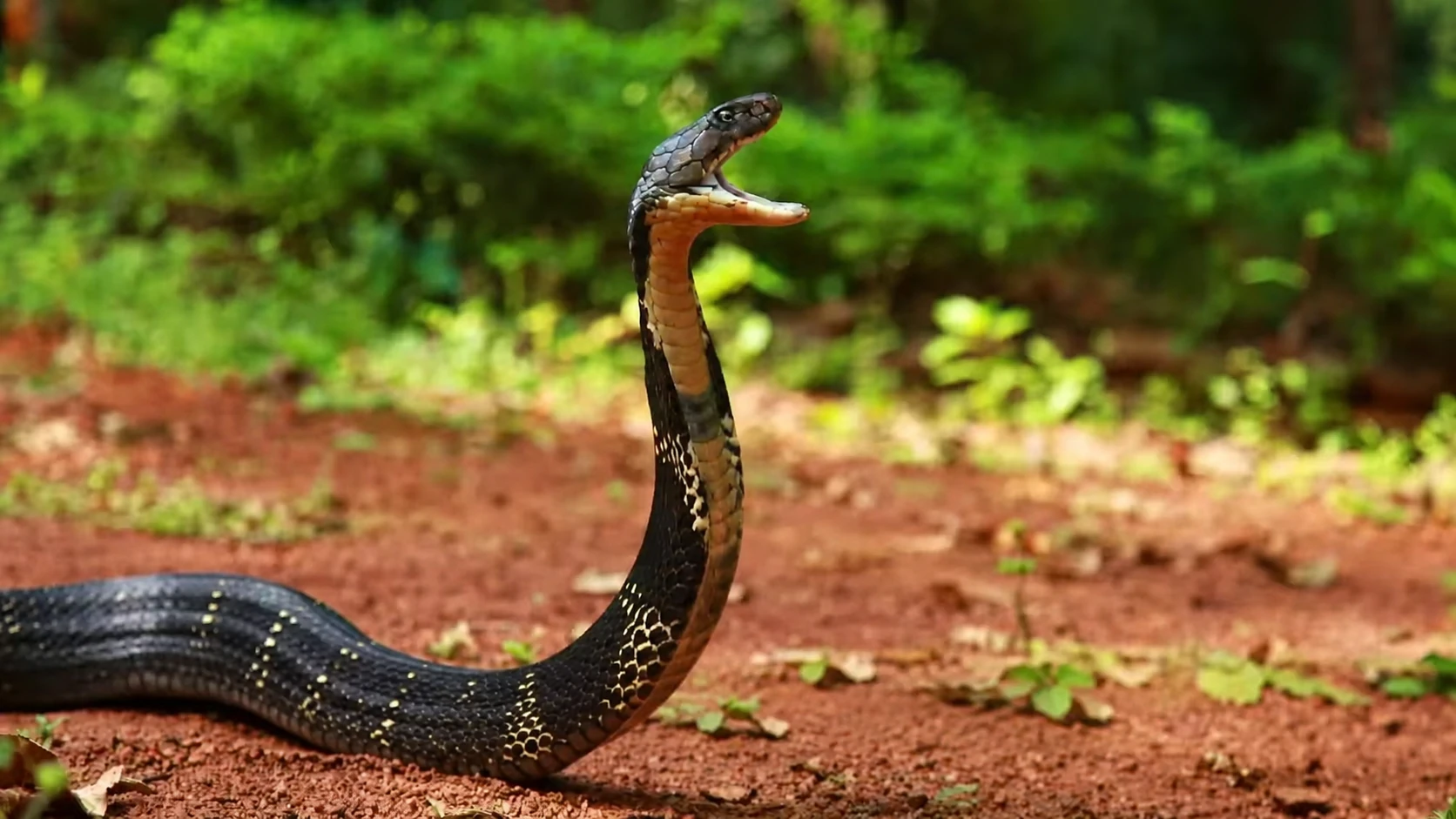
    King Cobra
    Vulnerable

    King Cobra

    Ophiophagus hannah
    The world's largest venomous snake, specialized in hunting other snakes and building distinct ground nests within dense, undisturbed forests.
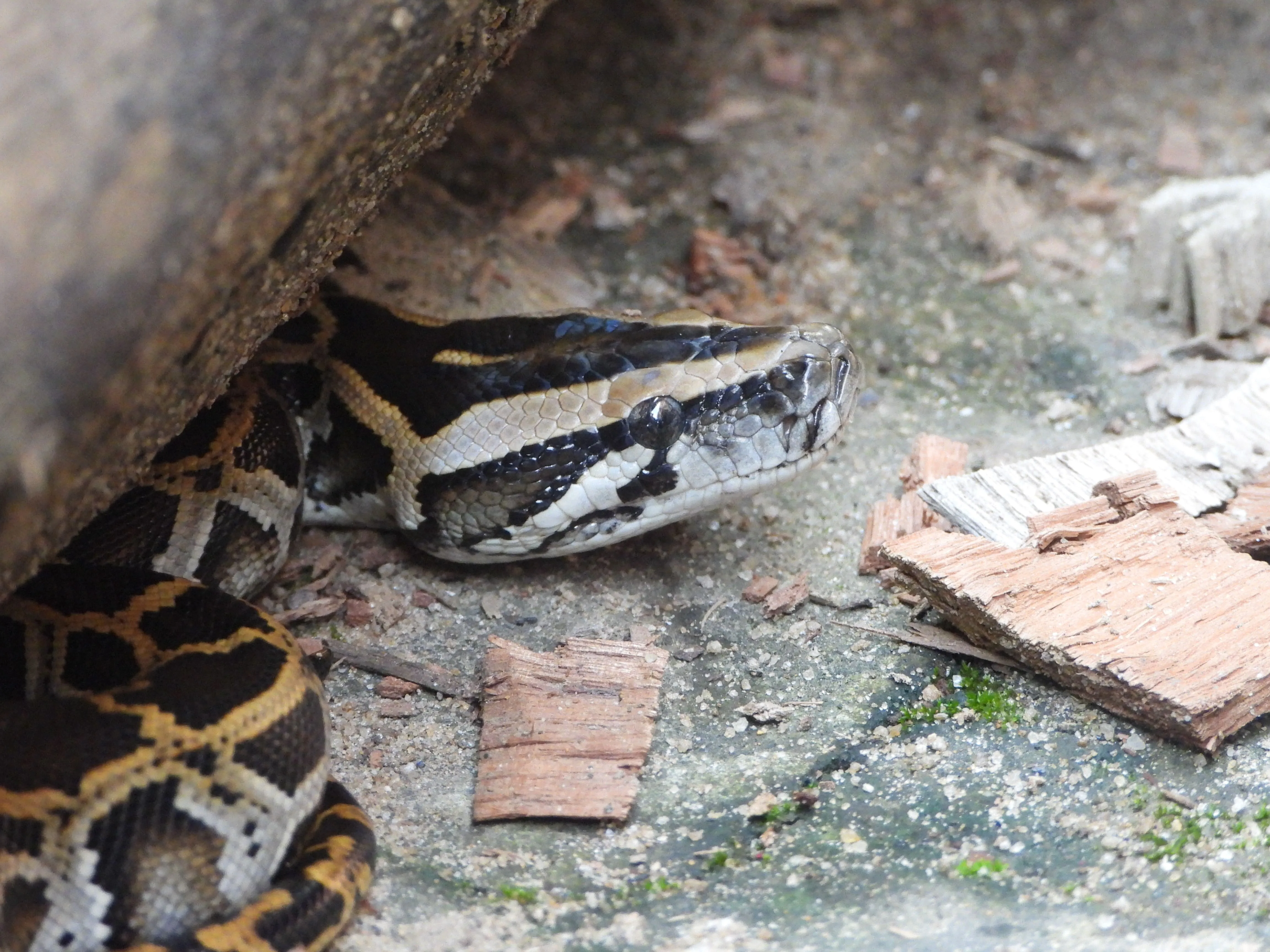
    Burmese Python
    Vulnerable

    Burmese Python

    Python bivittatus
    A massive, non-venomous constrictor snake with complex geometric skin patterns, frequently found near water bodies and warm lowland forest floors.
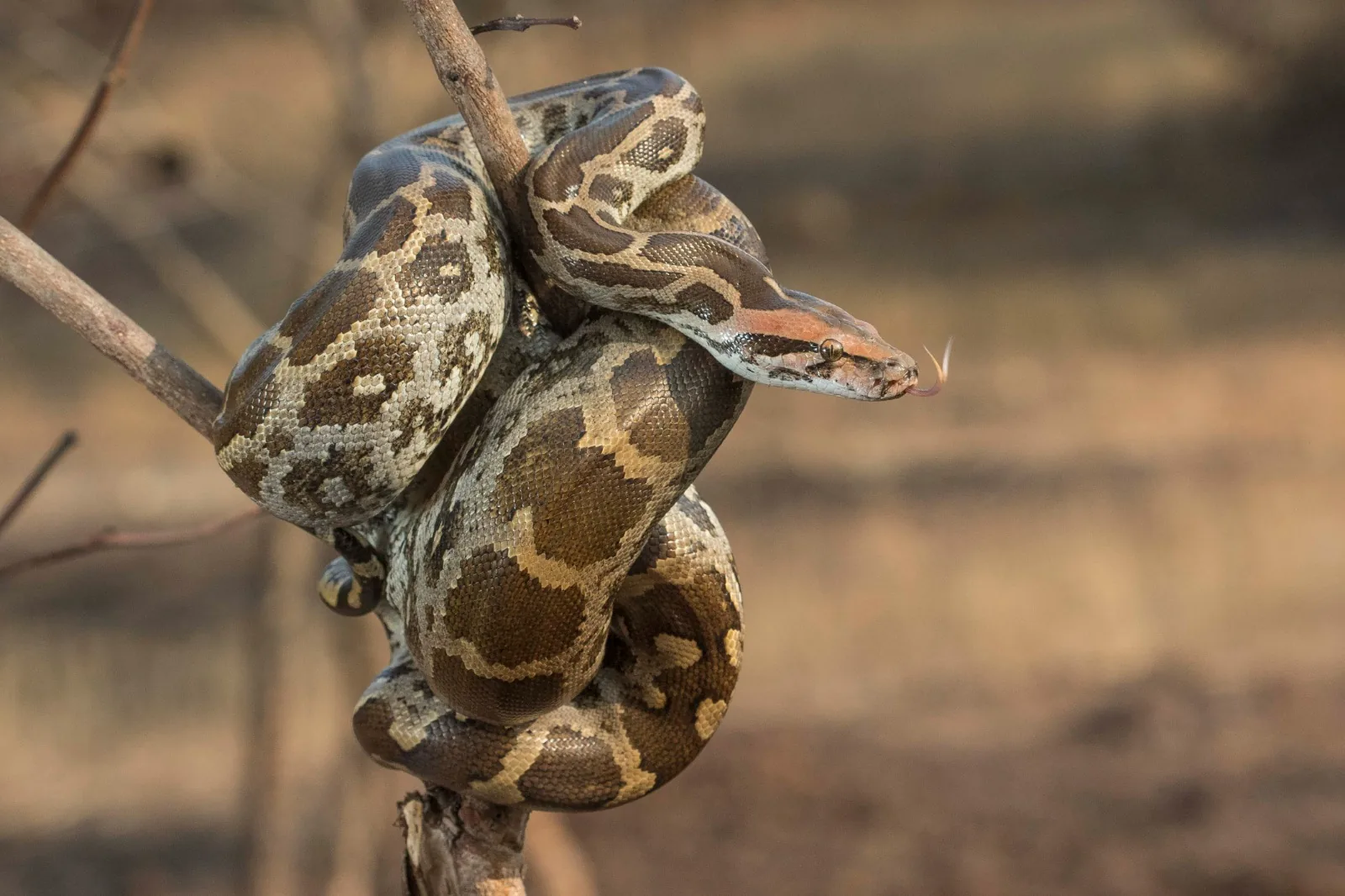
    Indian Rock Python
    Near Threatned

    Indian Rock Python

    Python molurus
    A large, non-venomous snake distinguished by its intricate yellowish-brown blotched patterns and robust body. Native to grasslands, swamps, and dense forests, it is a solitary constrictor that hunts a variety of birds, mammals, and reptiles near water sources.
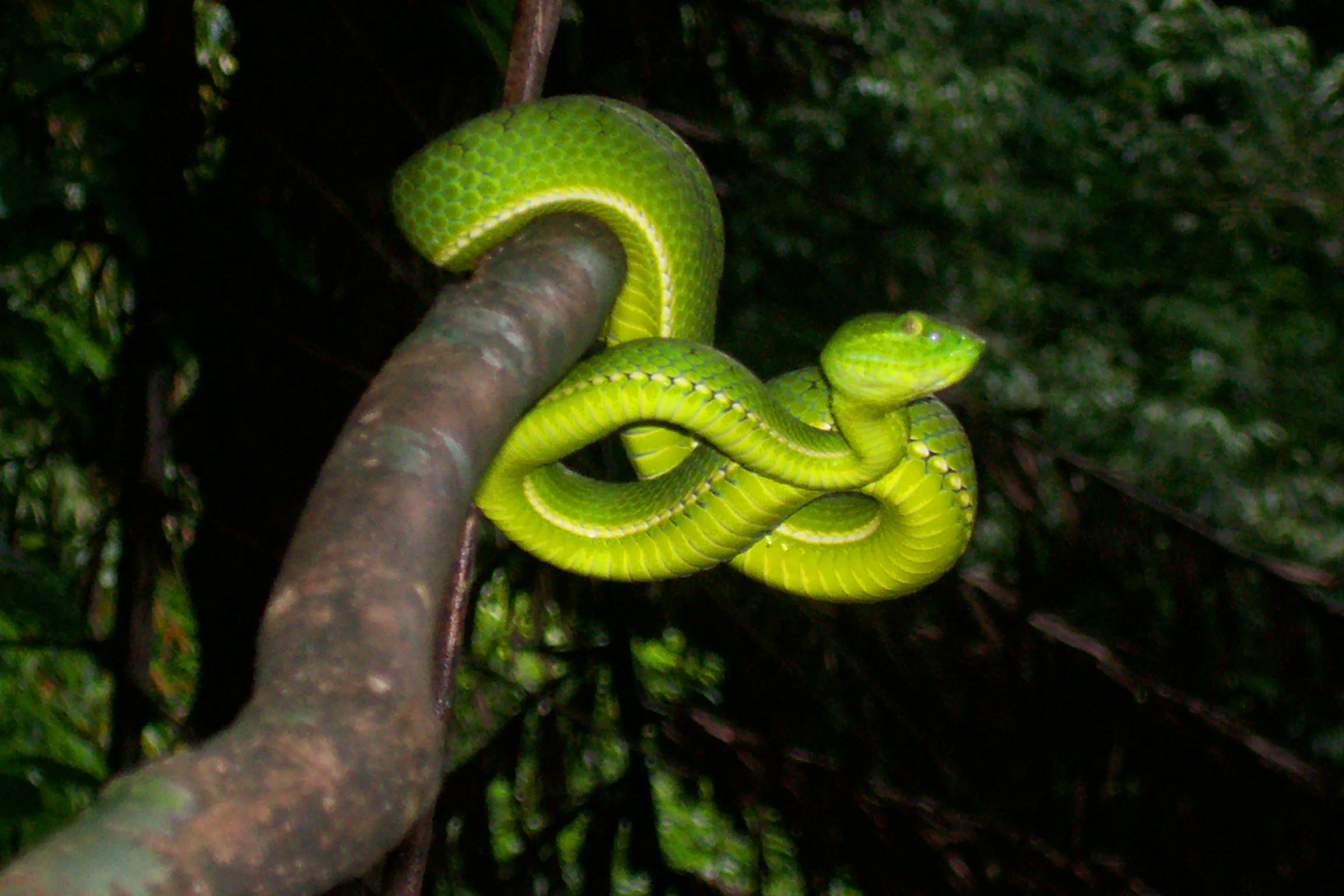
    Redtail (Bamboo) Pit Viper
    Least Concern

    Redtail (Bamboo) Pit Viper

    Trimeresurus gramineus
    A venomous, arboreal snake easily recognized by its vibrant lime-green body, broad triangular head, and heat-sensing facial pits. Inhabiting rainforests, bamboo groves, and dense foliage, it remains camouflaged in tree branches to ambush small birds, frogs, and rodents.
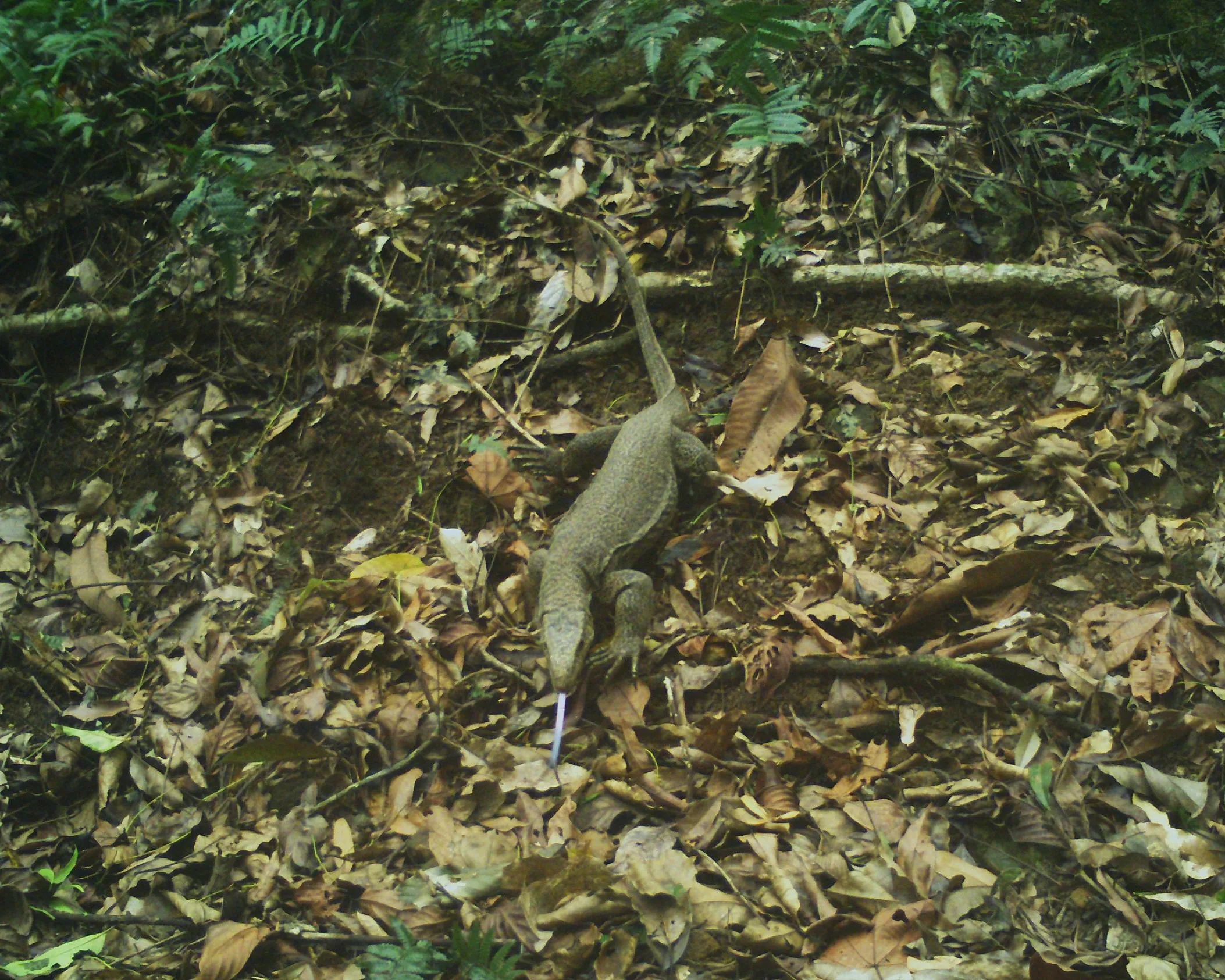
    Common Water Monitor
    Least Concern

    Common Water Monitor

    Varanus salvator
    A large, dark-scaled aquatic lizard featuring yellow markings, thriving primarily along perennial river banks, marsh margins, and deep pool ecosystems across wildlife sanctuaries.
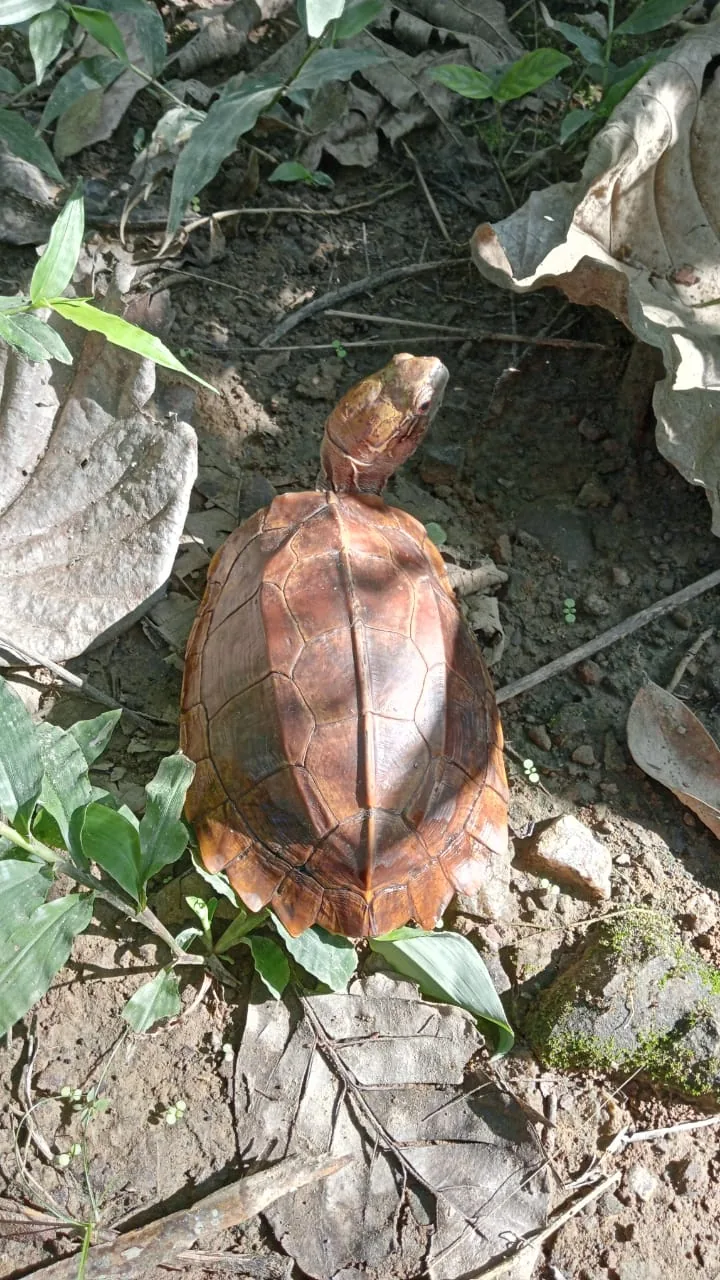
    Keeled Box Turtle
    Endangered

    Keeled Box Turtle

    Cuora mouhotii
    A terrestrial turtle named for the three distinct raised ridges running down its high-domed, serrated shell. Inhabiting humid tropical forests and rocky hillsides, it spends its time foraging through leaf litter for fruits, fungi, and small invertebrates.

    Aquatic

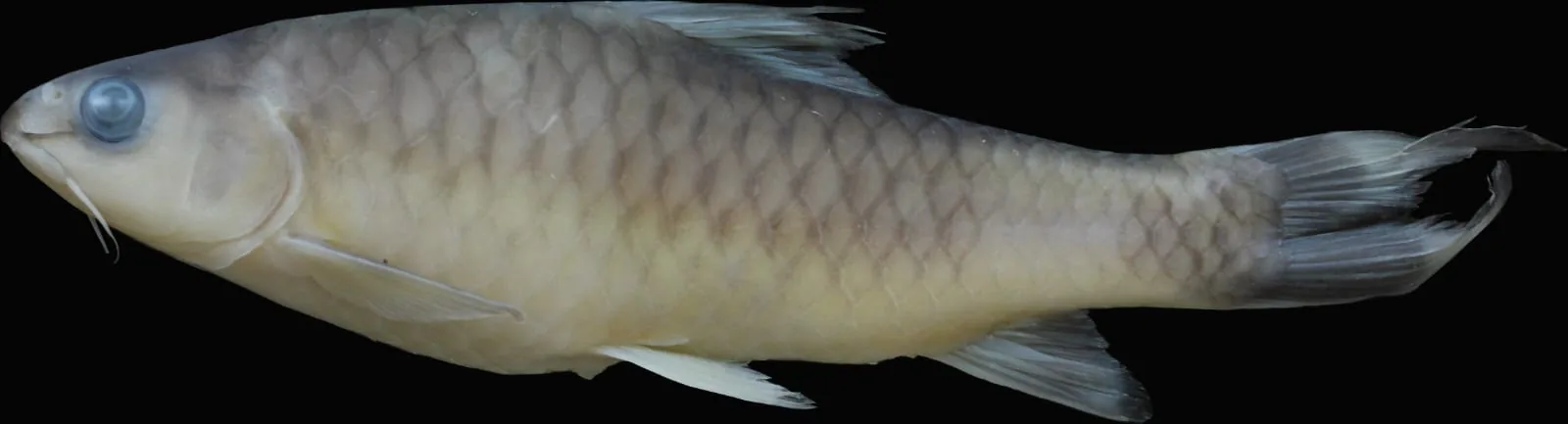
    Mahseer / Himalayan River Fish
    Endangered

    Mahseer / Himalayan River Fish

    Tor putitora
    A prized freshwater game and riverine fish species inhabiting swift, clear hill streams and deep river pools across the state's drainage basins.
    Copper Mahseer
    Near Threatened

    Copper Mahseer

    Neolissochilus hexastichus
    A freshwater mahseer associated with clear, fast-moving hill streams and rocky river channels, contributing to the diversity of native fish in Meghalaya's upland river systems.
    Chocolate Mahseer
    Near Threatened

    Chocolate Mahseer

    Neolissochilus hexagonolepis
    A powerful riverine fish inhabiting fast-flowing, oxygen-rich hill streams and rocky riverbeds, recognised for its importance in Meghalaya's freshwater biodiversity and traditional fisheries.
    Sucker-head Garra
    Least Concern

    Sucker-head Garra

    Garra gotyla
    A bottom-dwelling freshwater fish adapted to rocky streams and flowing rivers, recognised for its specialised mouth structure that helps it graze on algae and cling to submerged surfaces.
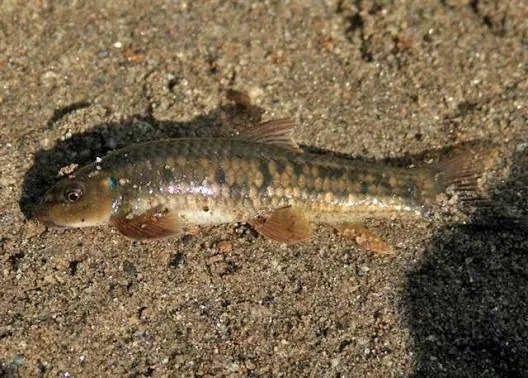
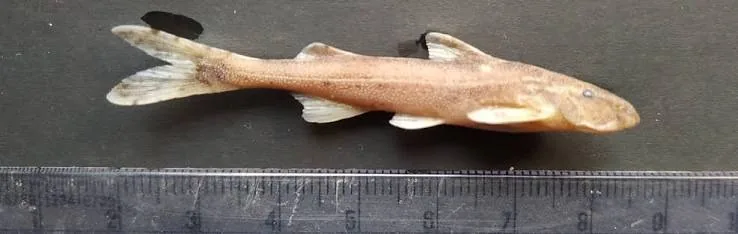
    Hill-stream Catfish
    Least Concern

    Hill-stream Catfish

    Glyptothorax telchitta
    A small, bottom-dwelling catfish inhabiting swift hill streams and rocky riverbeds, equipped with specialised adhesive structures that help it remain attached to surfaces in strong currents.
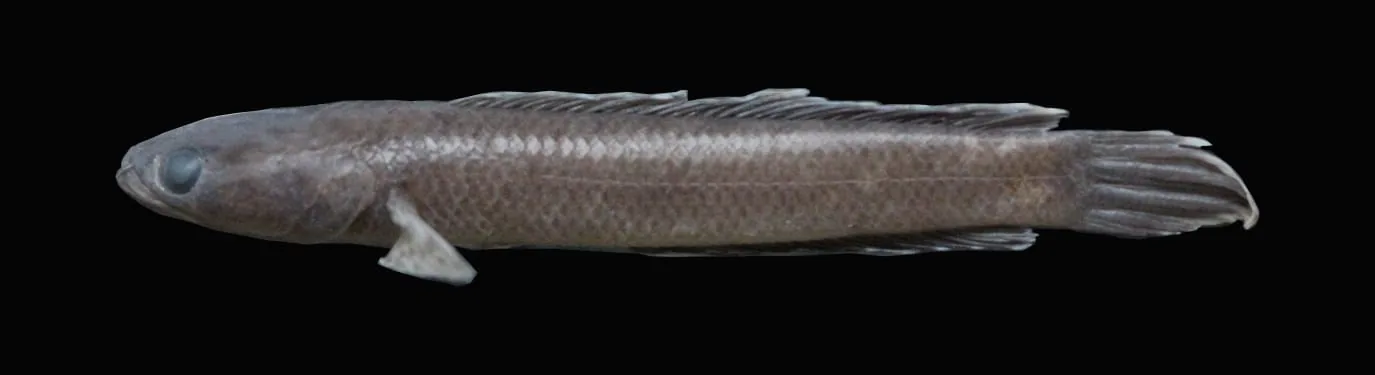
    Dwarf Snakehead
    Least Concern

    Dwarf Snakehead

    Channa gachua
    A hardy, air-breathing predatory fish inhabiting freshwater streams, pools and slow-moving river sections, playing an important role in regulating smaller aquatic organisms.
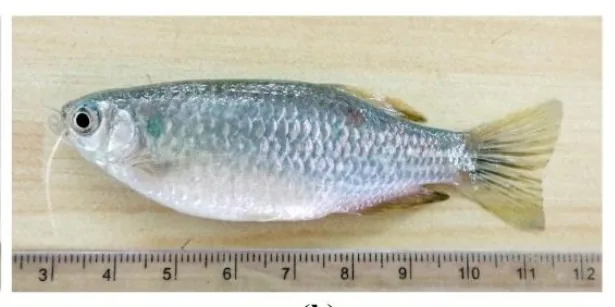
    Moustached Danio
    Least Concern

    Moustached Danio

    Danio dangila
    A small, active freshwater fish inhabiting clear hill streams and flowing rivers, recognised for its distinctive body markings and contribution to Meghalaya's native ornamental fish diversity.
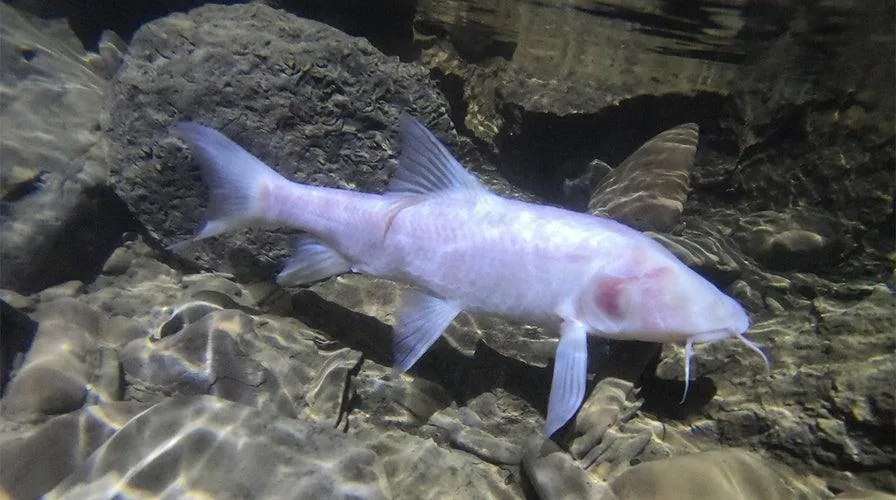
    Blind Cave Fish
    Not Evaluated

    Blind Cave Fish

    Neolissochilus pnar
    A rare, cave-dwelling freshwater fish endemic to Meghalaya’s limestone caves in the Jaintia Hills, recognised as the world’s largest known subterranean fish, measuring over 40 cm in length. Distinguished by its pale, pigment-free body and reduced or absent eyes, this remarkable species is uniquely adapted to life in complete darkness, highlighting the exceptional biodiversity of Meghalaya’s underground aquatic ecosystems.

    Amphibians

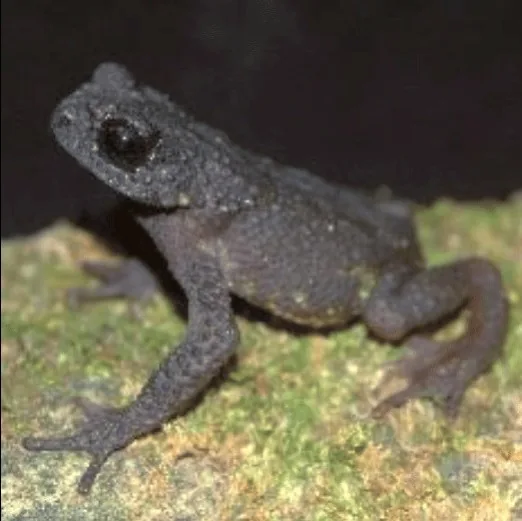
    Khasi Hills Toad
    Critically Endangered

    Khasi Hills Toad

    Bufoides meghalayanus
    A rare, endemic toad inhabiting rocky crevices, moist forest ravines and seasonal streams of Meghalaya's Khasi Hills, particularly around Sohra, highlighting the conservation importance of fragile hill ecosystems.
    Assam Hills Frog
    Least Concern

    Assam Hills Frog

    Clinotarsus alticola
    A distinctive stream frog of the Northeast Indian hills, inhabiting moist evergreen canopy, rocky stream margins, and waterfall basins, showcasing Meghalaya's unique highland aquatic amphibian diversity.
    Jadoh Bush Frog
    Data Deficient

    Jadoh Bush Frog

    Raorchestes jadoh
    A small, distinctive bush frog associated with the Shillong Plateau, inhabiting moist vegetation, forest shrubs, and surrounding hill habitats, representing Meghalaya's unique highland amphibian diversity
    Khasi Wart Frog
    Least Concern

    Khasi Wart Frog

    Limnonectes khasianus
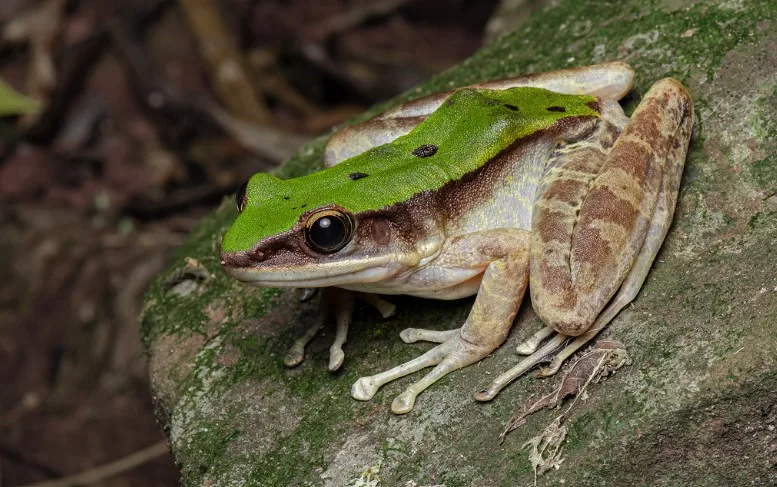
    A stream-associated frog found in moist subtropical forests, particularly along shallow, rocky forest streams, contributing to insect control and the ecological balance of Meghalaya's freshwater habitats.
    Green Cascade Frog
    Least Concern

    Green Cascade Frog

    Odorrana chloronota
    A medium-to-large stream frog associated with Northeast India's hill tracts, inhabiting fast-flowing cascades, mossy rock faces, and surrounding damp vegetation, representing the region's dynamic torrent amphibian diversity.
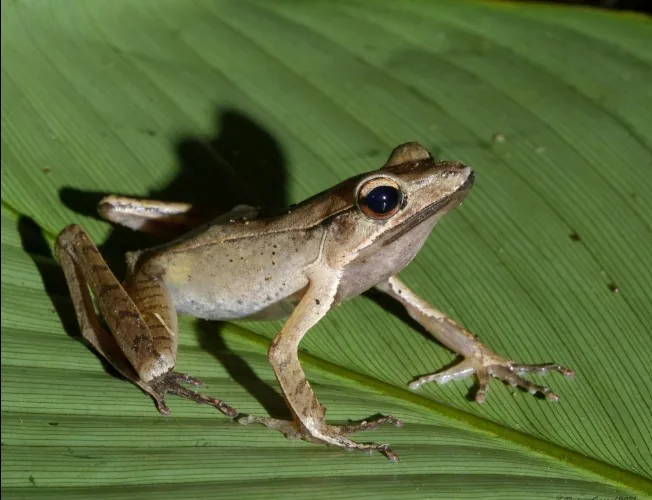
    White-lipped Treefrog
    Least Concern

    White-lipped Treefrog

    Zhangixalus smaragdinus
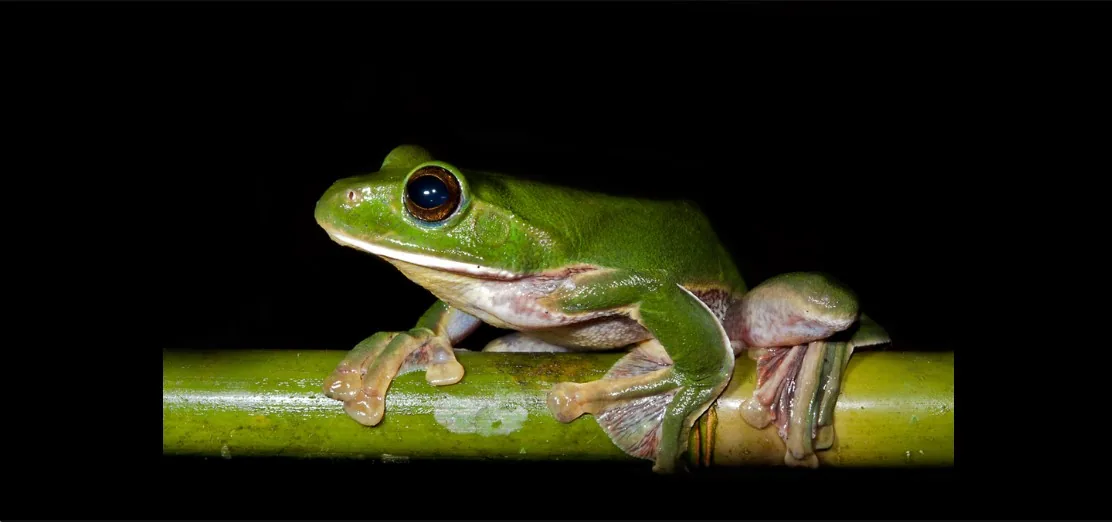
    A prominent, canopy-dwelling treefrog associated with Northeast India's hill forests, inhabiting high forest foliage, broad leaves, and surrounding stream margins, representing the region's rich arboreal amphibian diversity.
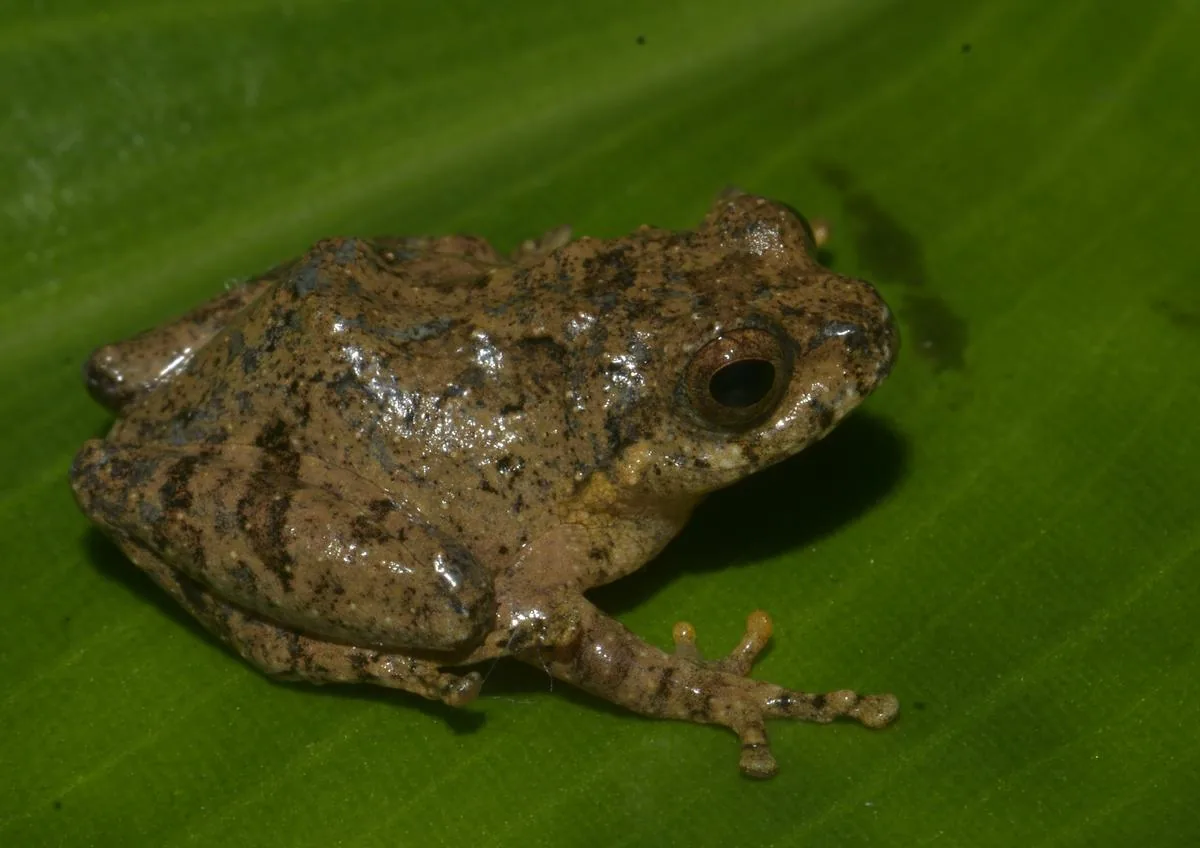
    Shillong Bubble Nest Frog
    Critically Endangered

    Shillong Bubble Nest Frog

    Raorchestes shillongensis
    A small, distinctive bush frog associated with the Shillong Plateau, inhabiting moist vegetation, forest shrubs, and surrounding hill habitats, representing Meghalaya's unique highland amphibian diversity.

    Butterflies & Moths

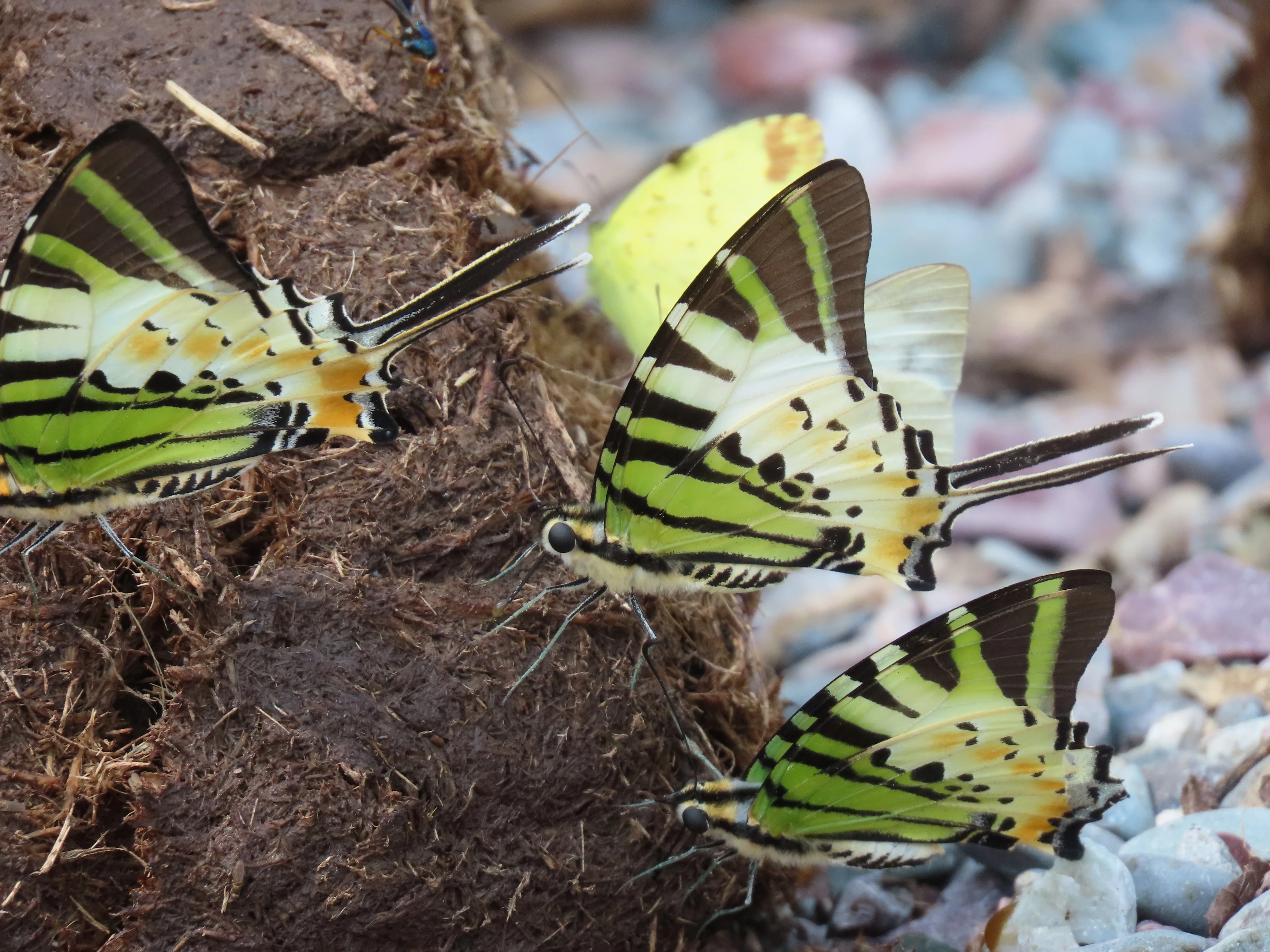
    Five-bar Swordtail
    Not Evaluated

    Five-bar Swordtail

    Graphium antiphates
    A striking butterfly easily recognized by its long tail-like hindwings and bright green-and-black striped upper wings. Native to rainforests and damp woodlands, it is frequently spotted near stream beds mud-puddling for minerals.
    Common Birdwing Butterfly
    Least Concern

    Common Birdwing Butterfly

    Troides helena
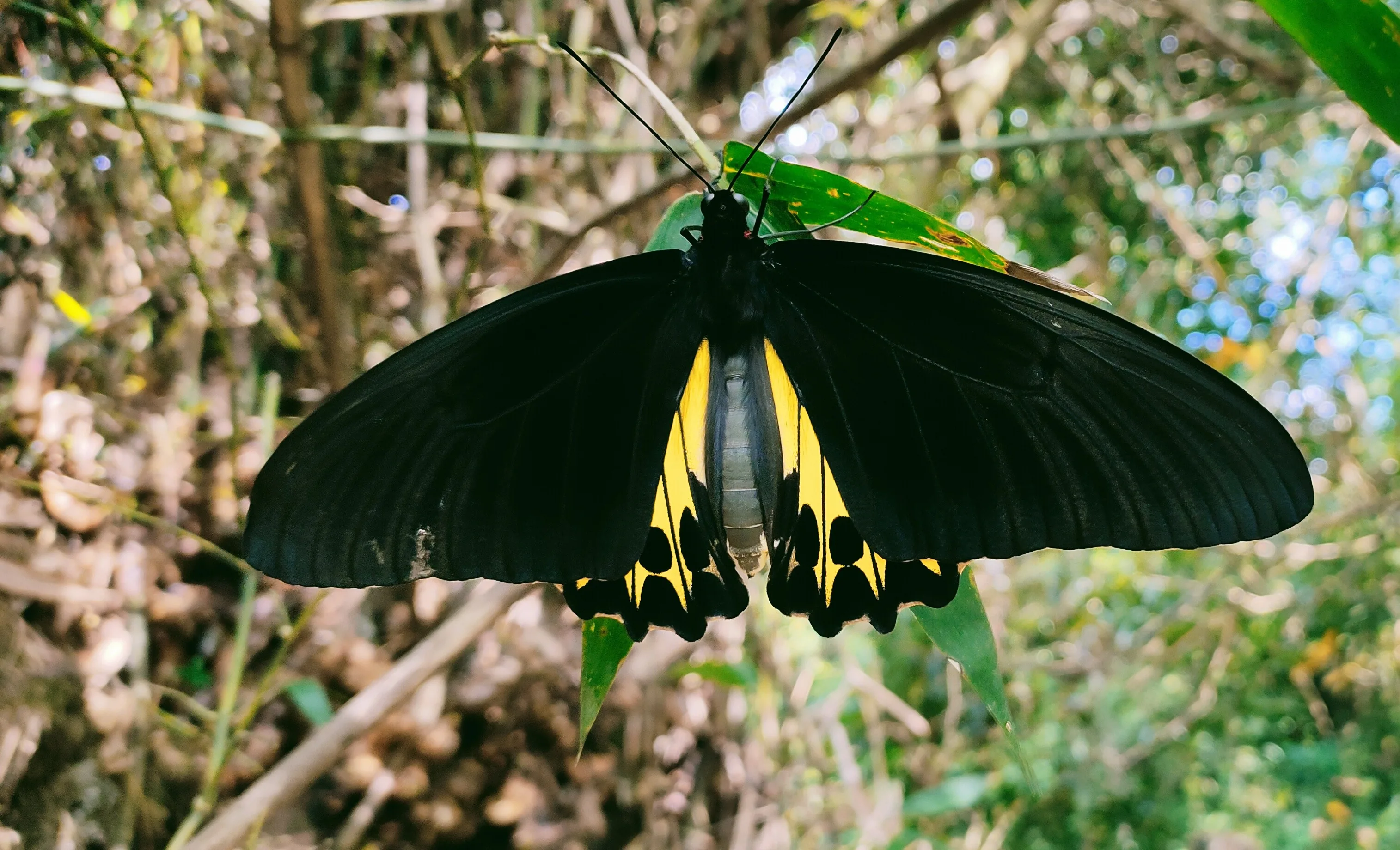
    A large, striking butterfly with velvety black forewings and brilliant golden-yellow hindwings, inhabiting Meghalaya's tropical and subtropical forests and feeding on nectar from flowering plants.
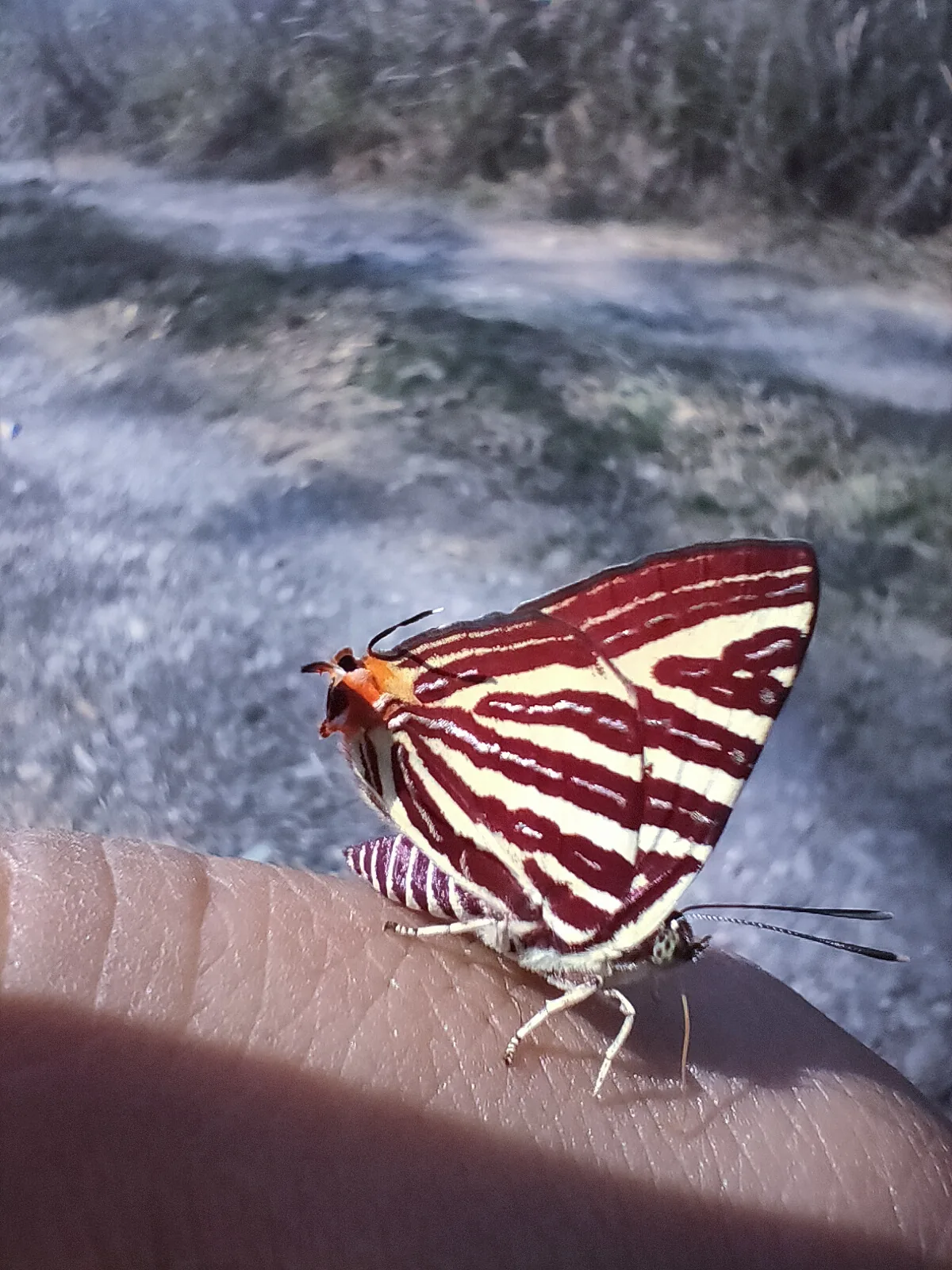
    Long-banded Silverline
    Not Evaluated

    Long-banded Silverline

    Cigaritis lohita
    A small, vibrant butterfly featuring distinct silver-centered dark stripes across its underwings and orange tail spots. Typically found in humid forest edges and sunny clearings, it is active during bright daylight and frequently visits flowers for nectar.
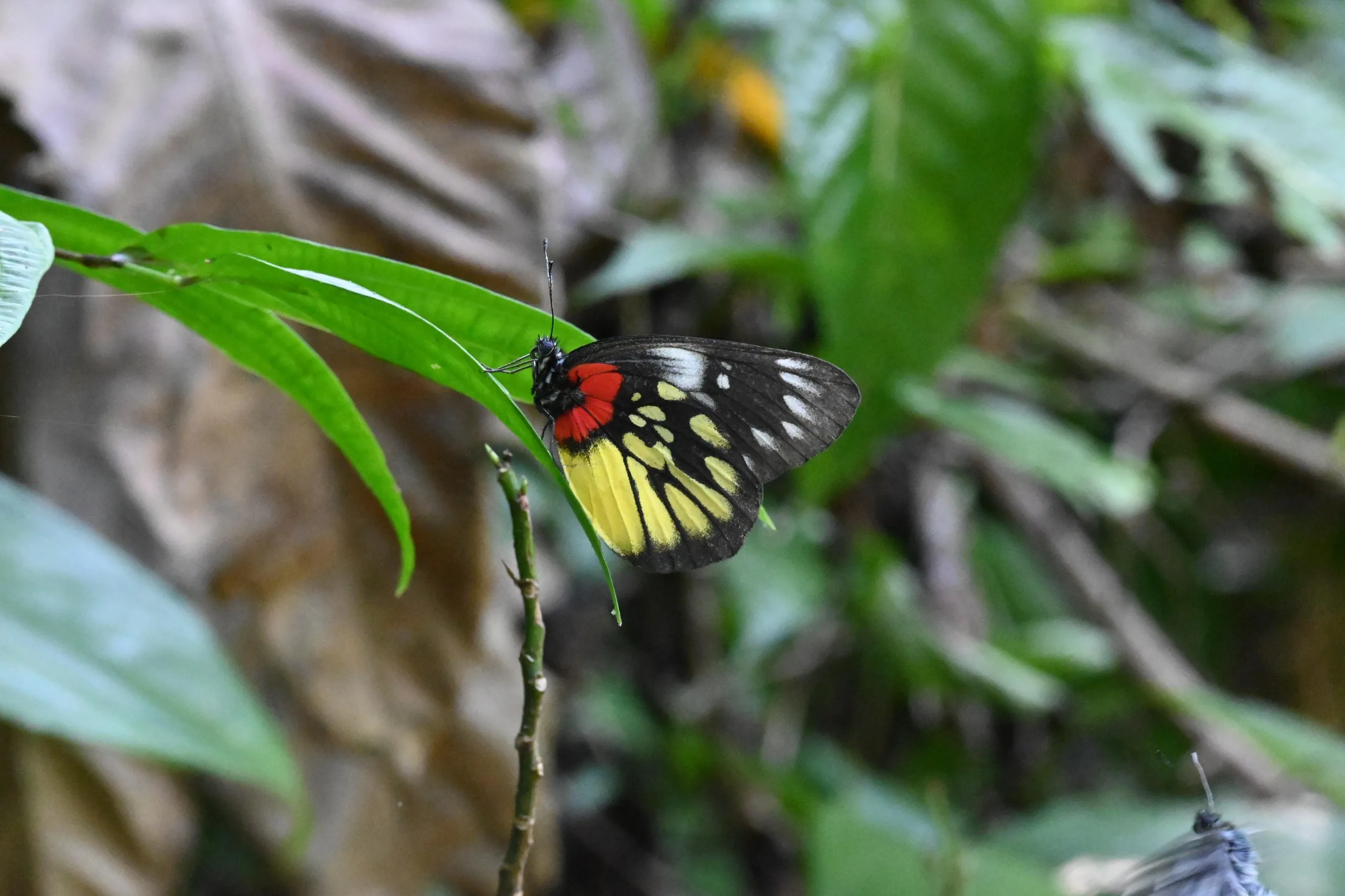
    Red-base Jezebel
    Least Concern

    Red-base Jezebel

    Delias pasithoe
    A striking butterfly featuring bold yellow, black, and white upper wings contrasting with a bright crimson patch at the base of its underwings. Commonly seen fluttering high in the canopy of tropical forests, it frequently descends to nectar-rich flowers and damp mud patches.
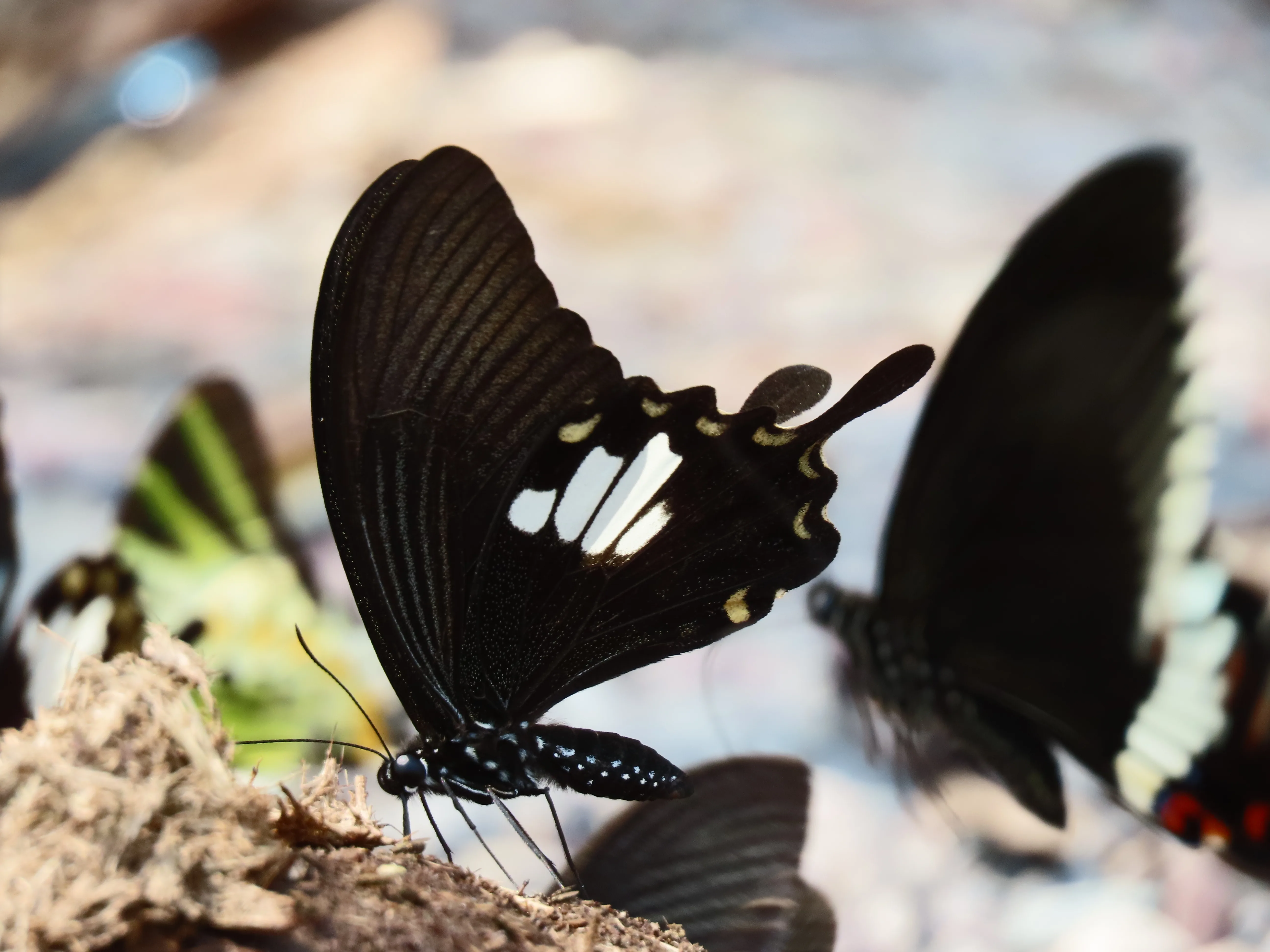
    Yellow Helen
    Not Evaluated

    Yellow Helen

    Papilio chaon
    A large, striking swallowtail butterfly featuring dark velvety wings marked by a bright pale-yellow patch on the hindwings. Commonly inhabiting tropical forest clearings and hill paths, it flies swiftly along shaded trails and regularly settles near damp patches to mud-puddle.
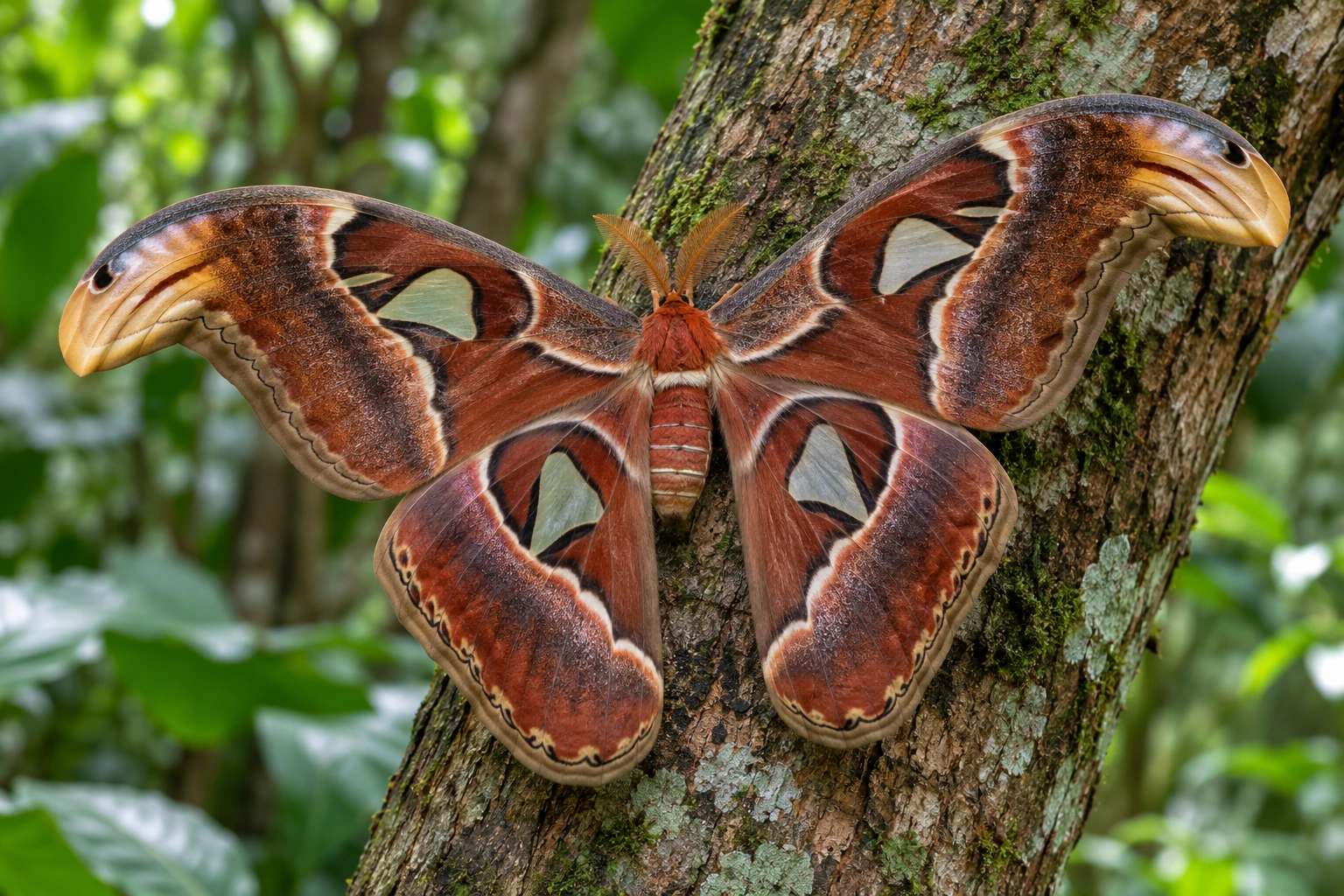
    Atlas Moth
    Not Evaluated

    Atlas Moth

    Attacus atlas
    One of the world's largest moths, recognised by its enormous patterned wings and snake-head-like wingtips, inhabiting Meghalaya's forested landscapes. A notable sighting was reported near Scholars' Garden, Shillong, in August 2025.
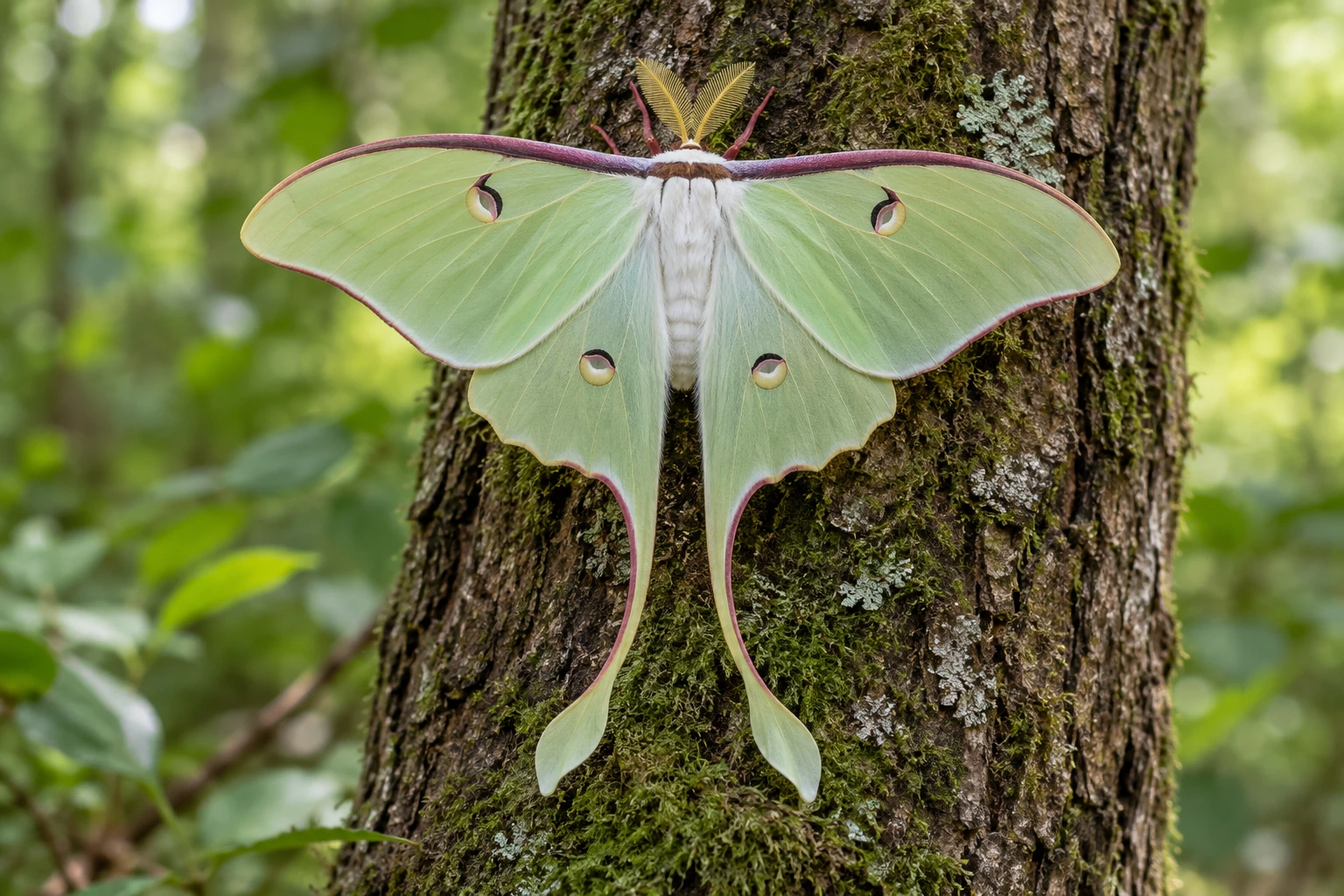
    Indian Moon Moth
    Not Evaluated

    Indian Moon Moth

    Actias selene
    An elegant nocturnal silk moth with pale-green wings, delicate eyespots and exceptionally long hindwing tails, occurring in Meghalaya's wooded habitats and contributing to the State's remarkable moth diversity.

    Mammals

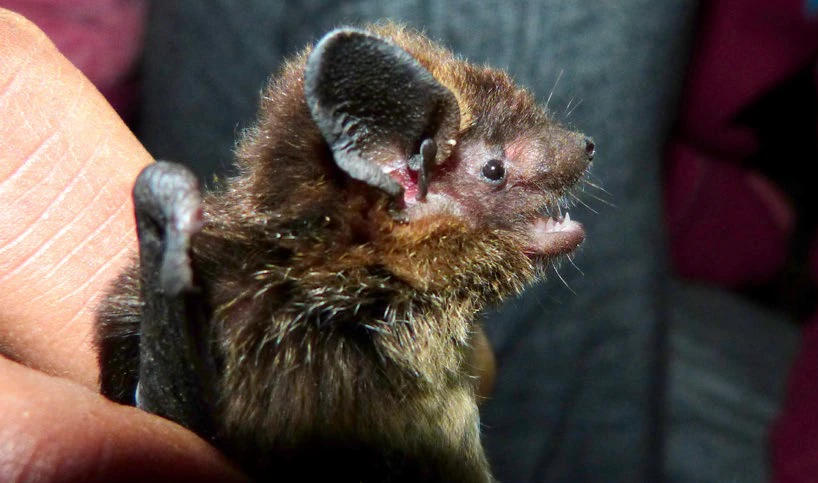
    Sombre Bat
    Data Deficient

    Sombre Bat

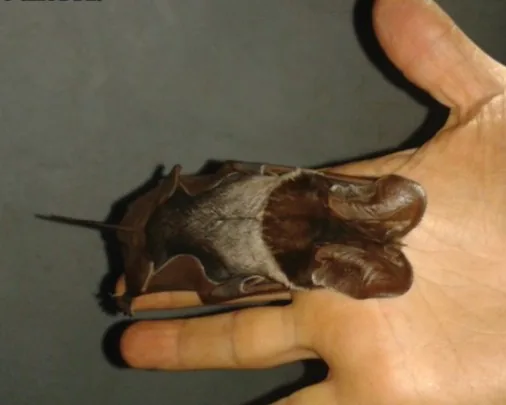
    Cnephaeus tatei
    A rare, dark-furred insectivorous bat adapted to high-altitude hill forests and cave roosts. Flying under the cover of night, it relies on precise echolocation to hunt small night-flying insects along forest edges.
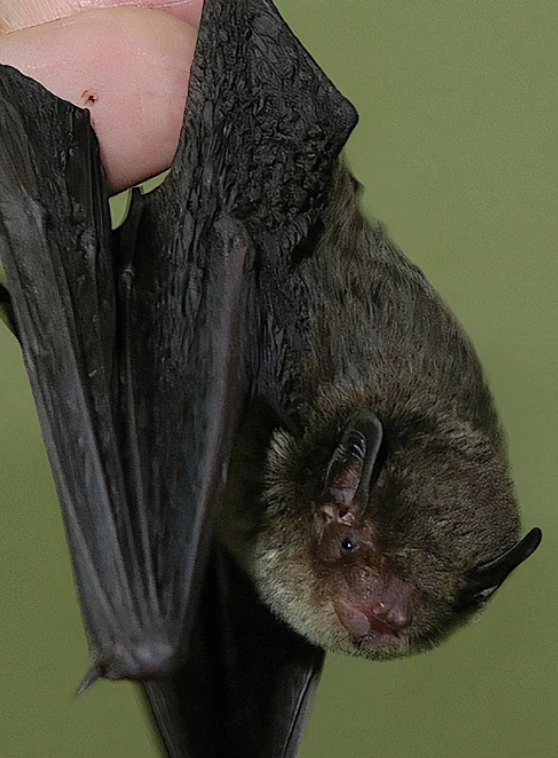
    Meghalaya Thick-thumbed Bat
    Not Evaluated

    Meghalaya Thick-thumbed Bat

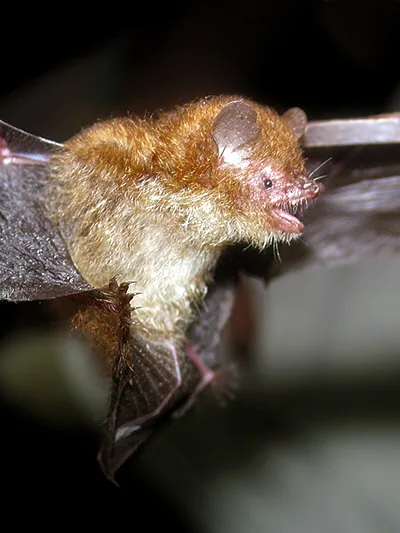
    Glischropus meghalayanus
    A specialized bamboo-dwelling bat identified by its distinct fleshy pads on its thumbs and feet. These unique pads act as suction discs, allowing it to easily grip and maneuver along smooth inner bamboo stalks where it roosts.
    Rainforest Tube-nosed Bat
    Data Deficient

    Rainforest Tube-nosed Bat

    Murina pluvialis
    A small forest bat easily recognized by its tubular, forward-facing nostrils and dense brownish fur. Inhabiting wet tropical and subtropical rainforests, it relies on its distinctive nose structures to forage for insects in dense lower canopies.
    Great Himalayan Leaf-Nosed Bat
    Least Concern

    Great Himalayan Leaf-Nosed Bat

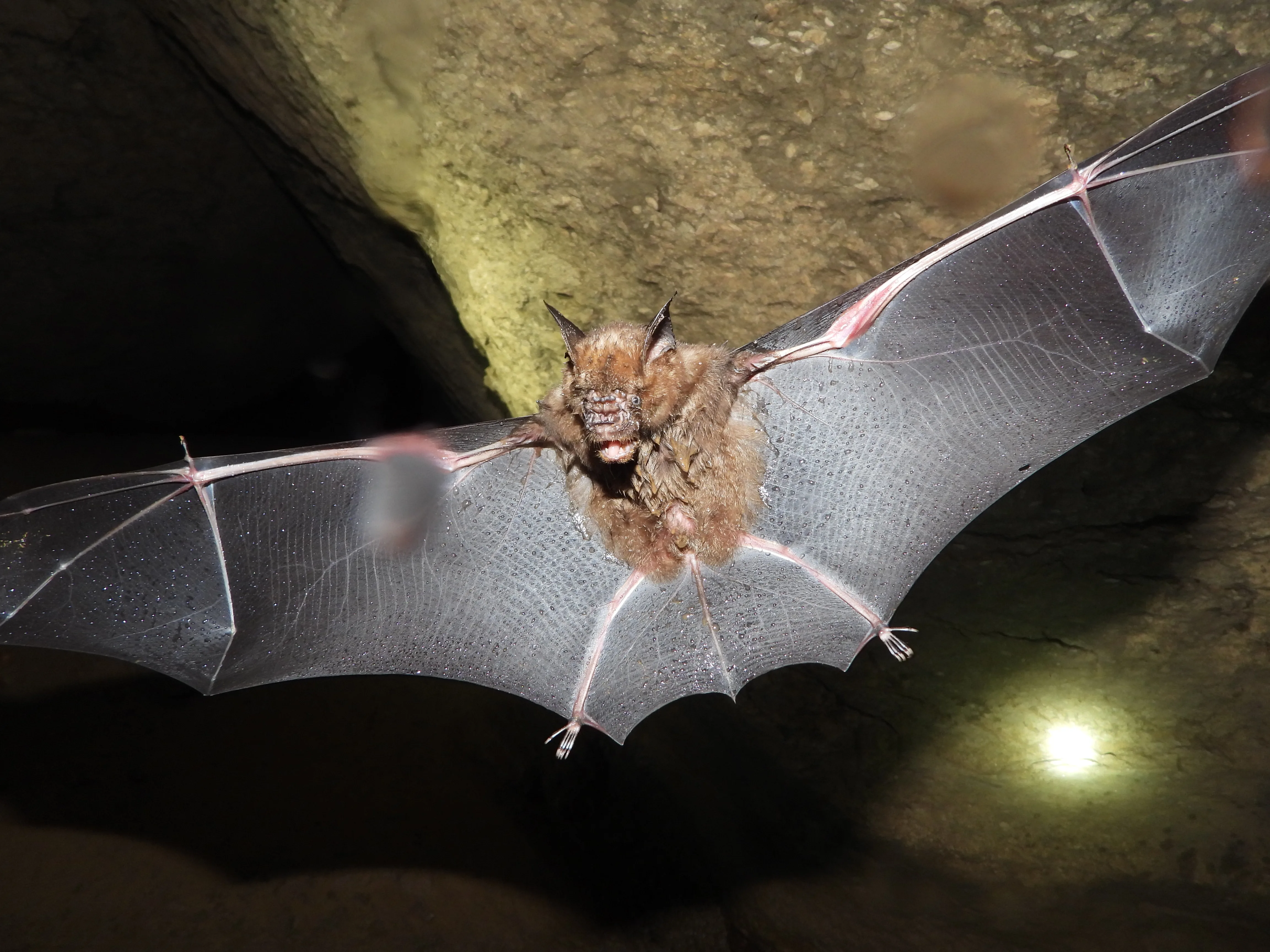
    Hipposideros armiger
    One of the largest insectivorous bats in the region, easily recognized by its complex, leaf-shaped nose leaf. Roosting in large cave colonies, it emerges at dusk to prey on large beetles and moths across forest valleys.
    Peter’s Tube-nosed Bat
    Data Deficient

    Peter’s Tube-nosed Bat

    Harpiola grisea
    A elusive montane species characterized by prominent tube-like nostrils and grayish-brown fur. Restricted to cool high-altitude hill forests, it navigates dense evergreen vegetation to feed on small insects and nectar.
    Free-Tailed Bat
    Least Concern

    Free-Tailed Bat

    Tadarida brasiliensis
    A fast-flying insectivore distinguished by its long narrow wings and a tail that extends visibly beyond its tail membrane. Highly social, it forms massive roosting colonies and travels long distances at high altitudes to feed on agricultural pests.